Get in touch with Suzhou Simitch Machinery Co., Ltd Company

Updated August 2026.
For product-family context, see SIMITCH servo riveting assembly systems.
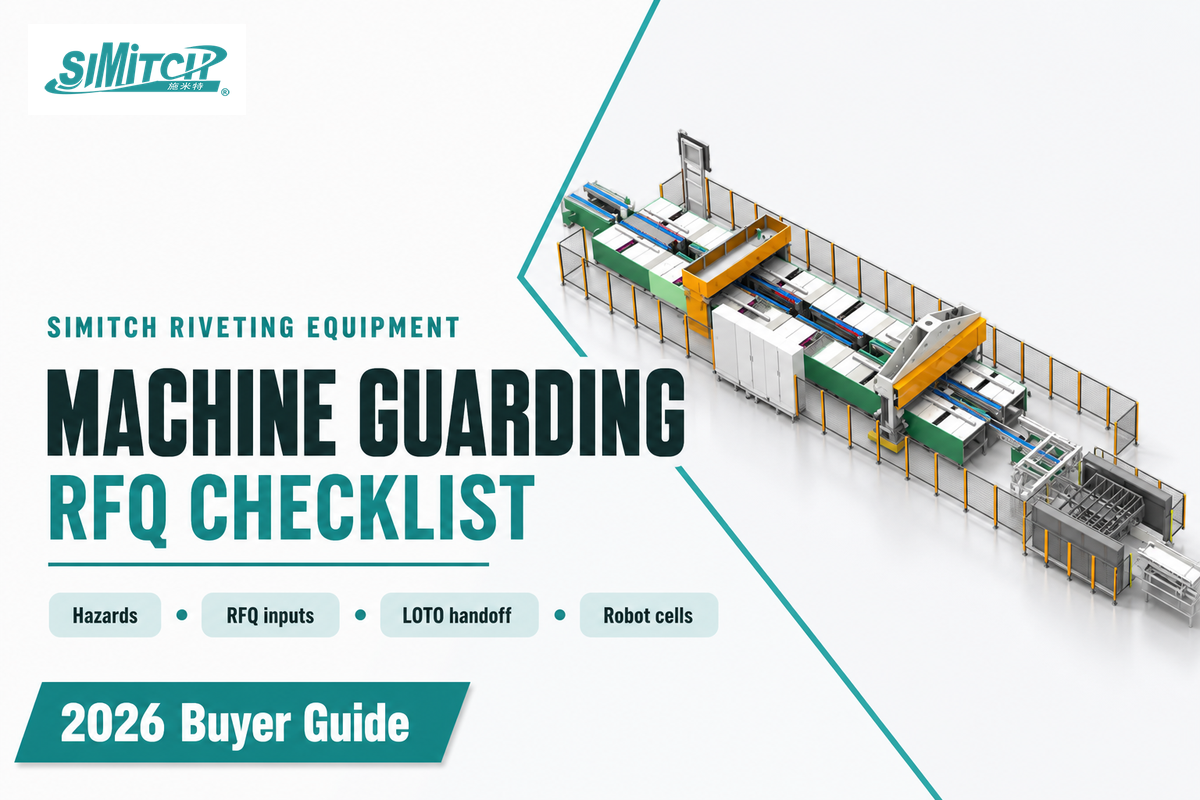
Machine guarding is the use of guards, safety devices, procedures, and training to protect operators and other employees from dangerous machine areas. For a riveting or robotic assembly cell, the practical question isn’t just “which guard type fits?” It’s which task, motion, energy source, and access path must be controlled before production starts.
Quick answer: OSHA 29 CFR 1910.212 is the general United States baseline for guarding hazards such as point of operation, ingoing nip points, rotating parts, flying chips, and sparks. A buyer still needs task-based assessment, machine-specific scope checks, validation evidence, and site-specific legal review.
Quick Specs
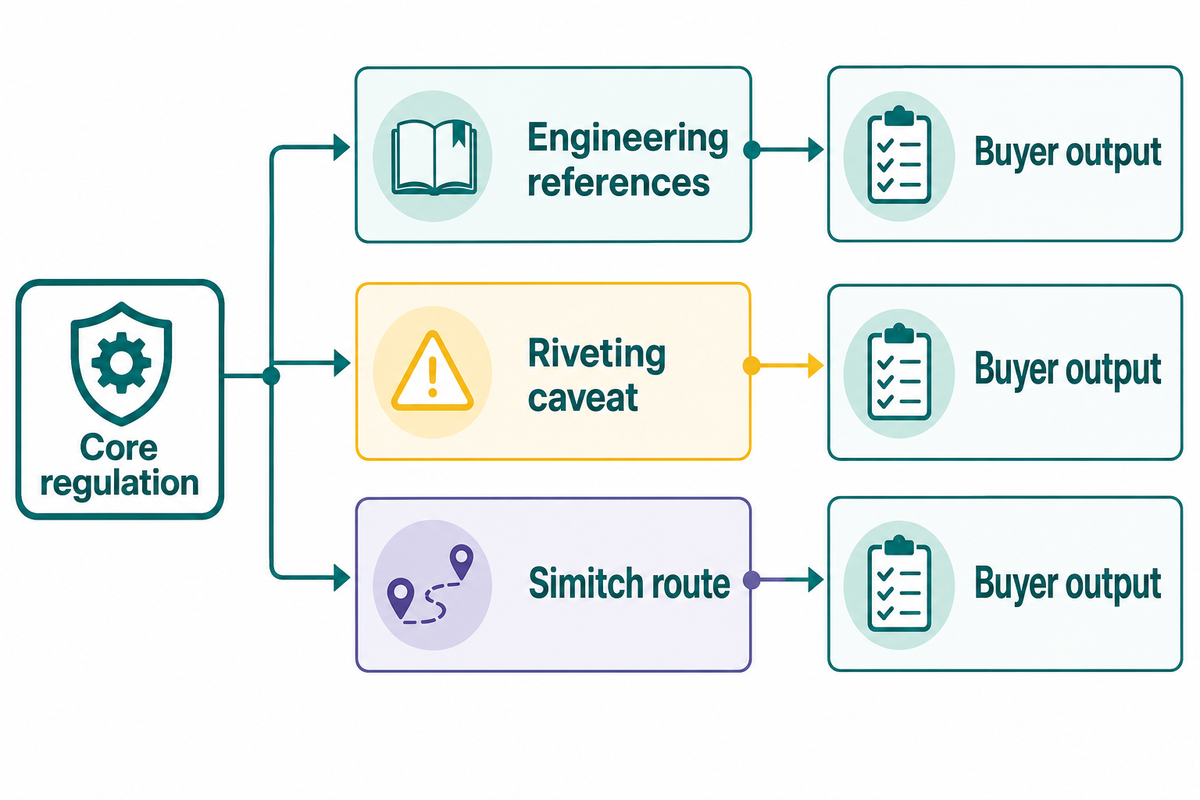
| Core regulation | 29 CFR 1910.212 for general machine-area hazards. |
|---|---|
| Engineering references | ANSI B11 and ISO 12100 can guide risk assessment, but they are not automatic OSHA regulations unless adopted by authority or contract. |
| Riveting caveat | 29 CFR 1910.217(a)(5) excludes riveting machines and similar fastener applicators from the mechanical power press section. |
| Buyer output | A task, energy, access, stopping-time, reset, inspection, and training evidence package. |
| Simitch route | Use Simitch riveting equipment, the RFQ readiness calculator, and the architecture selector to frame the engineering discussion. |
Key takeaways
- Guard choice should follow the hazard map, not a catalog label.
- Interlocked doors and control circuits don’t equal energy isolation.
- Simitch RFQ fields help collect intake data; they don’t prove safeguard effectiveness by themselves.
- Robot-cell planning must include rear sweep, fixed-object pinch points, clearance, and backup sensing where exposure can occur.
What Machine Guarding Means
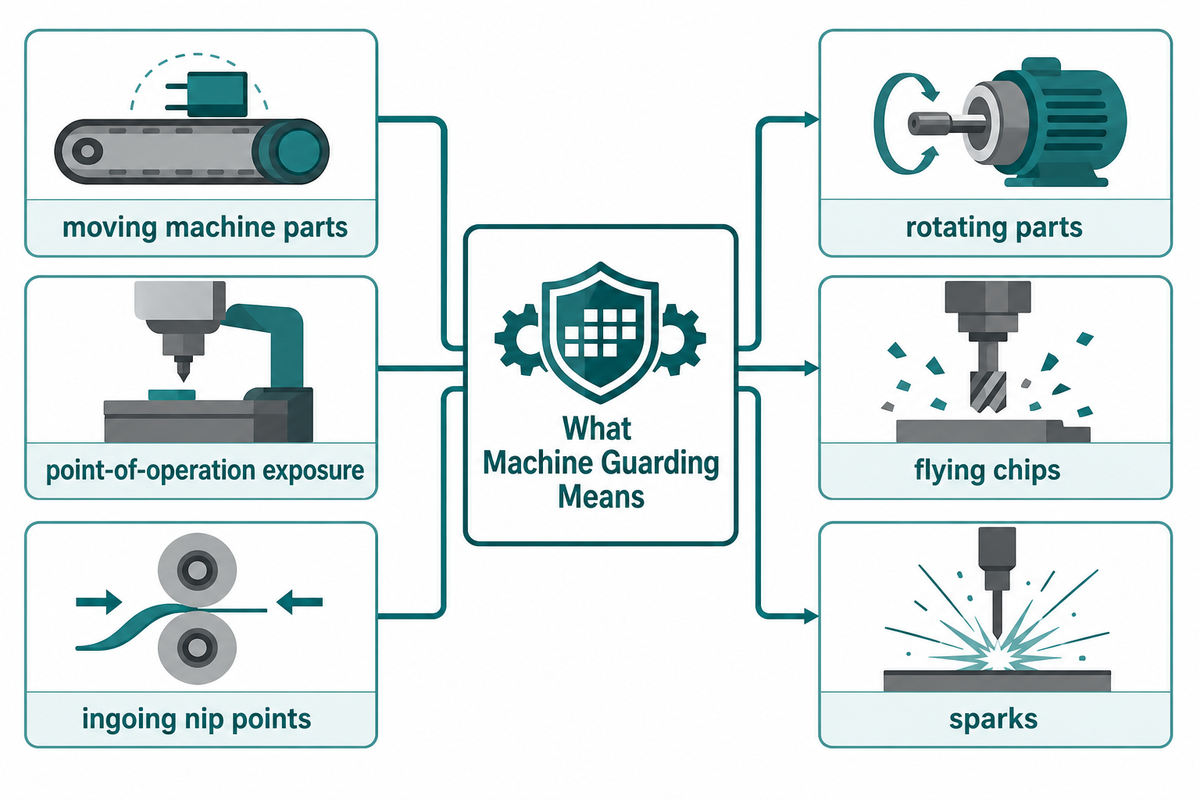
Machine guarding safety starts with exposure control: a guard must prevent contact with the danger area while the operation of a machine must remain workable and guard the machine where possible. OSHA’s general rule names moving machine parts, point-of-operation exposure, ingoing nip points, rotating parts, flying chips, and sparks as examples of hazards that require guarding methods.
That baseline covers more than the machine operator at the control panel. The phrase “operator and other employees in the machine area” matters because employees who operate, load, maintain, inspect, supervise, or pass by can reach a moving part, shear point, coupling, spindle, pulley, flywheel, or connecting rod. Machine parts have the potential for machine or accidental contact with any part of the body. Common injury modes include amputation, laceration, entanglement, abrasion, crushed fingers or hands, and impact from flying debris.
OSHA also addresses fixed machinery anchoring, so the guard discussion should not float apart from the machine body. If a riveter, press-fit station, servo actuator, or robot-mounted tool shifts, the boundary between safe work practices and actual machine part contact can change.
Hazard Map: Do Not Start With the Guard Type
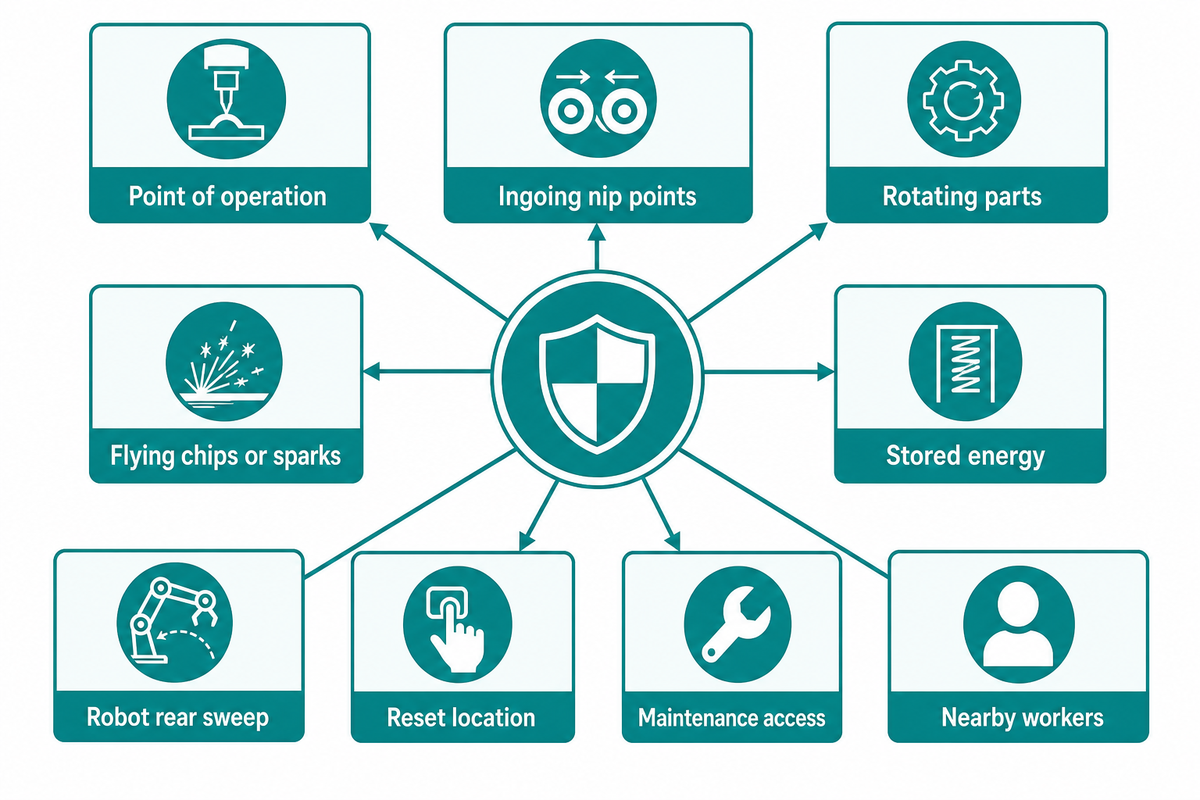
A hazard map should be the first design artifact because guard labels hide the real question: who can reach what, in which operating cycle, and with which energy still present? Riveting-machine context can point back to 1910.212, but old OSHA interpretation letters apply to particular facts and don’t create a blanket approval for modern automated cells or State Plans.
On legacy machinery, the inventory should name parts of the machine that transmit energy, such as a cam mechanism, pullback device, or components that reciprocate. It should also record physical barriers used to protect workers around machinery.
| Exposure point | Question to ask | Evidence to collect | Limitations / Not suitable for |
|---|---|---|---|
| Point of operation | Can a hand reach the rivet set, die, punch, or clamp during actuation? | Tooling envelope and approach path. | A remote button is not proof of distance safety. |
| Ingoing nip points | Can rollers, feeds, or clamps pull clothing or fingers inward? | Feed mechanism drawing. | Visibility alone does not prevent contact. |
| Rotating parts | Can shafts, gears, coupling parts, or spindle motion be contacted? | Access and service diagram. | Covers that are opened or removed need control. |
| Flying chips or sparks | Can fragments or hot material travel outside the fixture? | Sample-run and material stack evidence. | Barrier height alone may miss ejection path. |
| Stored energy | Can pneumatic, hydraulic, servo, gravity, or spring energy remain? | Energy-control list. | A stopped machine can still injure. |
| Robot rear sweep | Can the back end of a robot create a crush zone? | Full reach envelope. | An interlocked front gate may not cover rear motion. |
| Reset location | Can a person restart the system while someone is inside? | Reset device and visibility proof. | Remote reset without view is a red flag. |
| Maintenance access | Who removes panels, enters, clears jams, or changes dies? | Task list and work authorization. | Production-mode guards cannot replace every service procedure. |
| Nearby workers | Can others in the vicinity contact the machine or ejected material? | Aisle, fixture, and traffic layout. | Operator-only training misses bystanders. |
Main Guard and Safeguard Families
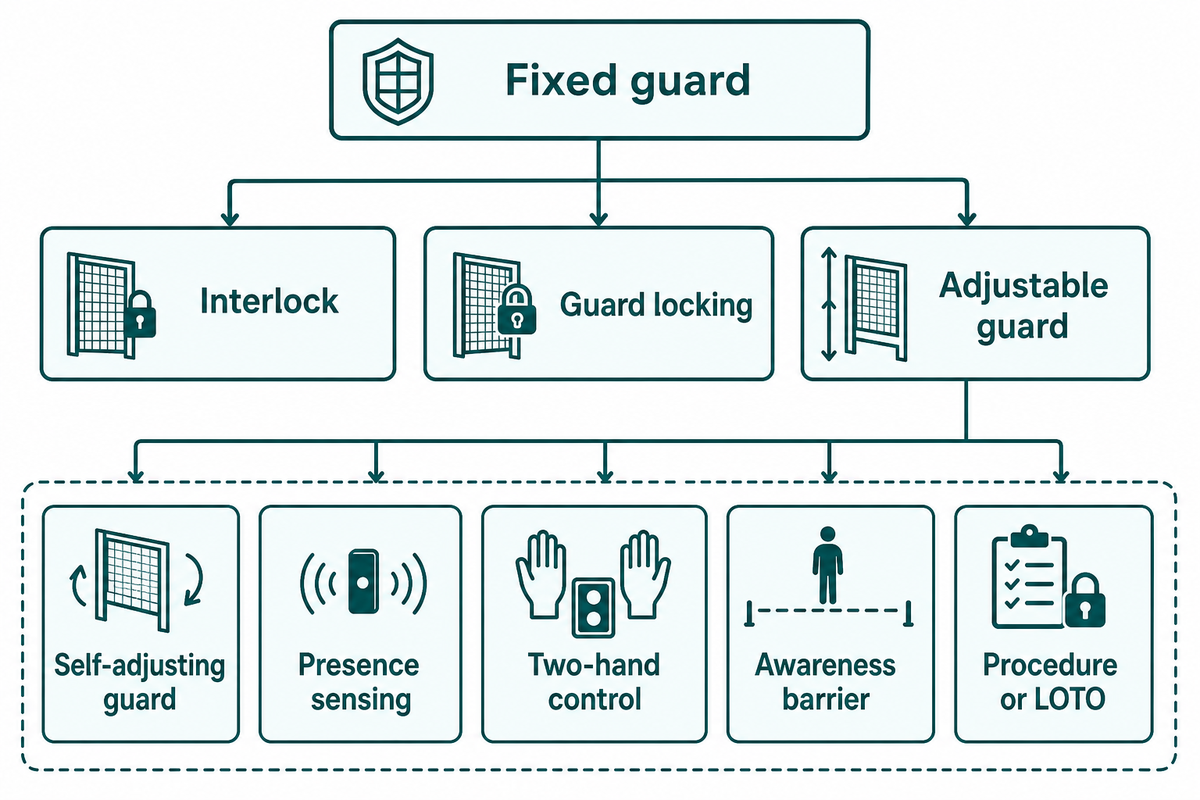
Guard families are useful after the hazard map is known. Fixed machine guards, safety guarding devices, interlocked guards, adjustable and self-adjusting guards, robot guarding measures, two-hand controls, awareness barriers, safe work practices, and lockout/tagout layers each solve a different access problem and create a different inspection burden.
OSHA’s eTool discusses guard types but also exposes the buyer tradeoff: a guard must prevent contact without becoming the reason people bypass it for setup, repair, jam clearing, quality checks, or material loading. A guard must also be secure, durable, and compatible with the work, otherwise the first line of defense against injuries can erode during production.
| Family | Best fit | Buyer check | Limitations / Not suitable for |
|---|---|---|---|
| Fixed guard | Routine production with no frequent body entry. | Fastening and tool-removal rule. | Poor fit when adjustment is frequent. |
| Interlock | Access door or gate where opening should stop motion. | Stopping time and access time. | Not energy isolation. |
| Guard locking | Hazard remains after stop command. | Run-down time proof. | Wrong if release timing is not validated. |
| Adjustable guard | Variable part sizes or tooling. | Who adjusts and verifies position? | Human setting errors are likely. |
| Self-adjusting guard | Material-fed equipment with variable stock. | Opening size across part range. | May leave residual access. |
| Presence sensing | Hands or body can enter a defined zone. | Safety distance and response time. | Not enough if material blocks detection. |
| Two-hand control | Single operator point-of-operation protection. | Anti-tie-down and safe distance. | Does not protect others nearby. |
| Awareness barrier | Warning and traffic separation. | Training and signage link. | Not a physical stop for a known danger area. |
| Procedure or LOTO | Setup, jam clearing, maintenance, or energy control. | Written procedure, training, and inspection. | A procedure alone is weak for routine access to moving machinery. |
Risk Assessment: OSHA Baseline vs ANSI B11 and ISO 12100 Guidance
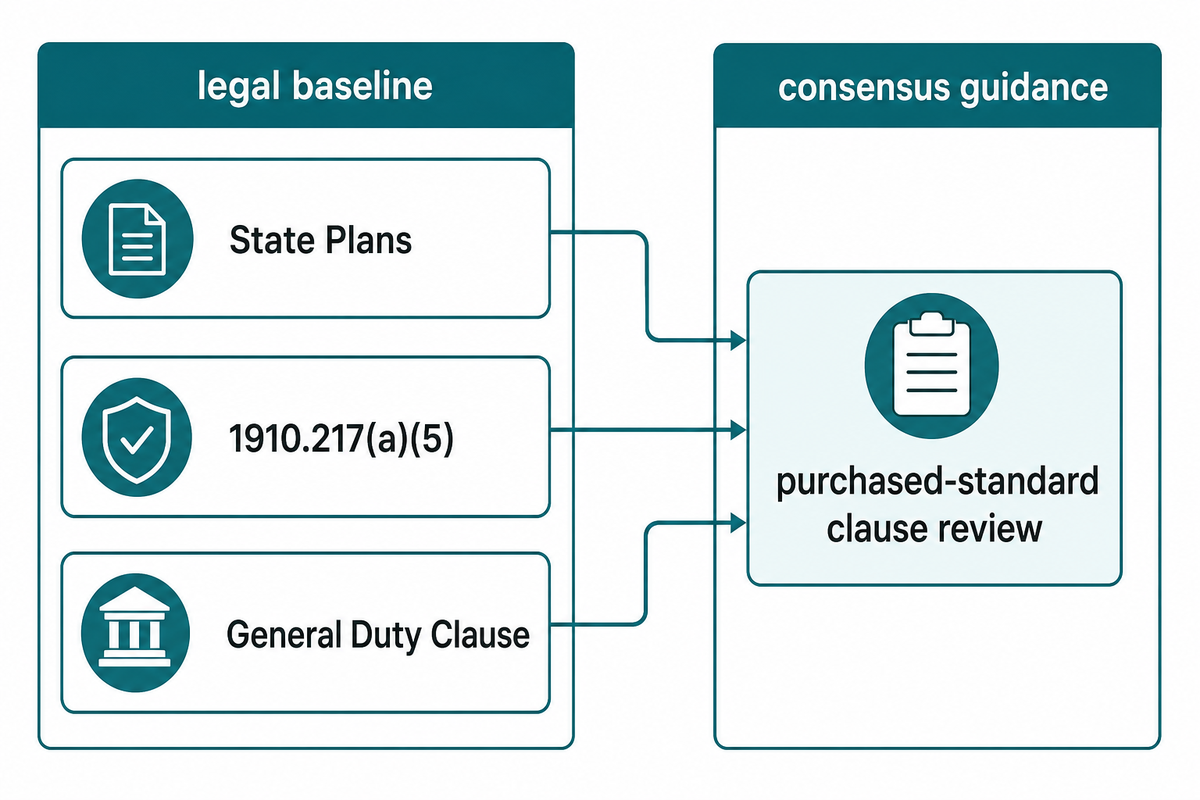
Risk assessment should separate legal baseline, consensus guidance, and purchased-standard clause review. OSHA 1910.212 is a general federal baseline, State Plans can differ or add requirements, and machine-specific federal sections can add scope or exclude equipment. For example, 1910.217(a)(5) excludes riveting machines and similar fastener applicators.
ANSI B11 and ISO 12100 can help frame task-based risk assessment and risk reduction, but public scope pages are not a substitute for owning and reviewing the relevant standard text. OSHA also notes that industry consensus standards can matter as evidence of recognized hazards and feasible correction under the General Duty Clause, yet that does not turn every ANSI or ISO provision into an automatic regulation.
For a buyer, this creates a clean purchase rule: ask the supplier what evidence they can provide, and ask your safety or legal team which legal baseline applies at your site. Supplier drawings, PLC notes, safety-function descriptions, and commissioning records help the discussion, but the plant remains responsible for its own compliance decision.
Task-State-Energy-Exposure Matrix
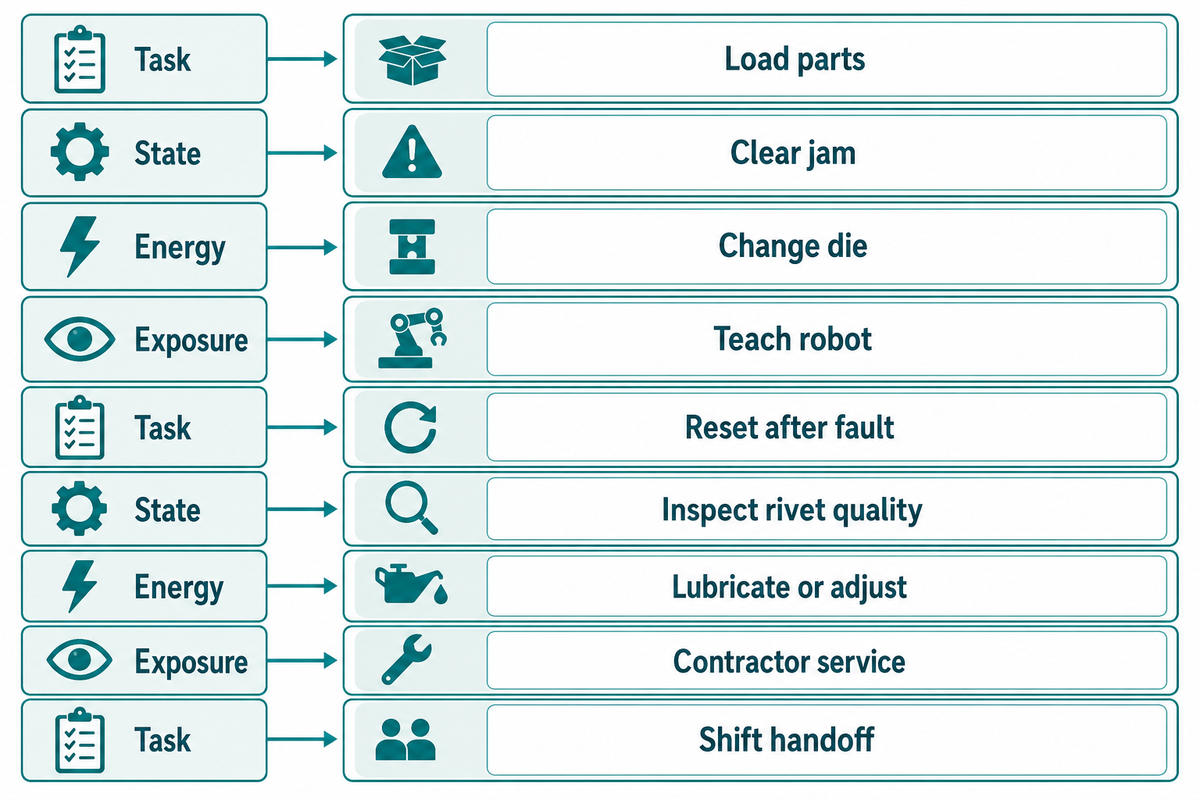
The Task-State-Energy-Exposure Matrix is a pre-RFQ screen, not a complete lockout/tagout program. It forces the buyer to classify each task by production state, body entry, hazardous energy, stopping time, access time, reset location, and program handoff before treating an interlock, guard, or procedure as enough.
| Task | State and exposure | Evidence request | LOTO overlay |
|---|---|---|---|
| Load parts | Normal production, hands near fixture. | Reach, clamp, and cycle-start control. | Usually guarded production, not full program proof. |
| Clear jam | Stopped or faulted state, possible stored energy. | Minor-servicing criteria and alternative protection. | If criteria are not met, energy control applies. |
| Change die | Tooling work near point of operation. | Written task method and isolation points. | Procedure, lock points, and authorization. |
| Teach robot | Person inside cell, robot may move under control. | Mode selection, speed, enabling device, and clearances. | Task-specific procedure and training. |
| Reset after fault | Person may still be inside or near a danger area. | Reset location, visibility, and restart prevention. | Shift handoff if fault spans teams. |
| Inspect rivet quality | QA access to finished and in-process parts. | Sampling point and safe access route. | Not a reason to bypass interlocks. |
| Lubricate or adjust | Routine or non-routine servicing decision. | Normal-production status and alternative measure. | Training and periodic inspection records. |
| Contractor service | Outside personnel may enter the boundary. | Contractor interface and host procedures. | Outside-personnel coordination. |
| Shift handoff | Work continues across personnel changes. | Status board, lock ownership, and restart permission. | Shift or personnel-change continuity. |
Use this matrix before asking for equipment price. It doesn’t replace written energy-control procedures, periodic inspection certification, safety training and retraining, outside-personnel coordination, group lockout/tagout rules, or shift-change continuity.
Guarding-to-RFQ Fit Gate for Riveting Cells
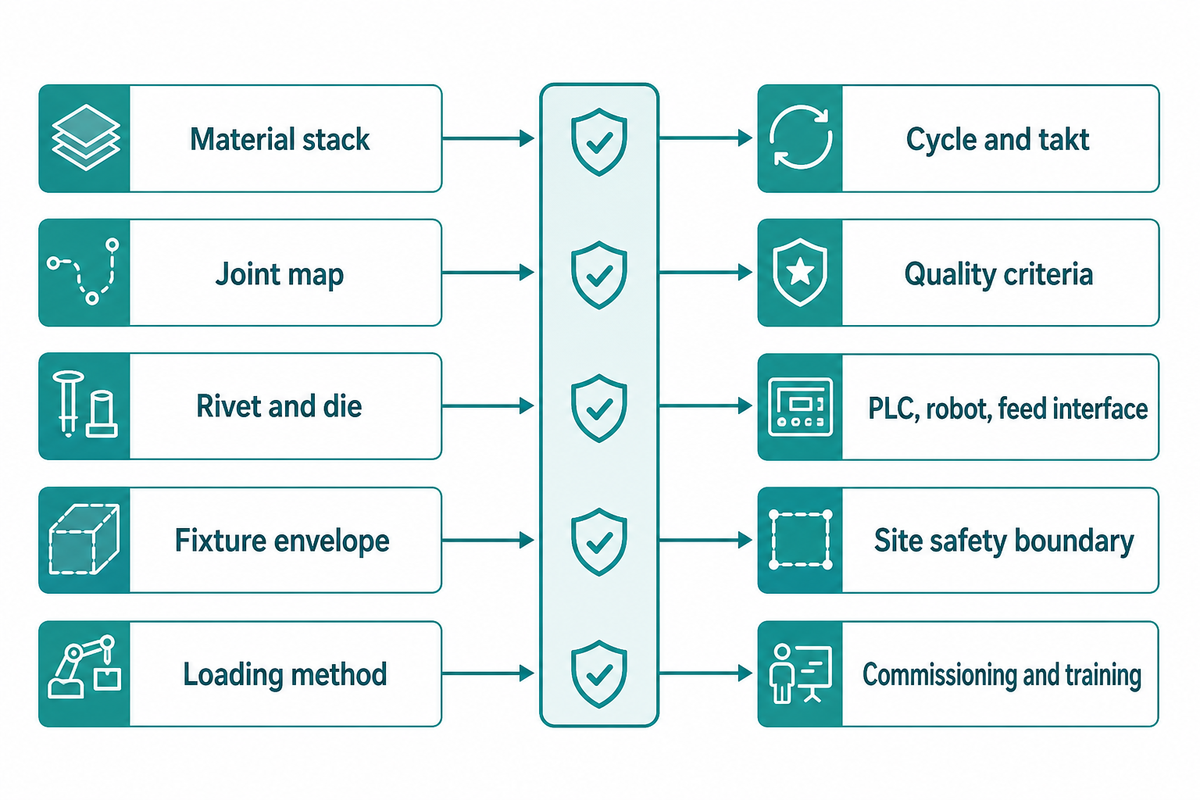
The Guarding-to-RFQ Fit Gate turns a generic safety topic into a quoting package for an engineered riveting cell. Simitch public RFQ fields can help buyers prepare material, joint, tooling, fixture, takt, quality, interface, safety-boundary, and commissioning data, but those fields are intake completeness only and not a safeguard validation result.
For equipment context, Simitch’s public riveting page lists self-piercing riveting machine force ranges of 50-75 kN, an 80 kN servo power unit, 0-333 mm/s motion speed, and a 3 s standard SPR cycle time. Use those numbers as public equipment context, not as a promise that one guarded layout will meet every material stack, access condition, or validation requirement.
50-75 kNSPR force range context
80 kNservo power unit context
0-333 mm/smotion speed context
3 sstandard SPR cycle context
| RFQ input | Why guarding changes it | Buyer evidence | Open engineering question |
|---|---|---|---|
| Material stack | Part thickness and material can change clamp and rivet force. | Drawings, samples, and stack tolerance. | Can scrap be contained? |
| Joint map | Guarding affects how operators present each joint. | Marked joint sequence. | Can all joints be reached safely? |
| Rivet and die | Tool changes affect access and stored energy. | Rivet, die, and changeover data. | What isolation is needed? |
| Fixture envelope | Doors, curtains, and robot reach change frame size. | Fixture window and load path. | Will the fixture fit the guard opening? |
| Loading method | Manual, robot, or feeder loading changes exposure. | Operator reach or robot path. | Who enters the cell and when? |
| Cycle and takt | Access doors and resets can add lost seconds. | Target rate and fault history. | Can recovery meet production needs? |
| Quality criteria | Inspection access can drive fixture and guard layout. | Pull-out, flushness, visual, or process data needs. | Where can QA inspect safely? |
| PLC, robot, feed interface | Safety functions and production handshakes meet here. | Signal list and responsibility split. | Who validates the control function? |
| Site safety boundary | Aisles, forklifts, and neighbors affect guards. | Floor plan and traffic route. | Does the cell need extra perimeter control? |
| Commissioning and training | Guards fail in use when people are not trained. | Handover list and training requirements. | Who owns inspection after launch? |
Hidden Bottleneck Map for Guarded Riveting Cells
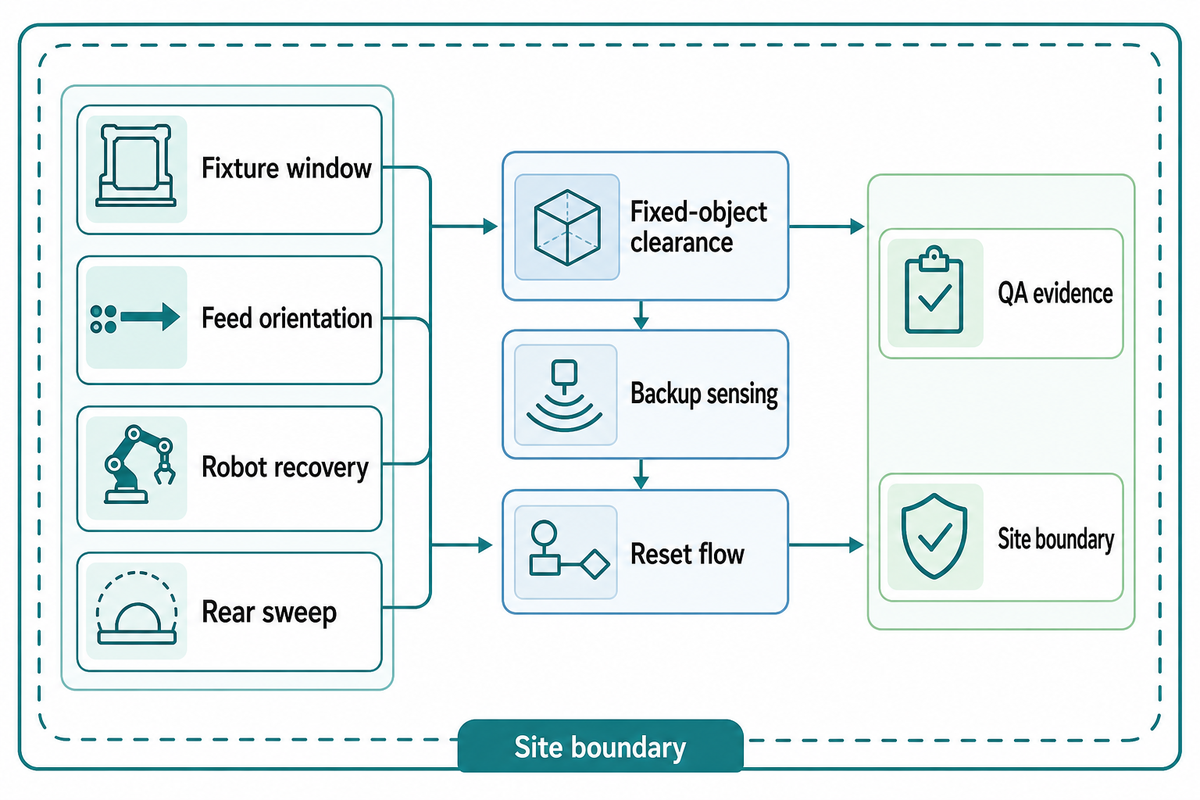
The Hidden Bottleneck Map shows how guarding affects launch risk beyond the guard price. Fixture envelope, part loading, maintenance access, reset flow, robot/PLC interface, QA evidence, and site safety boundary can jointly affect feasibility, but public evidence doesn’t support a universal claim that these factors always outrank the guard itself.
| Constraint | Plant risk | Finance or QA impact | Question for engineering review |
|---|---|---|---|
| Fixture window | Part cannot load through guarded opening. | Frame redesign or slower load cycle. | Has the fixture been checked with the guard envelope? |
| Feed orientation | Parts enter from unsafe or awkward side. | Extra operator motion or reject risk. | Can feed direction change without new pinch points? |
| Robot recovery | Fault recovery requires cell entry. | Downtime and restart risk. | Can faults be recovered from outside the danger area? |
| Rear sweep | Back-end robot motion creates crush exposure. | Injury and shutdown risk. | Are rear sweep and fixed-object pinch points mapped? |
| Fixed-object clearance | Robot or tooling traps a person against a post or frame. | Layout rework after installation. | Is clearance checked around all moving components? |
| Backup sensing | Entry gate misses someone already inside. | Validation and liability exposure. | Where can presence still occur after entry? |
| Reset flow | Restart can happen before the zone is clear. | Quality loss and incident risk. | Can reset be performed with full view? |
| QA evidence | Inspection is pushed into unsafe access. | Rejects, rework, or missing proof. | Can inspection data be captured without bypassing safeguards? |
| Site boundary | Cell conflicts with aisles or adjacent stations. | Floor-plan change and launch delay. | Has the plant supplied a real floor plan? |
NIOSH 85-103 is useful because it warns against a narrow front-gate view of robot safety. The reported case involved active back-end motion, a fixed steel pole, an interlocked entry point, and missing backup presence sensing. Robot-cell hazard mapping should therefore include rear sweep, fixed-object pinch points, clearance, and backup sensing where exposure can occur.
Inspection, Training, Maintenance Access, and LOTO Handoff
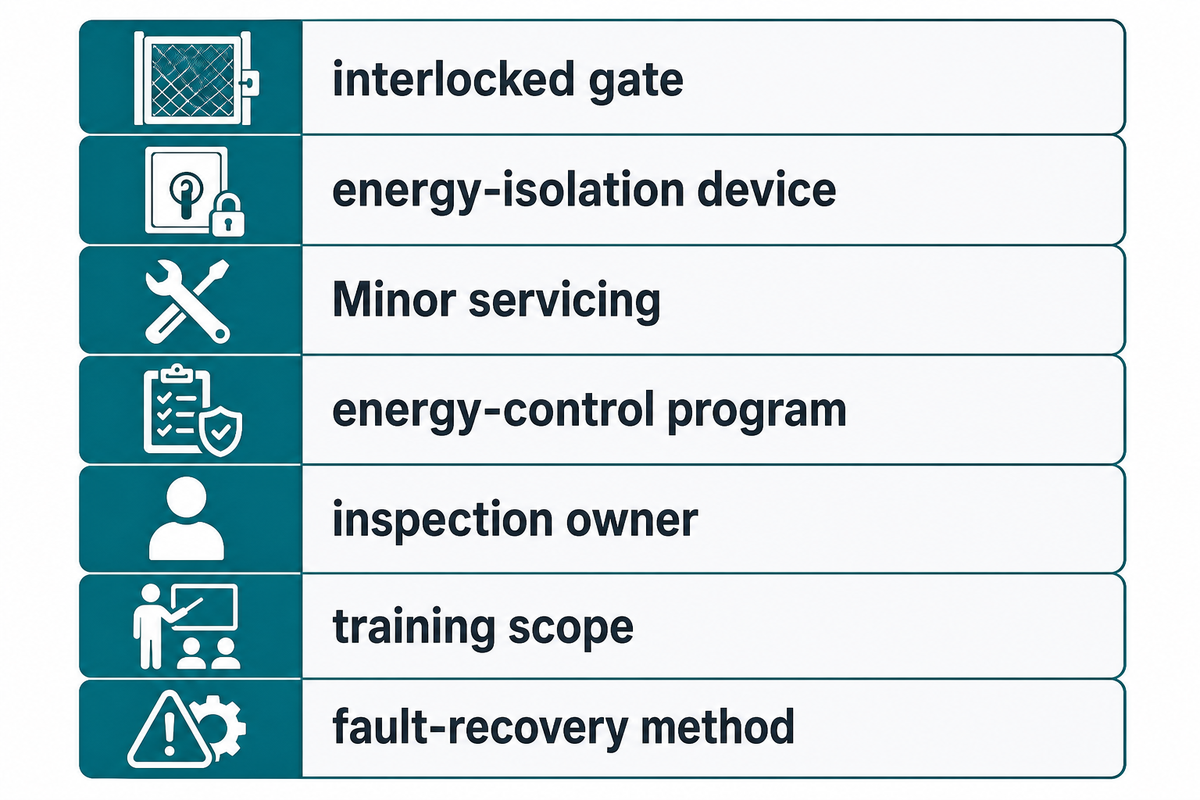
Guards survive production only when inspection, safety training, maintenance removal, and lockout/tagout handoff are designed into the work. OSHA’s robotics case study is a useful boundary marker: an interlocked gate is control circuitry, not an energy-isolation device, so unjamming, maintenance, and repair tasks still need task-by-task exposure analysis.
Minor servicing can be treated differently only when the OSHA criteria are met: the task is done during normal production operations, is routine, repetitive, and integral, and uses alternative safety measures that reduce or eliminate exposure. If those criteria aren’t met in full, the energy-control program, not a casual interlock habit, becomes the reference point.
For workplace records, Environmental Health & Safety teams should treat each pinch point hazard as a possible occupational injury path, not only as a wound after the fact. Lockout-tagout training and specific standards reviewed for the machine help supervisors explain who may maintain machinery and when equipment cannot be started.
Buyer handoff note
Ask for the inspection owner, training scope, spare guard parts, reset method, fault-recovery method, and maintenance-access method in the same conversation as equipment layout. Waiting until commissioning turns safety evidence into a late-stage dispute.
2026 Planning Notes for Automated Cells
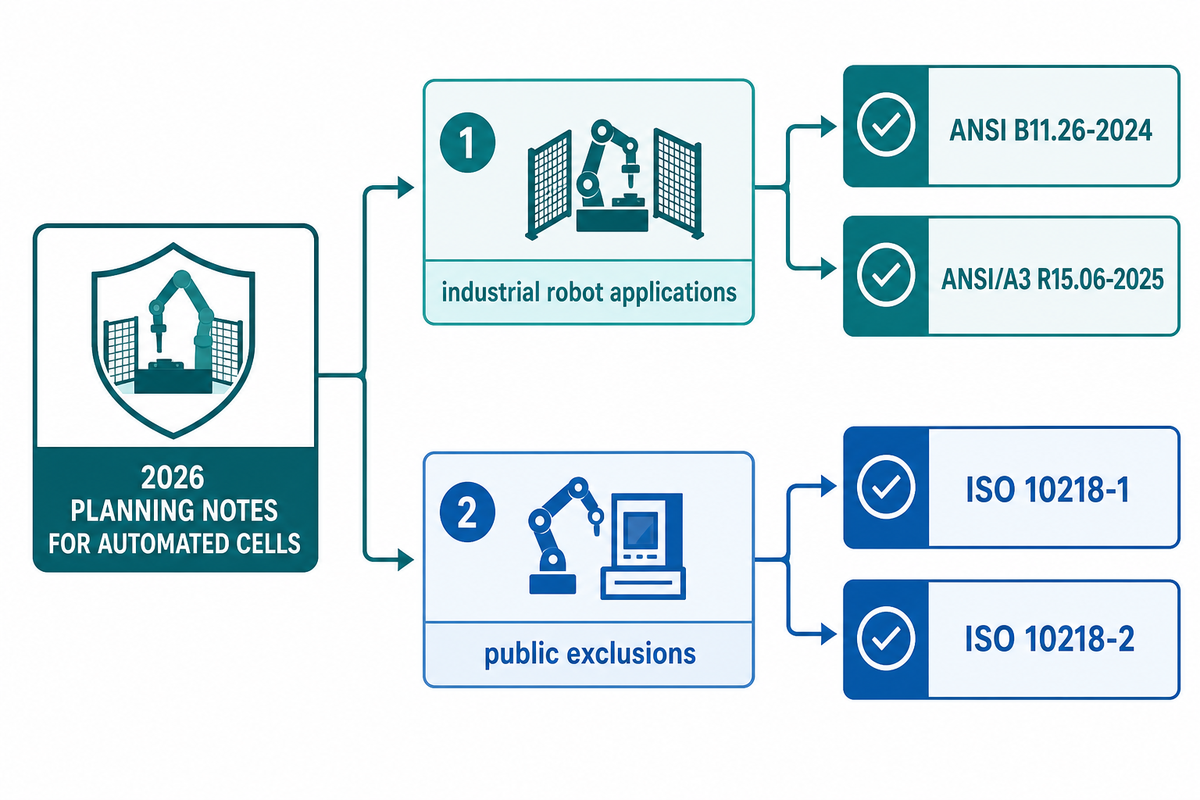
Automated-cell planning in 2026 should distinguish functional safety, integrated manufacturing systems, robot-cell guidance, and process-specific exclusions. ANSI B11.26-2024 public scope relates to safety-related control functions and components. ANSI/A3 R15.06-2025 public scope points to national adoption of ISO 10218-1 and ISO 10218-2 for industrial robots and robot cells, plus Part 3 guidance for users.
ISO 10218-2:2025 public scope includes industrial robot applications and robot cells, including integration of machines, components, end-effectors, and complete systems. Its public exclusions also matter. Listed process hazards cannot be treated as covered merely because the robot-cell standard is relevant to integration. A riveting cell may need robot-cell review and process-specific review at the same time.
When to Ask Simitch for an Engineering Review
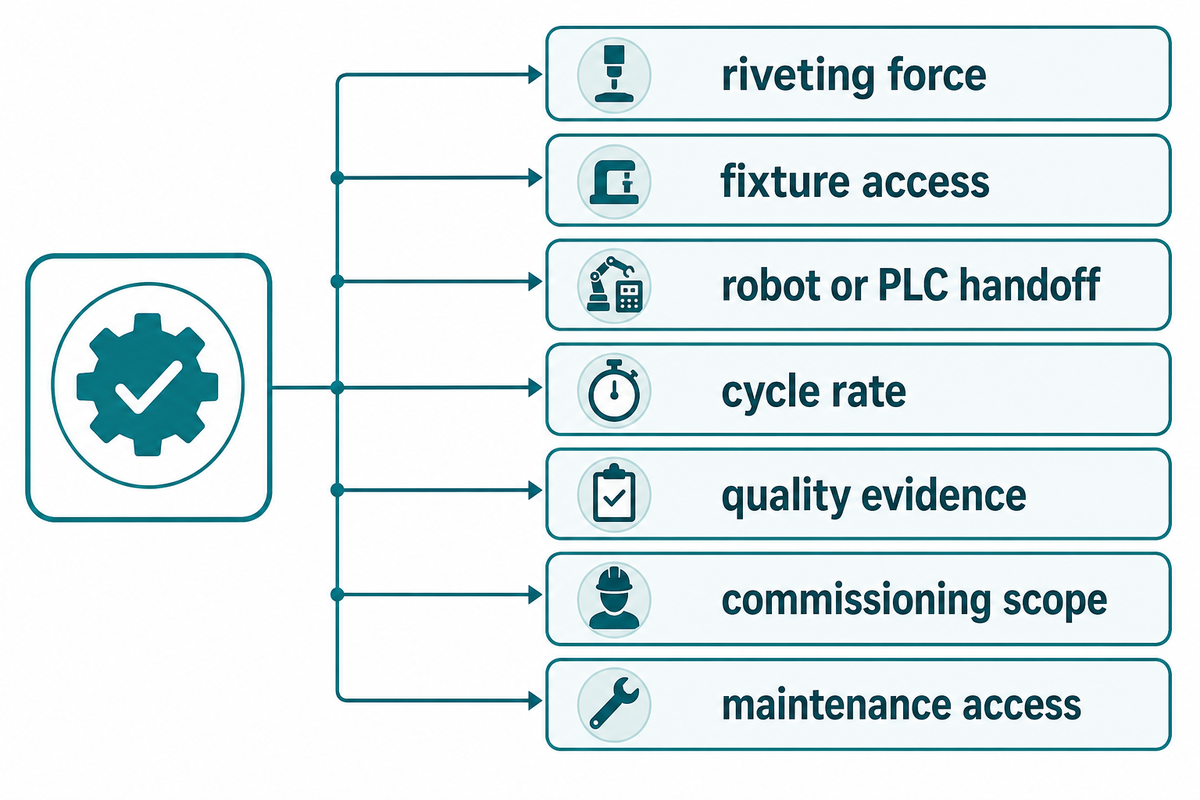
Ask Simitch for an engineering review when guarding depends on riveting force, fixture access, robot or PLC handoff, cycle rate, quality evidence, commissioning scope, or maintenance access. The Simitch company profile describes intelligent sheet metal joining, riveting, servo press, and pneumohydraulic systems for automotive components, energy storage, photovoltaic, appliance, and HVAC production.
A useful inquiry shouldn’t ask for “a safe guard” in isolation. Send the material stack, drawing, joint map, target takt, loading method, fixture envelope, inspection plan, interface list, floor plan, site safety boundary, and training/commissioning needs. The RFQ readiness calculator and architecture selector help organize those inputs before a quote request.
Simitch can review equipment scope, drawings, samples, interface needs, and engineering boundaries. Your plant remains responsible for its site-specific risk assessment, legal compliance, training program, lockout/tagout program, and final acceptance records.
Send Simitch a Guarded Riveting Cell RFQ
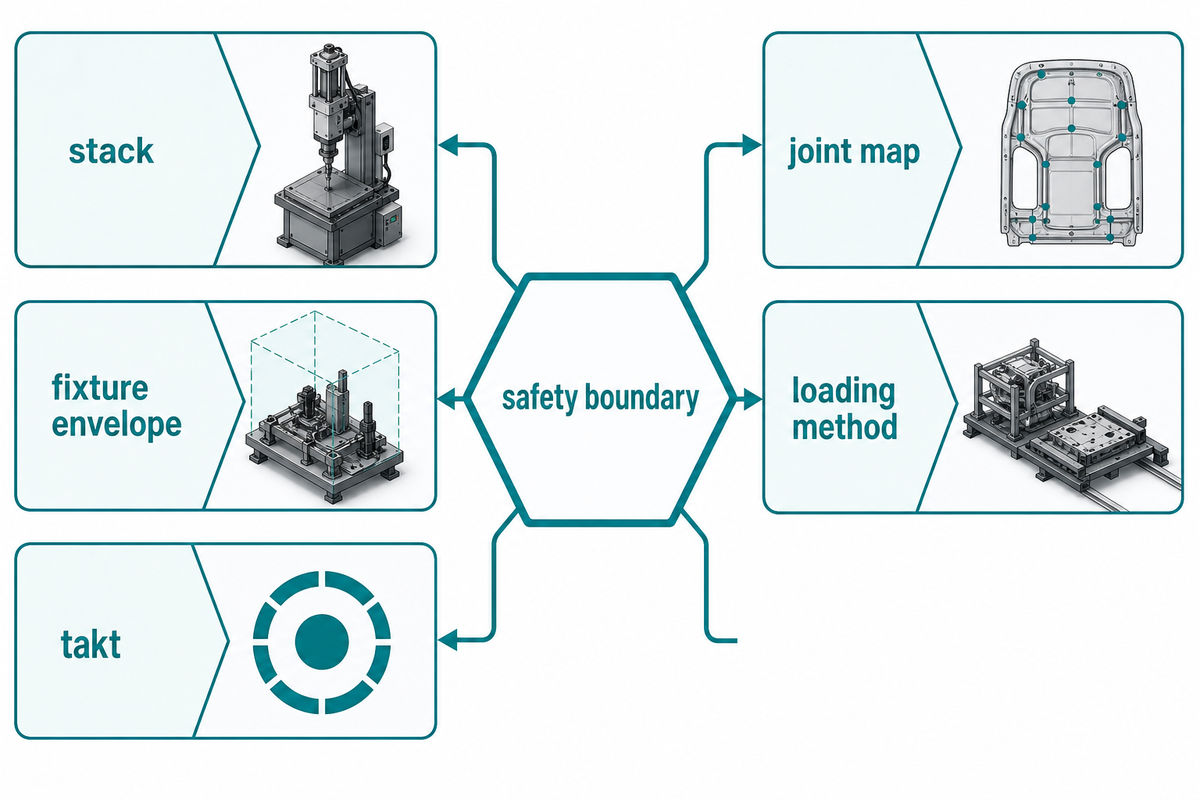
Share your stack, joint map, fixture envelope, loading method, takt, and safety boundary. Simitch can review the riveting-cell concept and define the next engineering questions.
FAQ
What are the four types of machine guarding?
Many programs group machine guards as fixed, interlocked, adjustable, and self-adjusting guards, but automated cells also need devices, procedures, and task exposure checks before selection.
Broader machine safeguards can also include presence-sensing devices, two-hand controls, awareness barriers, safe work practices, inspection rules, and lockout/tagout procedures. For an automated riveting cell, the more important question is whether the chosen family prevents contact during loading, setup, fault recovery, inspection, and maintenance without creating a bypass incentive. A fixed guard might be right for a closed drive train, while an interlocked and locked access door may be needed where a person can reach a hazard before run-down is complete. Guard selection belongs after the task and exposure map for daily work.
What is the 7 foot rule for machine guarding?
The 7 foot rule should never replace task, reach, motion, stored energy, ejected material, operator behavior, maintenance work, and applicable standards in a live cell.
The phrase is often used when discussing hazards located above a working surface, but a single height rule is a poor shortcut for modern machinery. In a riveting or robot cell, a lower fixture opening, rear-sweep crush zone, or reset point can matter more than overhead height during fault recovery or after reset attempts.
What are OSHA requirements for machine guarding?
OSHA 1910.212 requires guarding methods for listed machine-area hazards, but State Plans, machine-specific sections, consensus standards, and site facts can change the final compliance position.
The general rule requires protection for operators and other employees in the machine area from hazards such as point of operation, ingoing nip points, rotating parts, flying chips, and sparks. It also addresses point-of-operation guarding and fixed machine anchoring. That is the federal baseline for general industry, not the whole legal answer before acceptance.
Can machine guards be removed for maintenance tasks?
Guard removal for maintenance needs a controlled task method: classify the task, isolate hazardous energy when required, and document who may restart the equipment safely.
Yes, but only under that controlled method.
About This Analysis
This article connects public regulatory and standards evidence with Simitch’s public riveting-equipment and RFQ tools. It’s written for plant managers, safety teams, maintenance leads, QA teams, and procurement buyers who need a better first conversation before a guarded riveting cell is quoted. It isn’t legal advice or a replacement for a site-specific risk assessment.
References & Sources
- 29 CFR 1910.212, General requirements for all machines – Occupational Safety and Health Administration.
- Machine Guarding eTool, Introduction to Guards – Occupational Safety and Health Administration.
- OSHA standard interpretation on riveting machines – Occupational Safety and Health Administration.
- OSHA Letters of Interpretation statement – Occupational Safety and Health Administration.
- Machine Guarding Standards – Occupational Safety and Health Administration.
- 29 CFR 1910.217, Mechanical power presses – Occupational Safety and Health Administration.
- ANSI B11 Machine Guarding Standards overview – American Society of Safety Professionals.
- ANSI B11.0-2023 safety of machinery explainer – American National Standards Institute.
- ISO 12100:2010 public standard page – International Organization for Standardization.
- OSHA interpretation on industry consensus standards and the General Duty Clause – Occupational Safety and Health Administration.
- Minor Servicing Exception – Occupational Safety and Health Administration.
- OSHA standard interpretation on interlocked gate stopping time – Occupational Safety and Health Administration.
- 29 CFR 1910.147, The control of hazardous energy – Occupational Safety and Health Administration.
- Lockout/Tagout robotics case study – Occupational Safety and Health Administration.
- Industrial Robot Systems and Industrial Robot System Safety – Occupational Safety and Health Administration.
- ANSI B11.26-2024 public scope page – American National Standards Institute.
- ANSI/A3 R15.06-2025 parts public scope page – American National Standards Institute.
- ISO 10218-2:2025 public standard page – International Organization for Standardization.
- NIOSH 85-103 robot injury prevention alert – GovInfo and National Institute for Occupational Safety and Health.
![Hot-Melt Connection Molds & Equipment Guide [2026]](https://simitch.com/wp-content/uploads/2026/09/hot-melt-connection-molds-equipment-guide-featured-768x512.png)