Get in touch with Suzhou Simitch Machinery Co., Ltd Company

Battery and electronics assembly solution
Servo Press for Battery Pack & Electronics Assembly
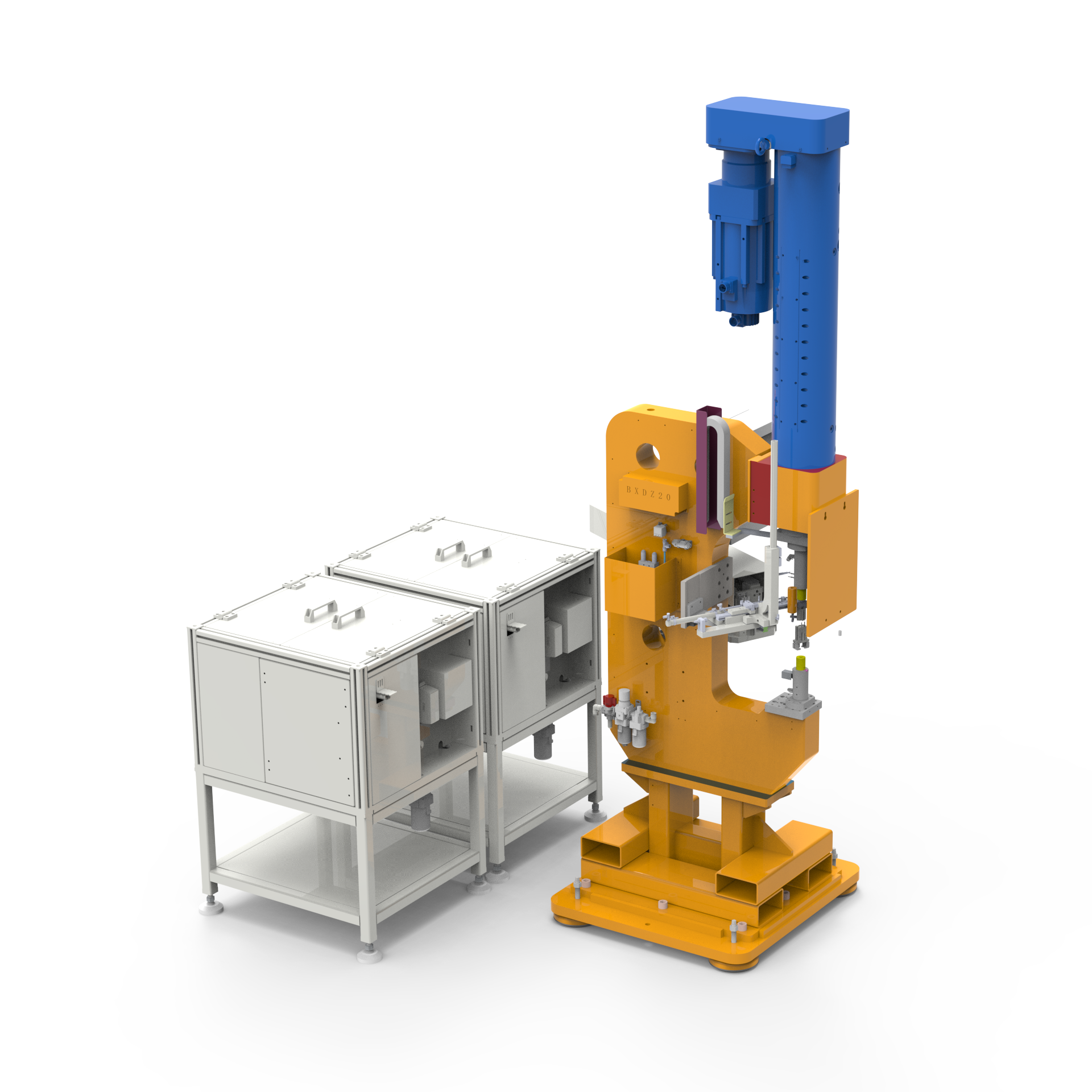
A servo press should be selected around the part, joint and acceptance window—not around a force number alone. SIMITCH reviews battery enclosure, structural fastening and precision electronics requirements before proposing the pressing architecture.
- Part and stack-up variation
- Tooling and fixture access
- Force-position acceptance
- Feeding and line interfaces
The real selection problem
When Assembly Variation Becomes a Quality Risk
Max press force alone doesn’t indicate a stable process. A more relevant question: can the machine, tool, sensing and fixture maintain the joint within a specified window as the parts and working conditions drift?
01
Part variation
Material, finish, lubrication, geometry and interference can change the real joining load. Sample parts reveal behavior that a drawing or formula may miss.
02
Tool alignment
Misaligned parts convert force to sideload. Ram position, fixture rigidity and peak load region should be examined together.
03
Signal quality
A force signal without displacement context can hide process drift. Honest evaluation gives the sensing method and useful range as much attention as the dashboard.
04
Acceptance logic
A clean press curve needs a defined acceptance window. Quality teams need to agree on what is measured, what causes a reject and what record must be retained.
Safety boundary
Battery-product projects add electrical, fire and handling requirements outside of the press itself. Local hazard assessment, machine access, guarding, interlocks and battery readiness specifications belong in the project plan; see NHTSA battery safety information and OSHA 1910.212.
System logic
A Servo Press System Built Around the Joint
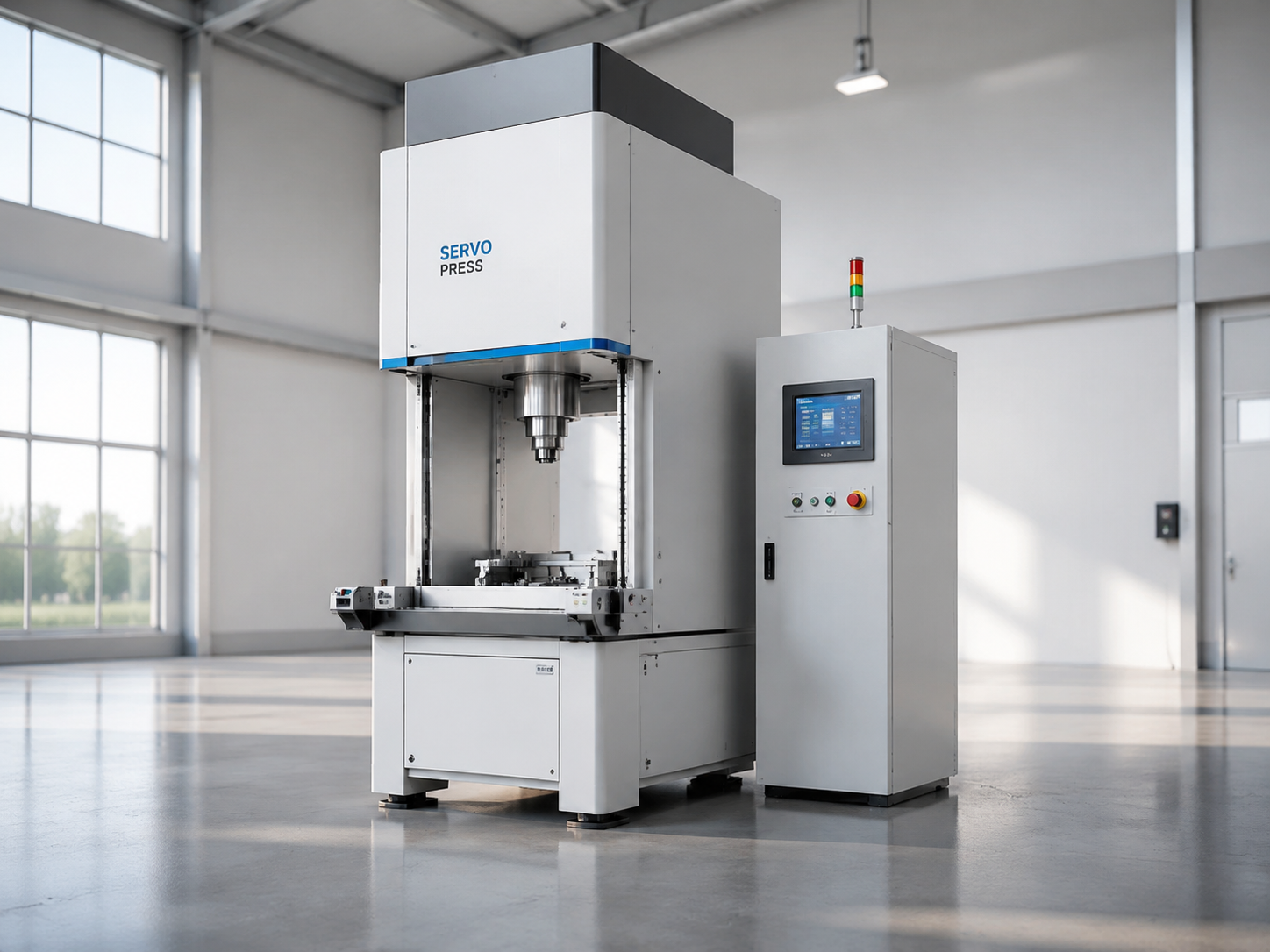
An electric servo press converts a programmable motion profile into a controlled joining sequence. For a production project, the machine only becomes useful when the part, tooling, cycle, measurement and acceptance decision work as one system.
Decision rule: A control gap appears because motion, measurement and acceptance are often specified separately. Project engineers connect the assembly sequence to evidence such as IEC 60352-5:2020; the counter-intuitive point is that a richer screen does not automatically mean a better process.
Request a detailed process review.
Part & Joint
Tooling & Fixture
Press Cycle
Measurement
Accepted Result
“Hand us the part, joint assembly and quality requirements. We will then engineer a press that matches the process findings.”
— SIMITCH Engineering Team

Why not select by capacity alone?
A press may be “too much machine” and still be inappropriate for the task. Excess capacity or overly wide sensors may limit process resolution and compromise tooling life.

What should be programmable?
Approach, contact, pressing, holding and return behavior may need separate settings. The required stages depend on how the part reacts during joining.
What should be recorded?
Define the signal source, result fields, recipe identity and retention needs before the controls are finalized. Traceability is a project requirement, not an automatic consequence of the word “servo.”
Pressing sequence questions that change the result
01
Approach
How quickly can the tool move before contact, and what clearance remains around the part? A fast approach can shorten cycle time, but the transition point needs a repeatable reference.
02
Contact search
Does the process need to find the actual part surface before pressing? Contact variation may reveal stack-up changes, missing components or a locating problem.
03
Working stroke
Which speed, force or position behavior matters after contact? The answer depends on the joint and on whether the part can tolerate impact or rapid deformation.
04
Hold and release
Does the material relax, spring back or need a dwell before the tool returns? Release behavior can affect both the finished joint and the takt calculation.
Keep the press architectures distinct
Electric servo architecture
A servo motor and drive move the ram through the programmed profile. Motor torque may be used in the control system, but the method used to measure working force must be confirmed separately.
Mechanical architecture
A traditional mechanical press can use a flywheel and crank mechanism to stamp or form material. Rated tonnage and strokes per minute describe a different operating model from a joining-focused electric press.
Fluid-power architecture
A traditional hydraulic press develops force through a pump, hydraulic fluid and cylinder, while a pneumatic press uses compressed air. Each architecture has its own motion, maintenance and operating profile.
Control language needs a measurable definition
“Precise control,” “real-time” evaluation, and “accuracy and repeatability” are not complete specifications. State the reference, working range, conditions and acceptance method; the recipe may also be called a program or programme in different plant documentation.
- Do not transfer requirements from a stamping line to a press-fit workstation without reviewing the joint physics.
- Do not assume a medical device assembly rule applies to a battery enclosure or electronics connector.
- Do not treat a motor value, screen label or controller option as proof of finished-joint quality.
Battery Pack, Enclosure and Structural Assembly Applications
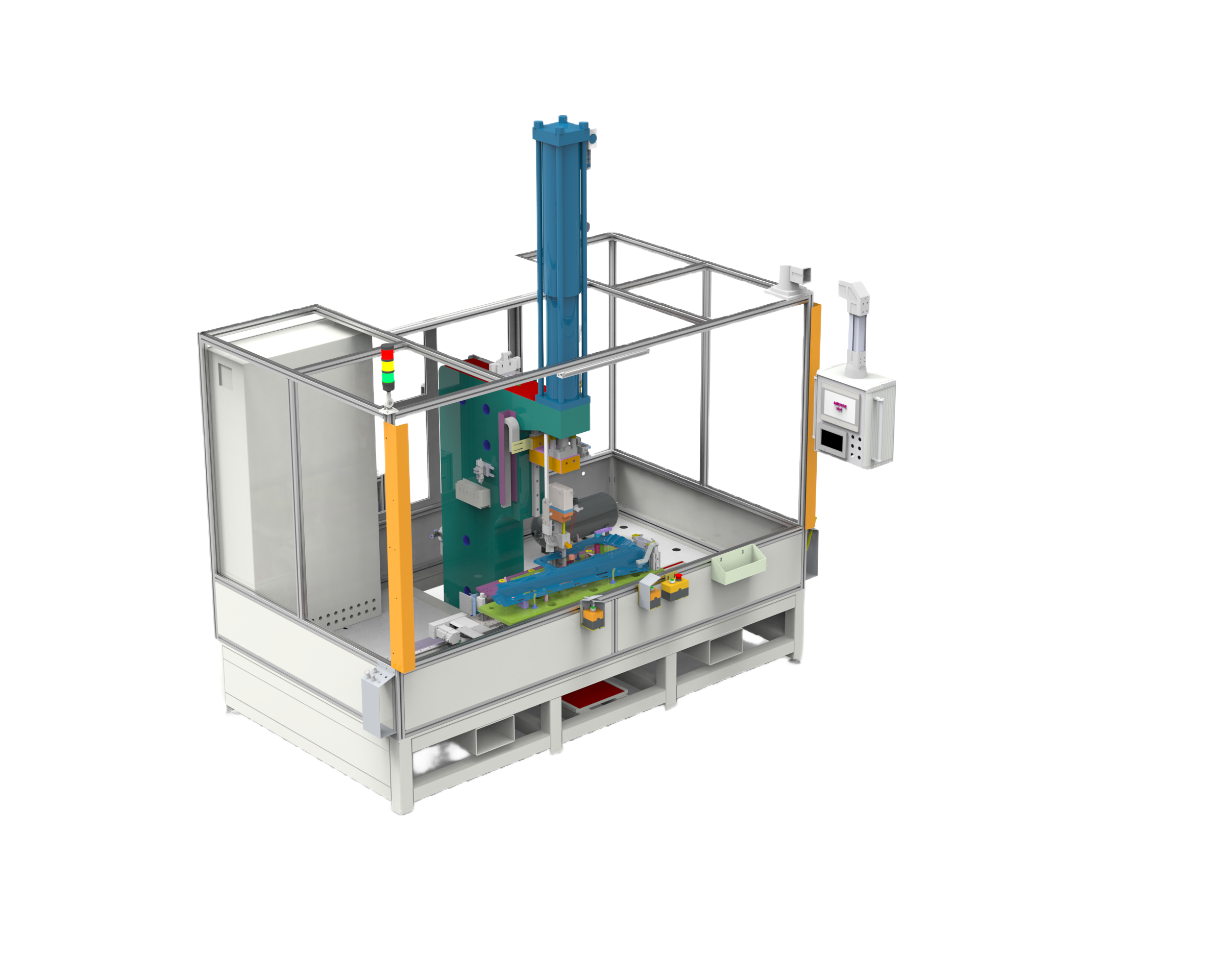
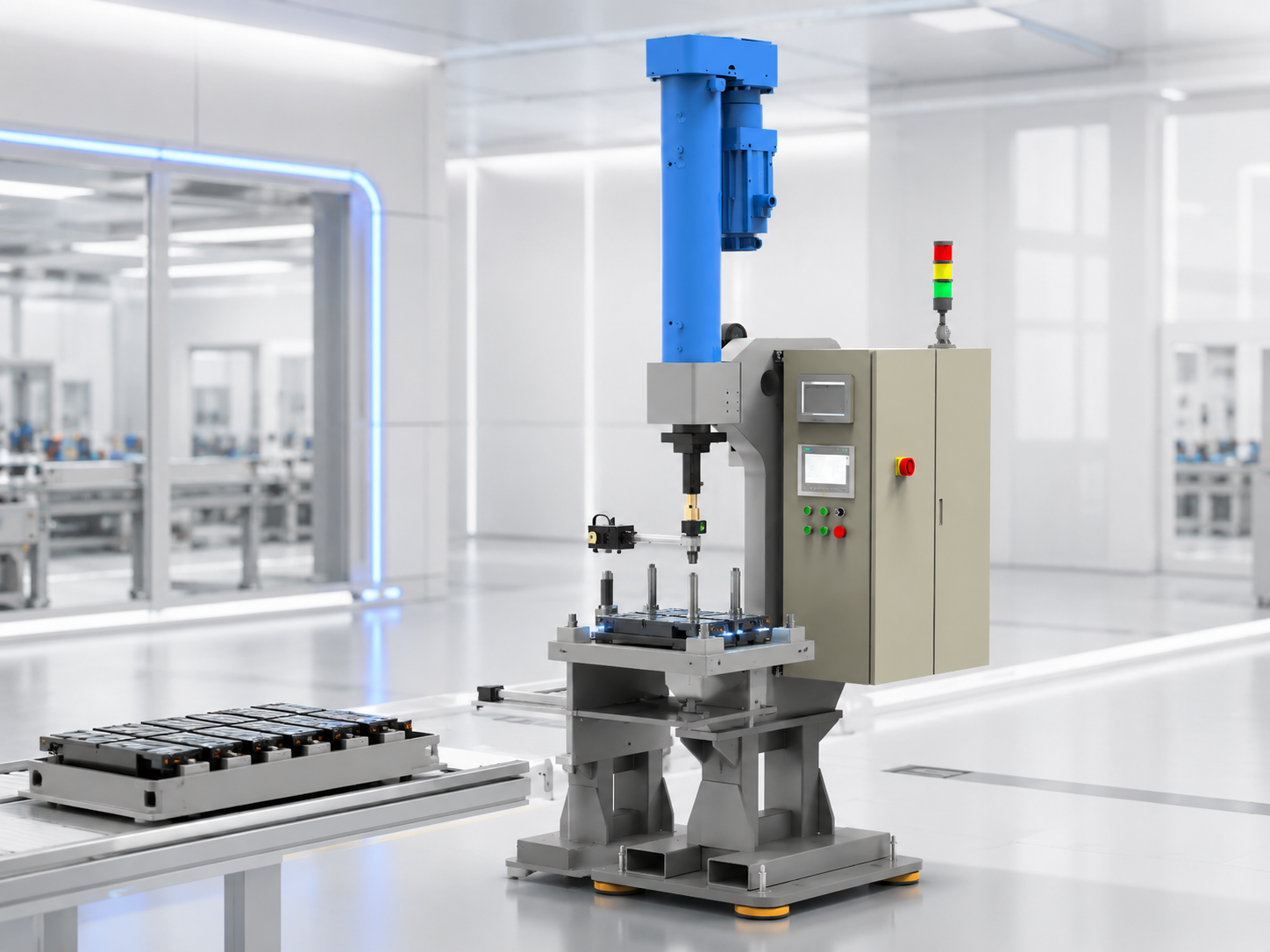
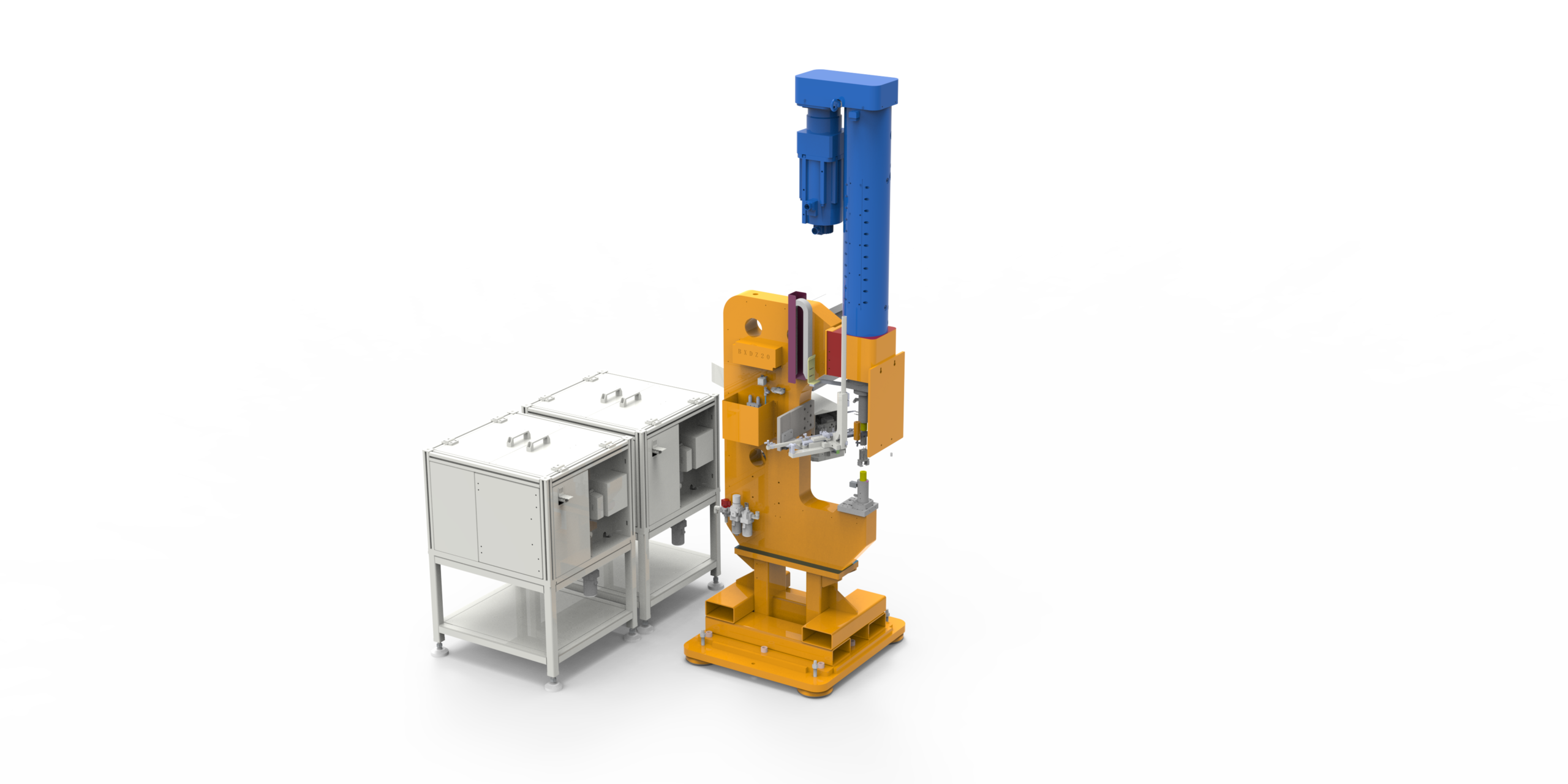
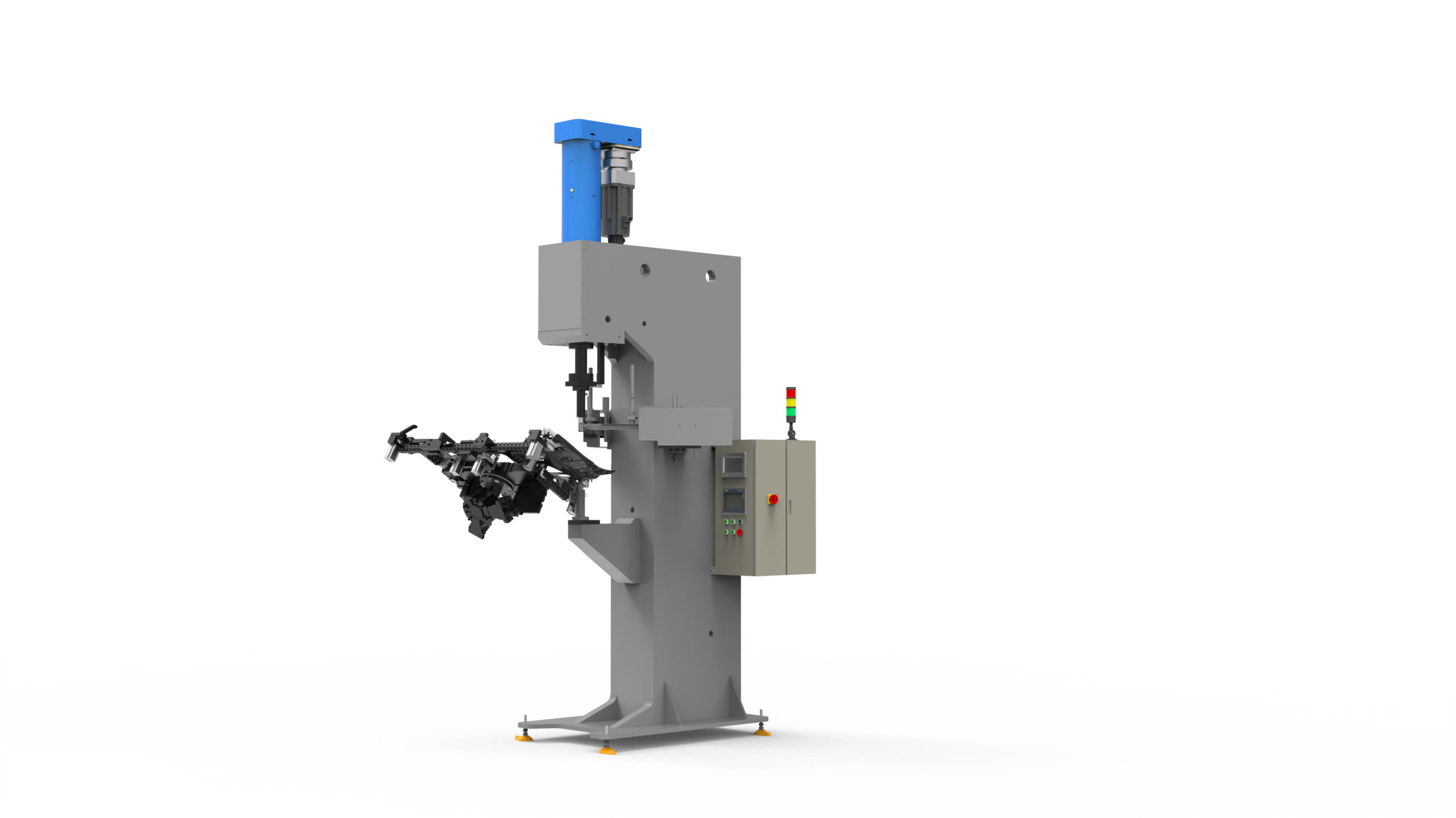
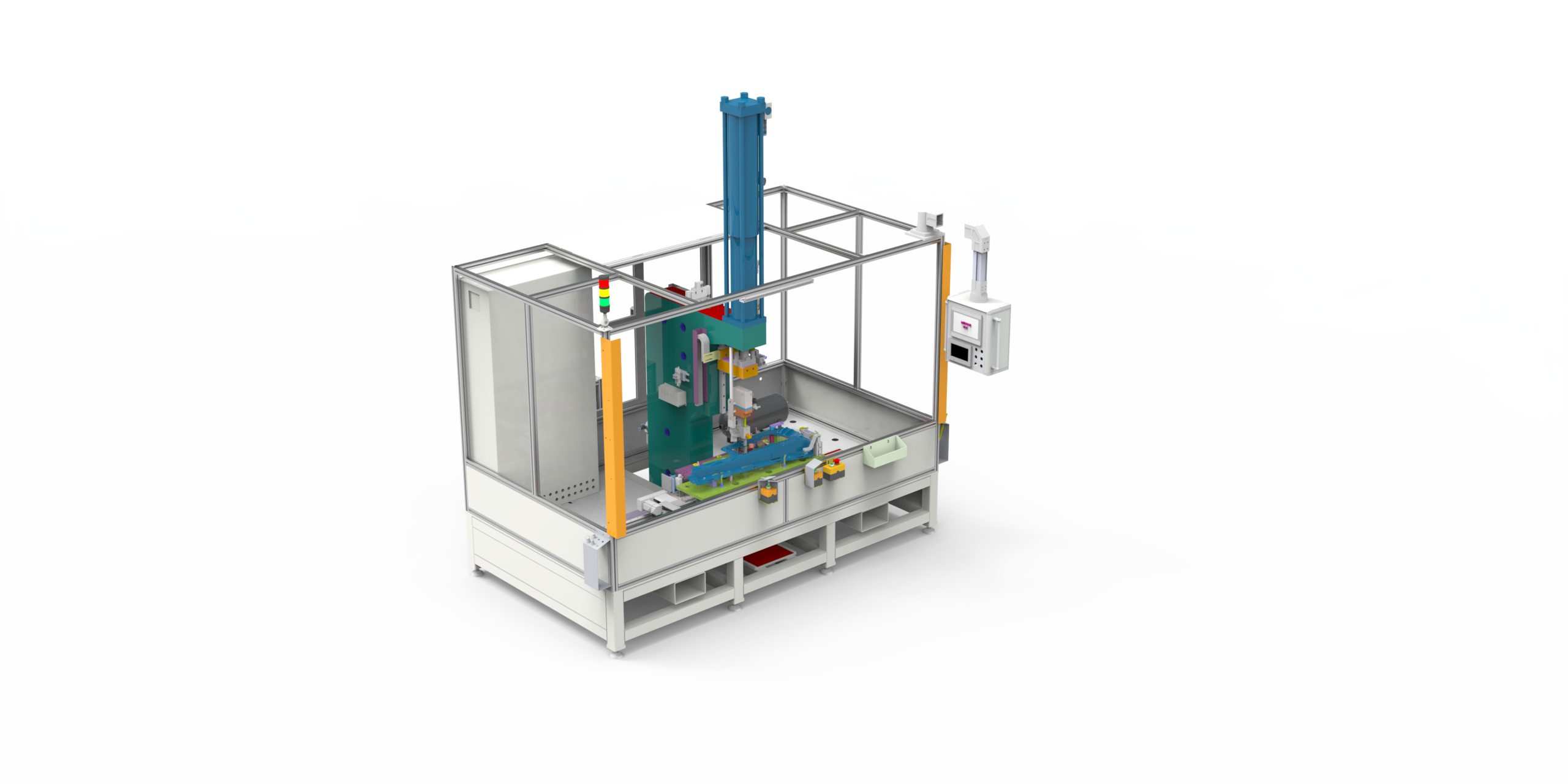
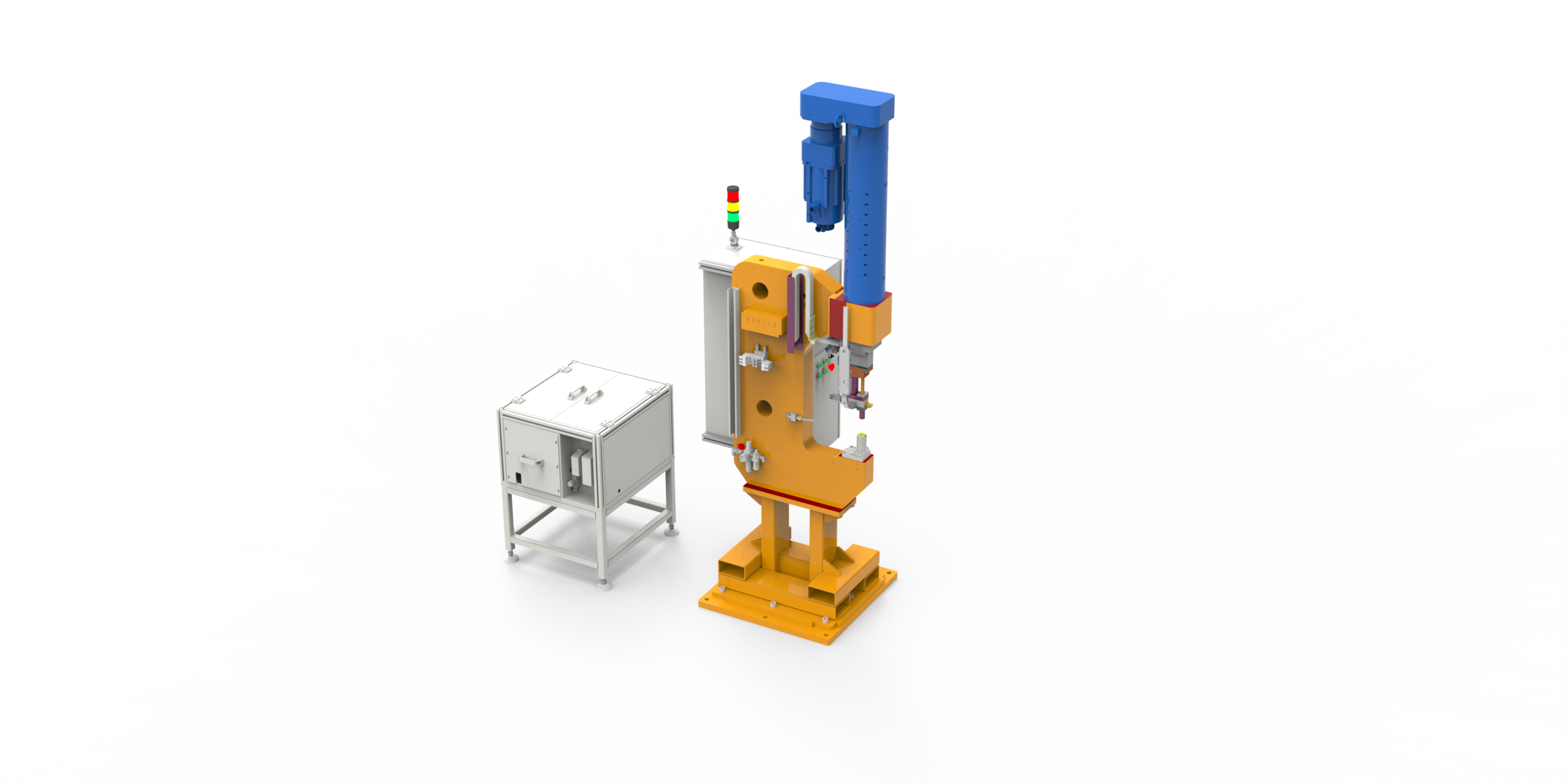
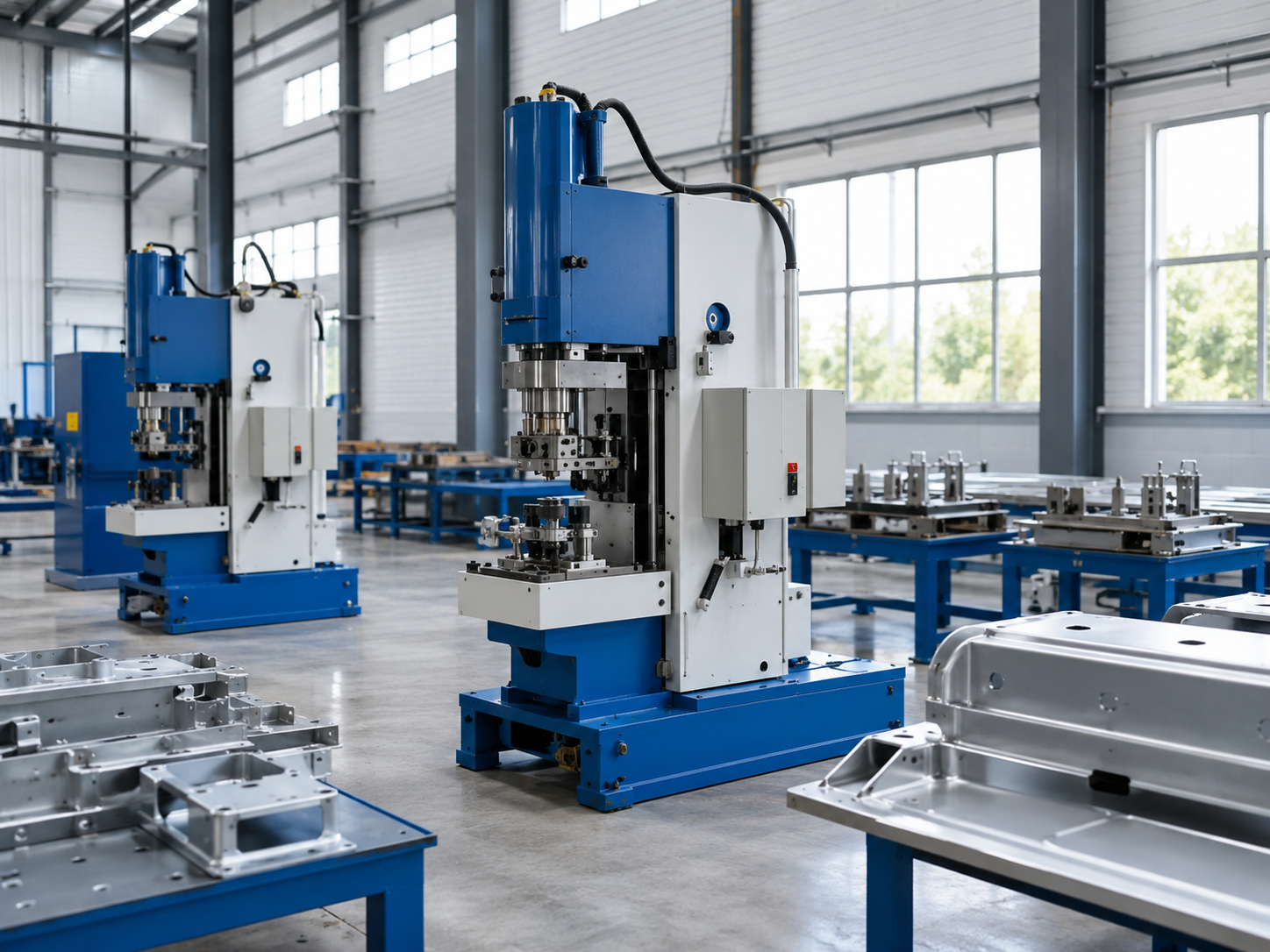
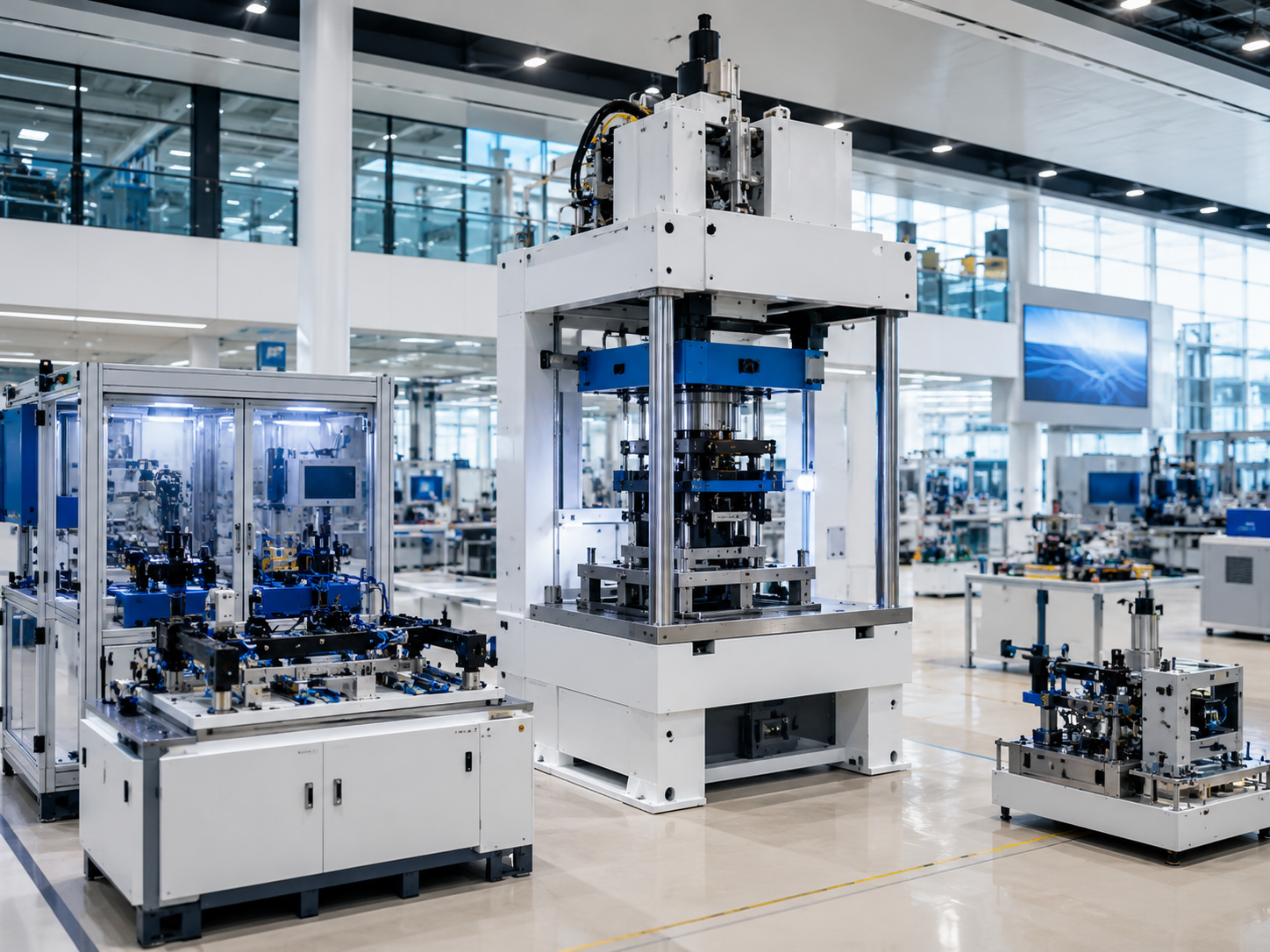
SIMITCH equipment images show several possible pressing layouts, from stand-alone machines to automated cells. They demonstrate configuration breadth only; final process capability must be confirmed with the buyer’s parts, joints and acceptance criteria.
Decision rule: Battery-assembly risk changes because enclosure geometry, handling and safety duties differ by product. SIMITCH engineers use the buyer’s production scenario and safety inputs, including the boundary described by UL 2580; unlike a generic cell image, a sample plan can expose the actual tooling problem.
Request an enclosure review.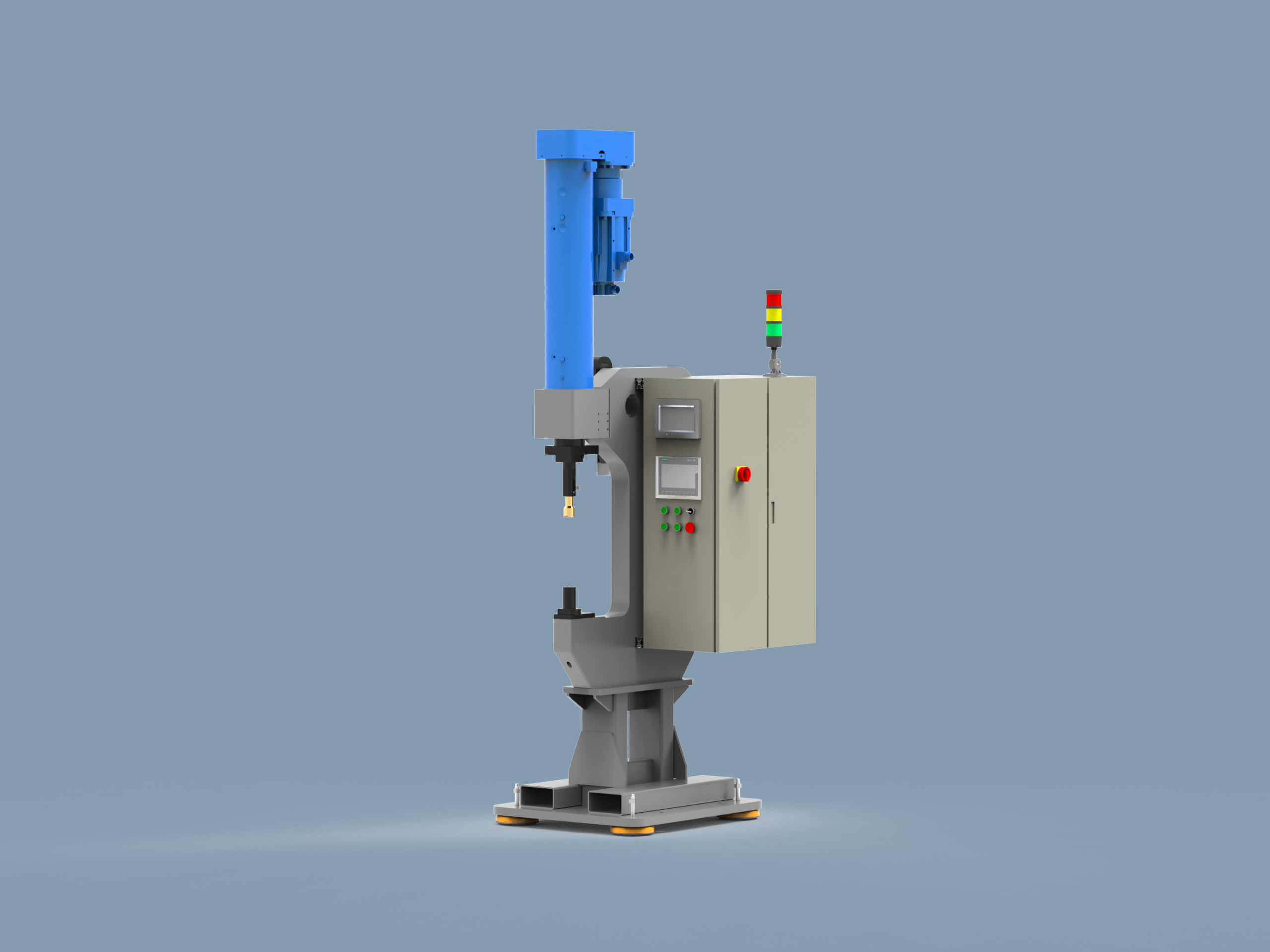
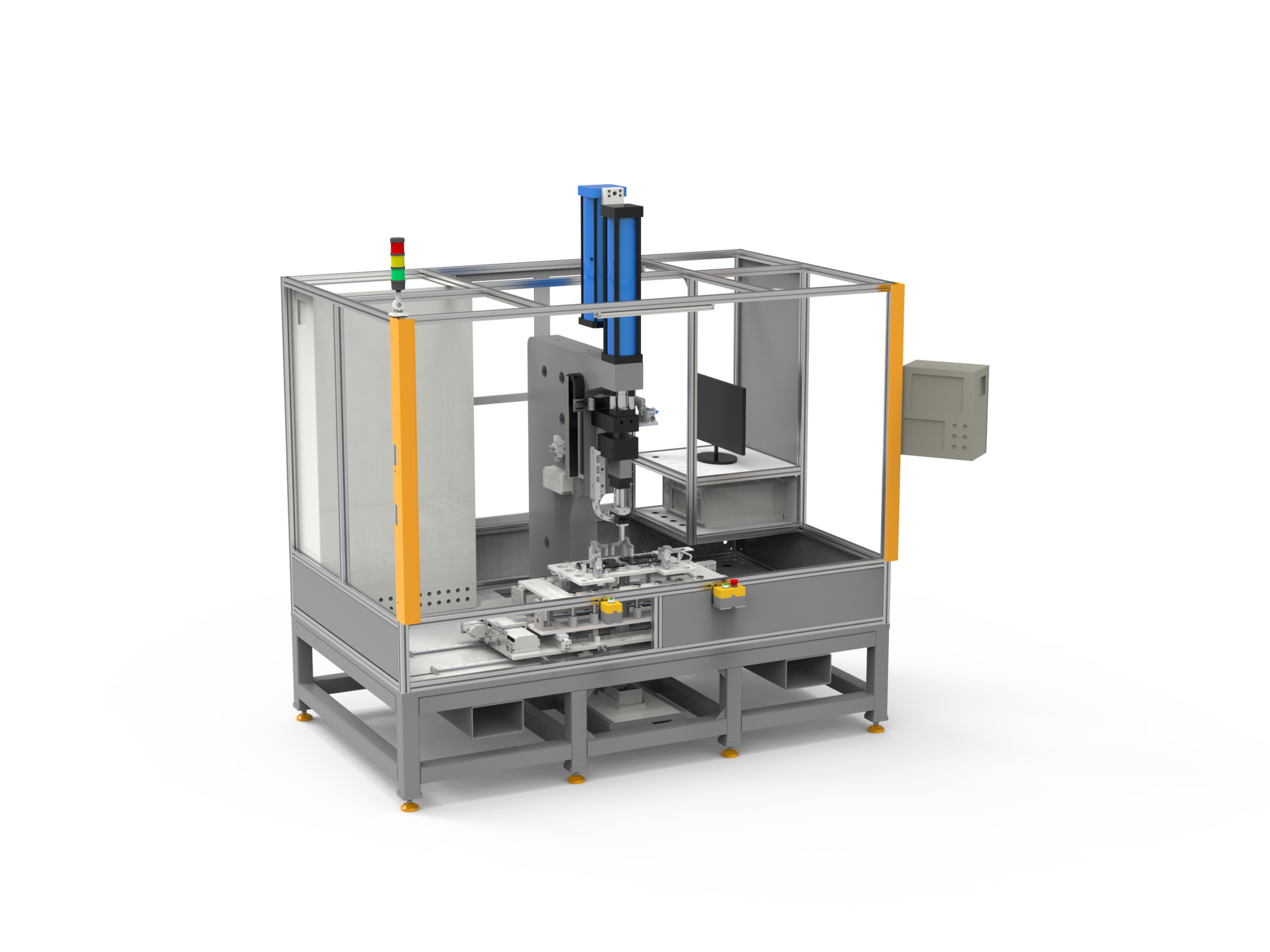
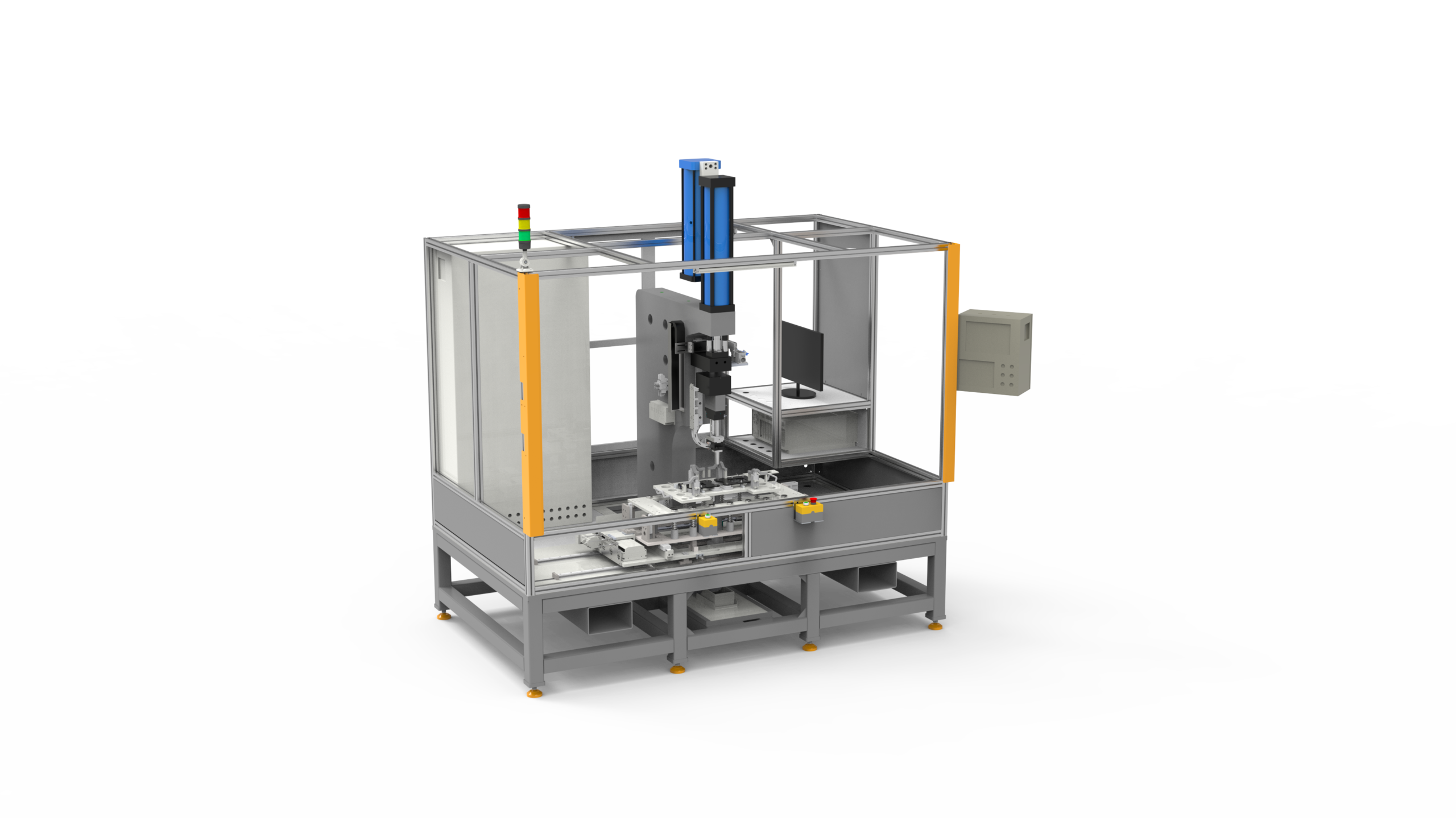
Stand-alone servo press layout for battery enclosure joint work
Review panel access, flange geometry, local stiffness and the risk of distortion. The tool approach and support strategy may determine whether the joint is practical.
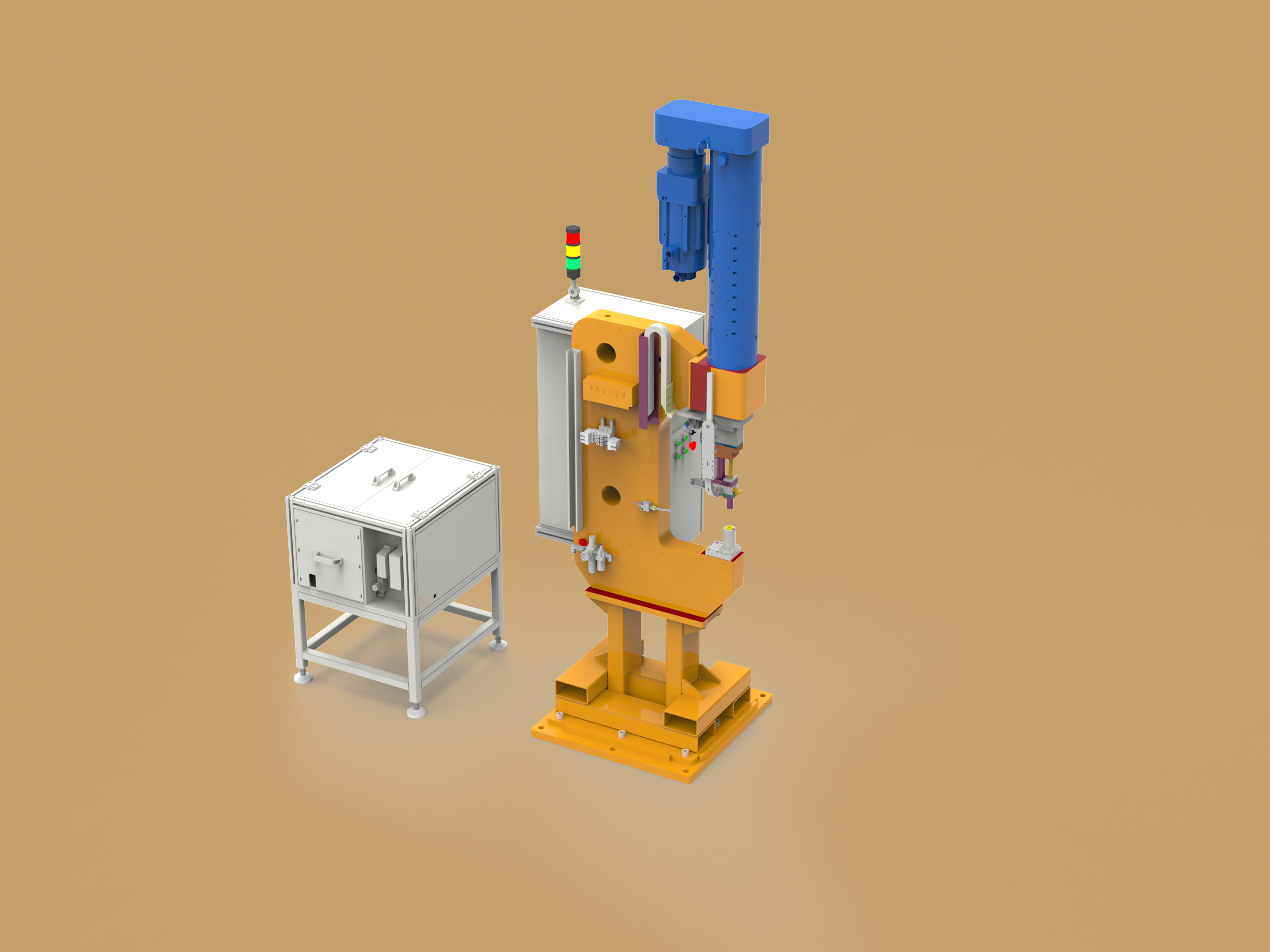
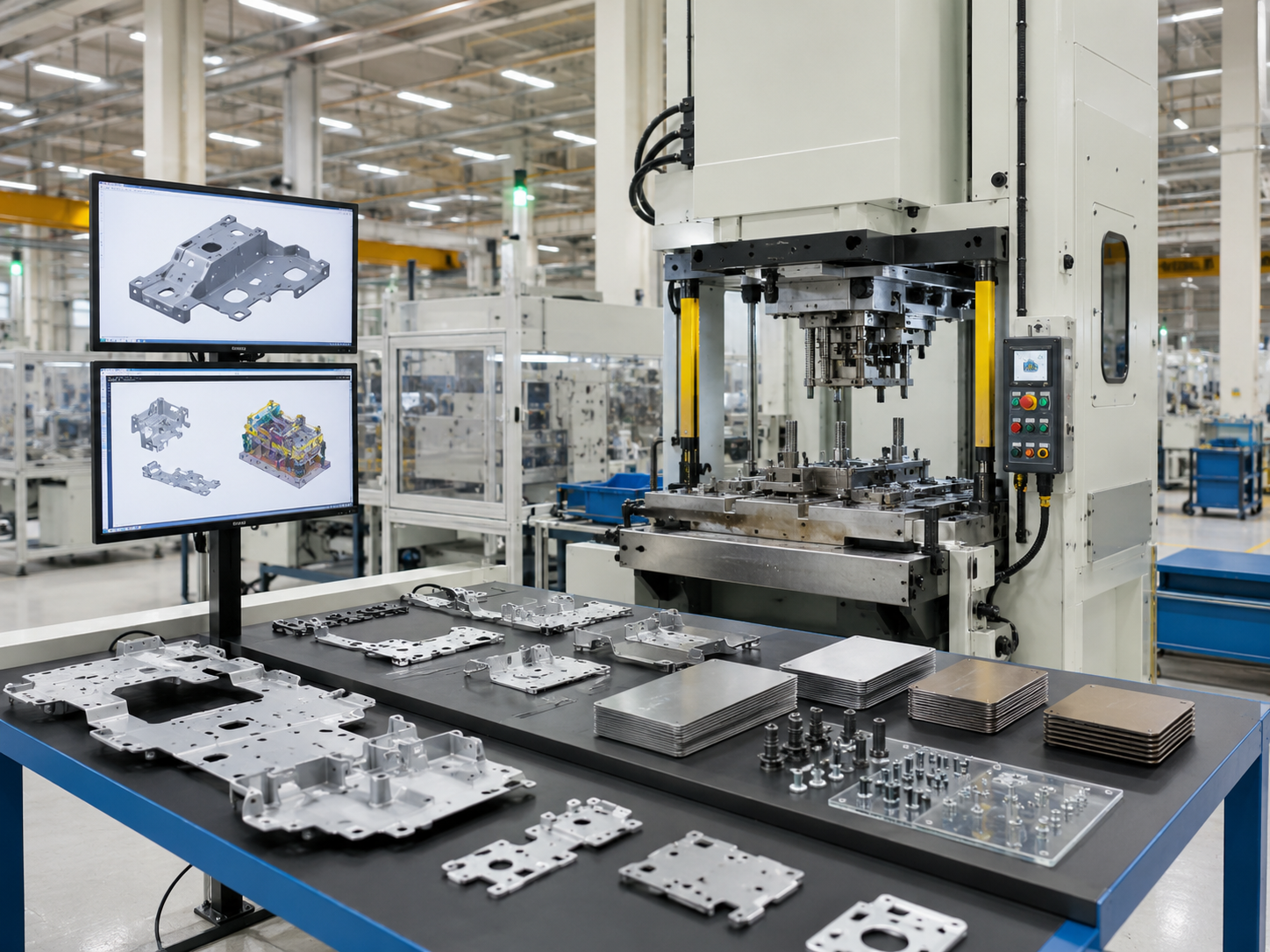
Automatic pressing equipment layout for left and right structural connecting plates
Mirrored parts can require changeover logic, poka-yoke and fixture access. Confirm orientation and joint sequence before designing automation.
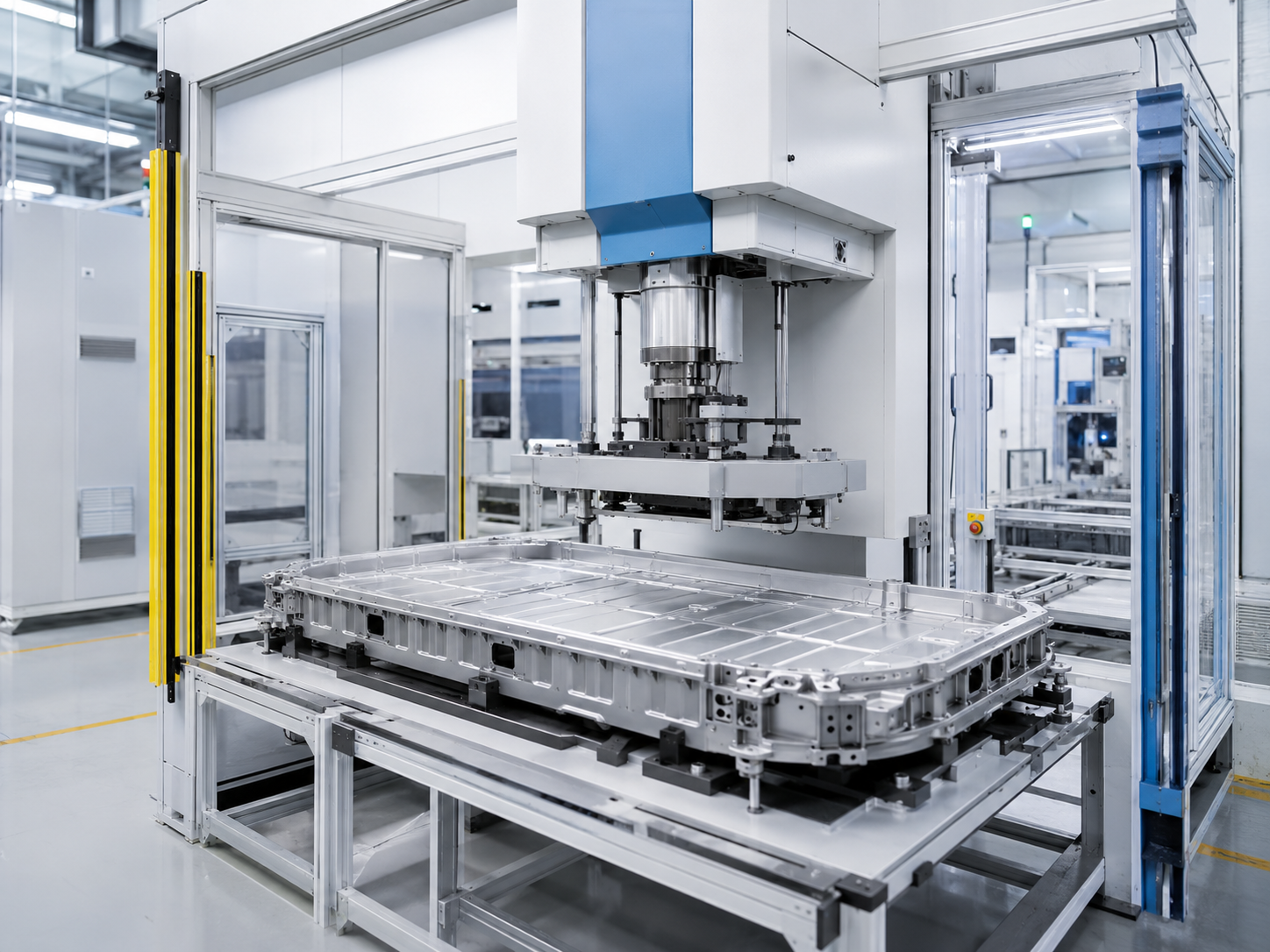
Integrated automated press-riveting equipment layout for a large structural panel
Large panels add access, transfer and deflection questions. Robot reach, locating strategy, safe access and line recovery need to be defined with the cell concept.
Application boundary
This page covers assembly of enclosures, trays, structural parts, fasteners and related electronics components. It does not represent cell manufacturing, battery formation or electrochemical processing equipment.
Sensitive components
Precision Electronics and Press-Fit Applications
Electronics assemblies can be damaged by over-travel, side load or a poorly defined support condition. A small servo press or benchtop servo press may suit some workstations, but machine format should follow the part envelope, force window and integration need.
Decision rule: Connector damage can occur because the fixture, pin field and housing do not share one tolerance. Project engineers use samples and the qualification-versus-application distinction in IEC 60352-5:2020; the honest plan is not always the smallest workstation. Request a press-fit test discussion.
Application
Connector press-fit
Quality variable to define
Insertion load and final position
Engineering question
How much variation is allowed across pins, housing and board support?
Possible validation signal
Force-position window, subject to confirmed sensing
Application
Small fastener insertion
Quality variable to define
Head position, seating and substrate damage
Engineering question
Does the joint need feeding, presence detection or orientation control?
Possible validation signal
Position, load and feeder-state checks
Application
Housing assembly
Quality variable to define
Parallelism, contact point and over-travel
Engineering question
How will the fixture support thin or delicate surfaces?
Possible validation signal
Contact detection and final-position limits
Application
Precision staking or clinching
Quality variable to define
Joint geometry and retained function
Engineering question
What physical feature proves the joint is acceptable?
Possible validation signal
Press signature plus downstream inspection
Match Project Inputs to the Pressing Architecture
Force capacity alone cannot predict the real joining load. SIMITCH uses the following inputs to frame a feasibility review, identify test needs and avoid treating the largest machine as the safest answer.
Decision rule: A sizing mistake happens because drawings, part condition and takt can point to different constraints. SIMITCH engineers combine nearly 20 years of machinery context with the sample variables described in published press-fit engineering guidance; unlike a tonnage-only quote, the detailed review makes missing evidence visible.
Request an engineering input review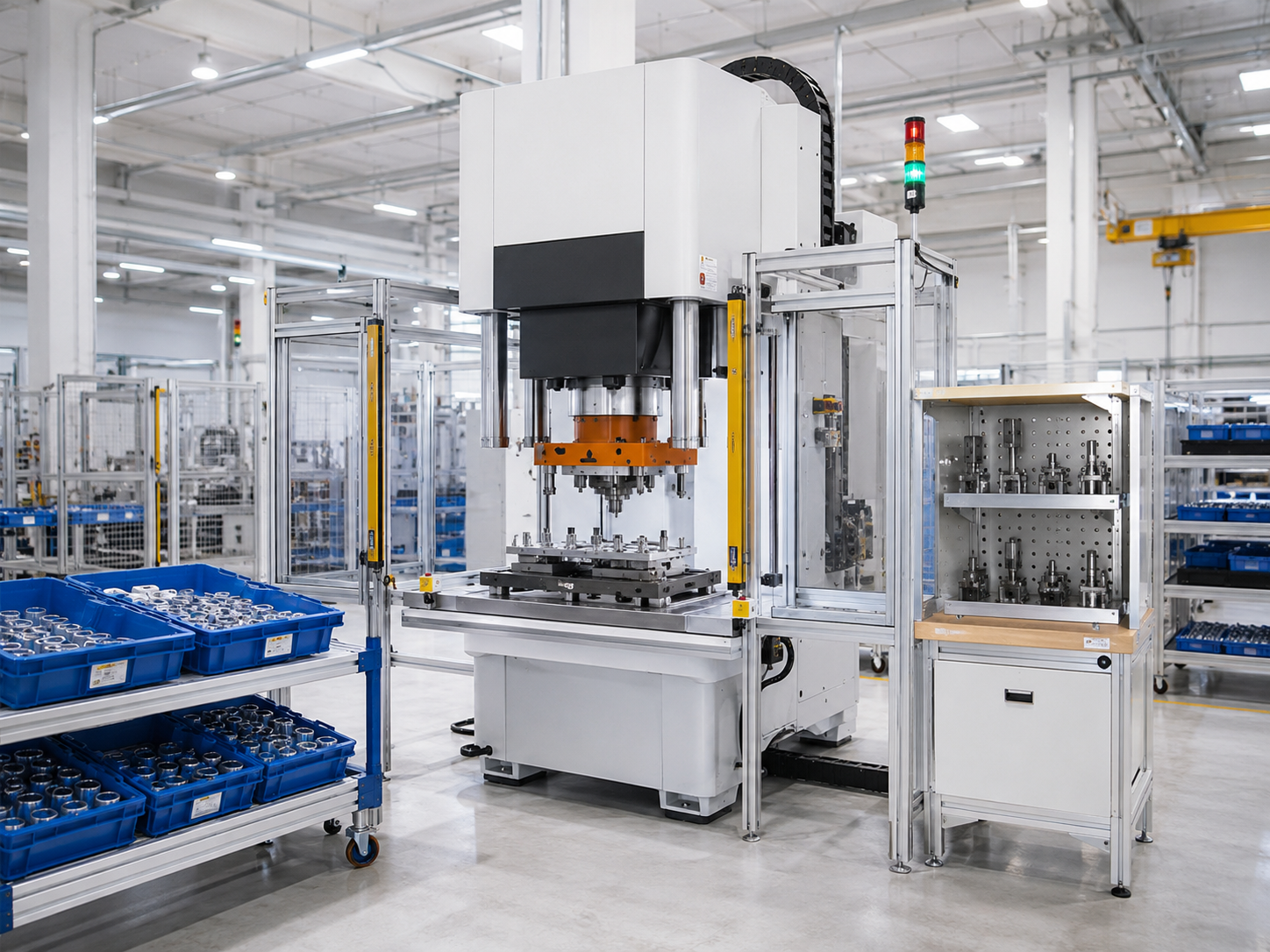
| Input from your team | Why it changes the design | Decision it supports |
|---|---|---|
| Part drawings, samples and material stack | Geometry, finish and interference influence real load and support needs. | Tool approach, fixture concept and sample plan |
| Joint type and acceptable result | A press-fit, clinched joint and inserted fastener fail in different ways. | Process stages and acceptance method |
| Expected force range and travel | The working window matters for both actuator selection and measurement resolution. | Press architecture and sensing range |
| Takt time and loading method | Manual loading, indexed transfer and robot handling create different cycle constraints. | Stand-alone station or integrated cell |
| Product mix and changeover | Variants can affect recipes, fixtures, feeder parts and mistake-proofing. | Changeover concept and recipe control |
| Plant controls and data requirements | PLC, robot and manufacturing-system expectations shape interfaces and record fields. | Control architecture and handshakes |
| Safety standard and operator access | Guarding and recovery paths depend on the operation and local assessment. | Cell layout and protective measures |
Total-cost check: use your operating conditions
A 2023 Assembly Magazine article summarized a University of Kassel comparison that reported lower energy use for a servo press in a defined 100-kilogram, 6,000-hour test. Treat this as a secondary-source example—not independent primary evidence or an industry-wide savings promise—and compare your own duty cycle, idle time, tariff, maintenance pattern, reject handling and data needs.
Operating energy
Compare energy usage between active pressing and auxiliary functions for the same cycle time, noting differences in idle behavior under identical conditions and with the same duty cycle.
Process loss
Include costs for scrap, rework, and investigations, as well as any advantages to be realized from earlier defect identification.
Ownership work
Define the ease of access for maintenance, the time and labor required for changeover operations, the typical lifespan of tooling components, relevant training requirements, and the time investment needed for data management.

How to compare a quotation without hiding scope gaps
Normalize the included equipment
- Press, frame, base, guarding and operator interface
- Tooling, fixture, change parts and sample quantity
- Feeding, presence checks and reject handling
- Sensors, result evaluation and data storage
Normalize the delivery work
- Design review, trials and acceptance criteria
- Installation, commissioning and training boundaries
- Buyer-supplied utilities, interfaces and samples
- Documentation, spare parts and support terms
Don’t base your comparison on headline price; use a formal scope comparison instead. Two offers may specify equivalent press capabilities but vary significantly in the included tooling, measurement, feeding, and acceptance systems.
Do not force every project into one format
A small servo press can be right for a controlled workstation, while a larger automated cell can be justified by handling, access or takt. Neither is automatically the better engineering answer until the part and workflow are known.
Scope, Components & Utilities
Determine whether sample parts, plant utilities, interface simulators, and production tooling are included in the price.
Specify all consumables and identify which partner is providing samples.
Keep optional modules visible so procurement can compare the same operating requirement across suppliers.
Specify all consumables and identify which partner is providing samples.
Keep optional modules visible so procurement can compare the same operating requirement across suppliers.
Testing, Acceptance & Calibration
Describe the factory and site acceptance tests, including the part conditions for each test.
Ask how measurement devices will be checked and which party owns any reference parts or calibration records.
Ask how measurement devices will be checked and which party owns any reference parts or calibration records.
Post-Installation Support & Changes
Record training, documentation, spare-part and remote-support boundaries in the commercial scope.
State how production changes will be reviewed after acceptance, especially when a new part, material or fastener enters the process.
State how production changes will be reviewed after acceptance, especially when a new part, material or fastener enters the process.
Configurable project scope
Process Control, Monitoring and Traceability Options
Servo press manufacturers use different sensing, control and data architectures. Ask how the signal is produced and used rather than assuming every servo press machine includes the same monitoring package.
Decision rule: A traceability gap persists because a stored number may lack recipe, part and decision context. SIMITCH engineers define the production interface against NIST SP 800-82 Rev. 3 boundaries; the common assumption that every servo controller supplies complete evidence is wrong. Request a detailed interface review.
01
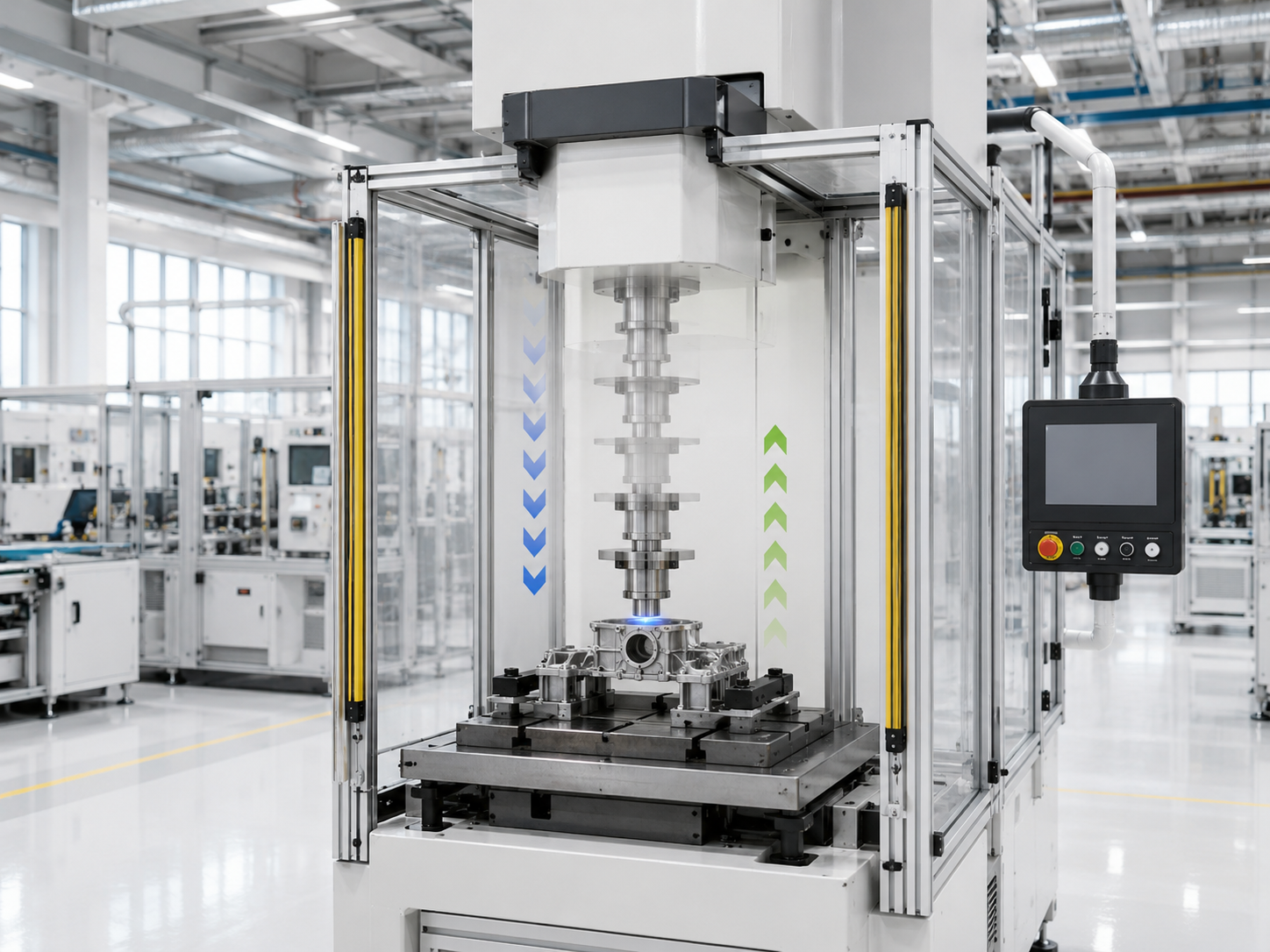
Motion profile
Define approach, search, pressing, hold and return behavior around the part. Required control stages are confirmed during process review.
02
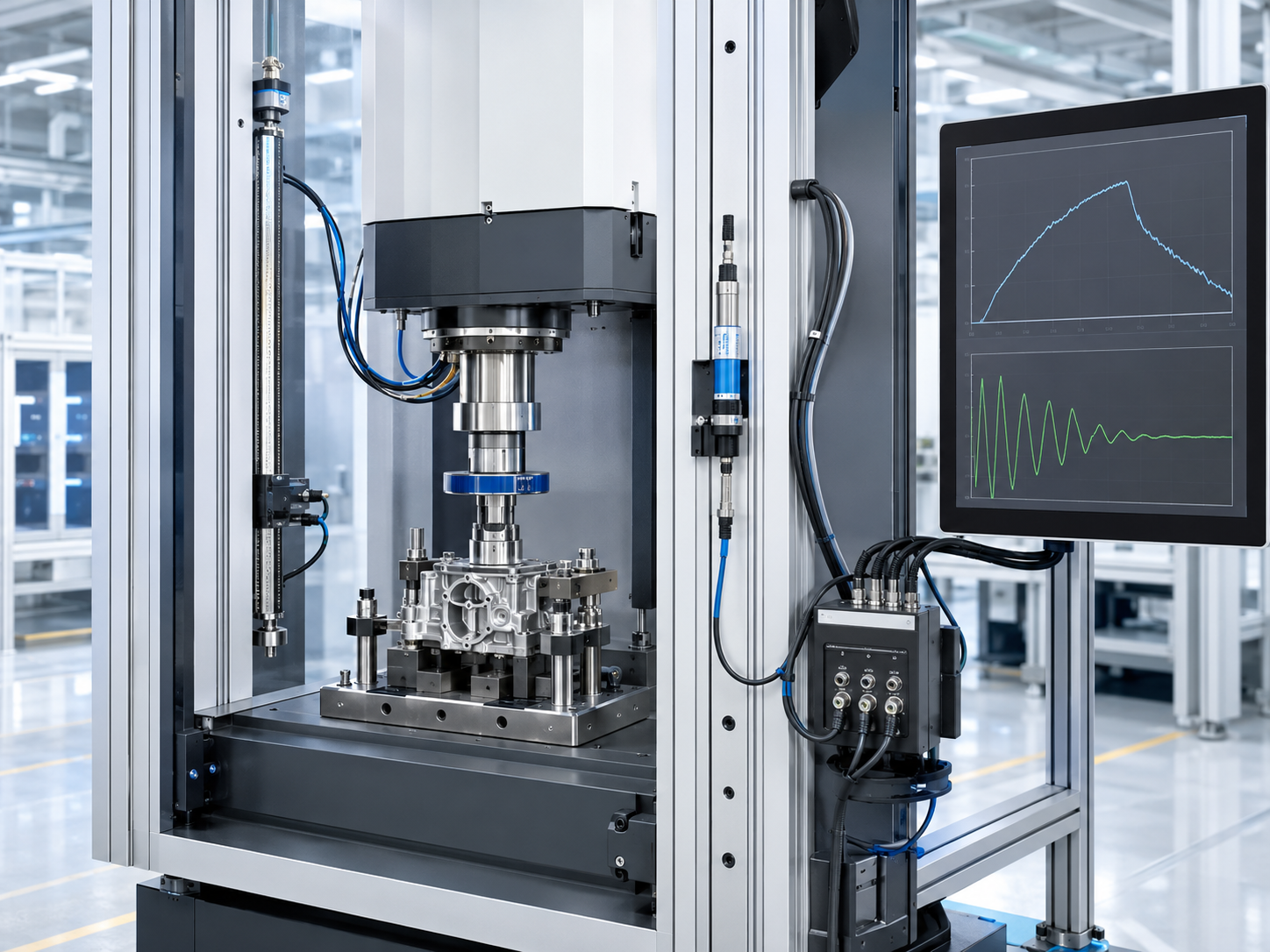
Measurement
Confirm force sensing, position feedback, useful range, sampling needs and how the measurement chain is verified.
03
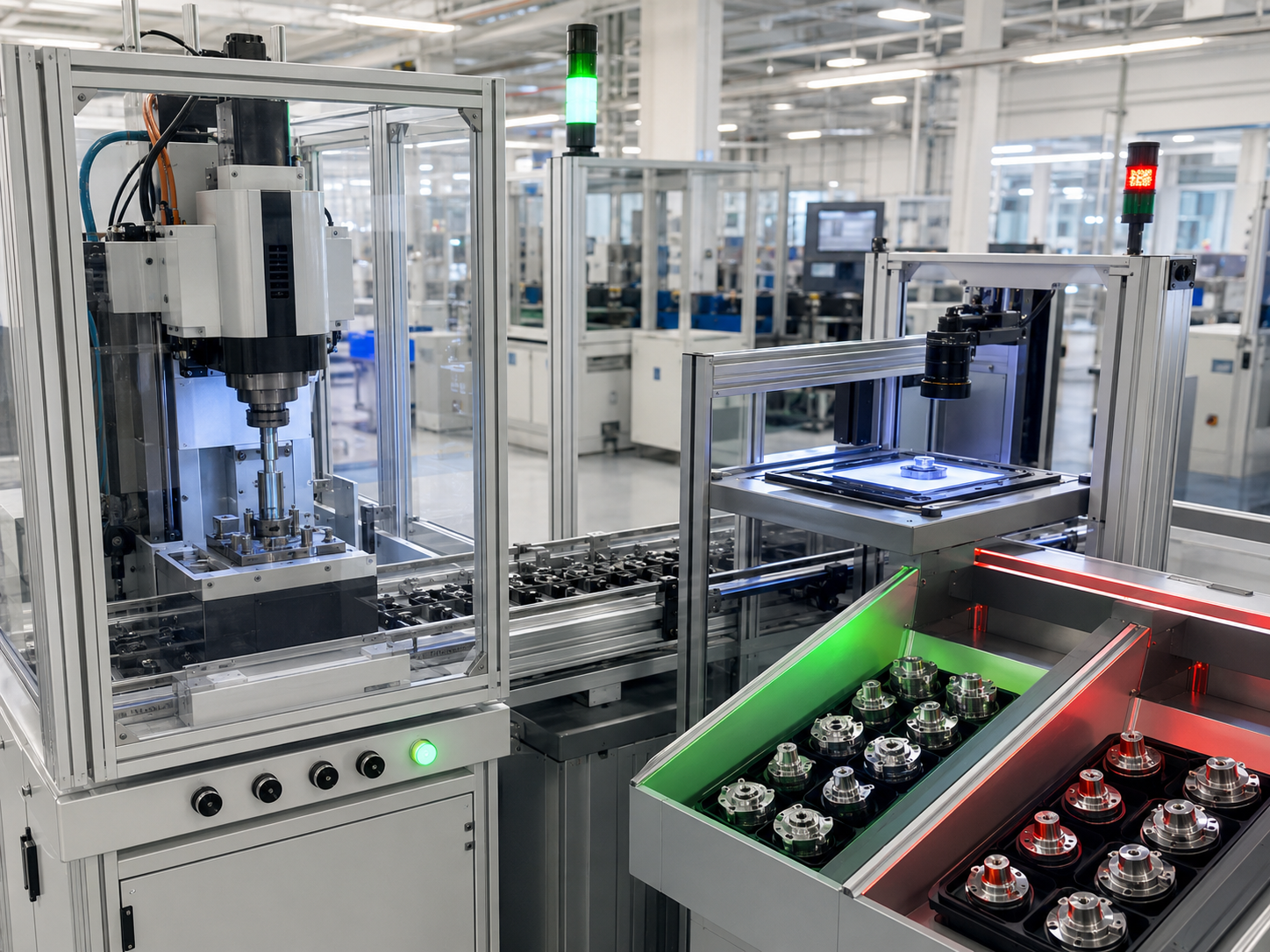
Acceptance
Agree on the curve or result limits, recipe ownership, reject response and any downstream inspection that remains necessary.

04
Connectivity
List required PLC, robot and production-system handshakes, record fields, retention rules and cybersecurity ownership.
SLIDE TO EXPLORE
Monitoring is not the same as control
A curve displays events without modifying the cycle in real time. Decide whether the project needs display, monitoring, closed-loop adjustment, result archiving or a combination; NIST SP 800-82 Rev. 3 can help define operational-technology boundaries.
Define the pass/fail rule before choosing the screen
Window logic
Decide whether the cycle checks a certain value, a band throughout the stroke, a curve point or several events. The criterion should relate to a real joint problem.
Reaction plan
Define what happens after a failed cycle: stop, isolate, retry, approve or send the part for inspection. A red response isn’t useful without a recovery plan.
Record context
Store enough context to interpret the result, such as recipe, part identifier, time, measured values and decision. The final data fields depend on the buyer’s quality system.
Configuration gallery
SIMITCH Servo Press and Automated Pressing Configurations
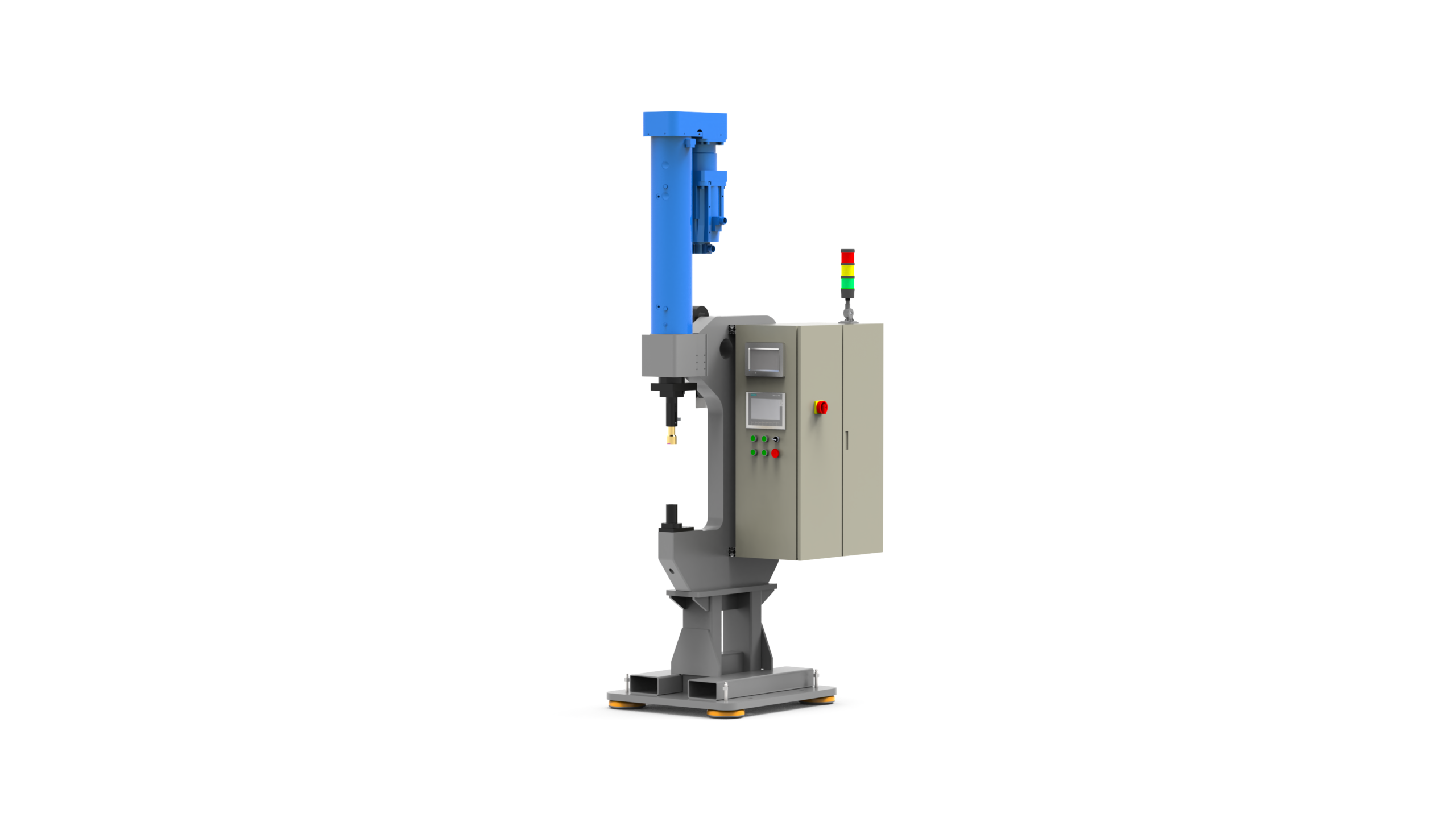
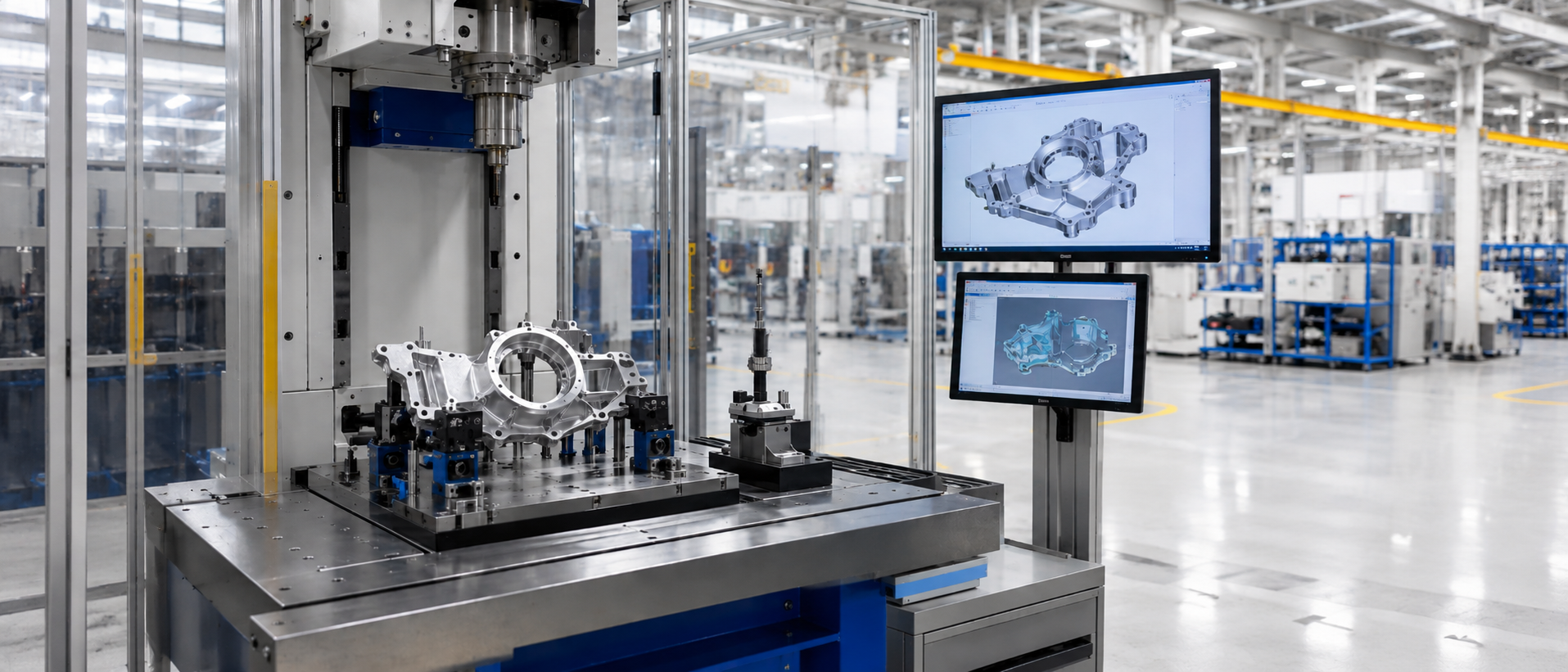
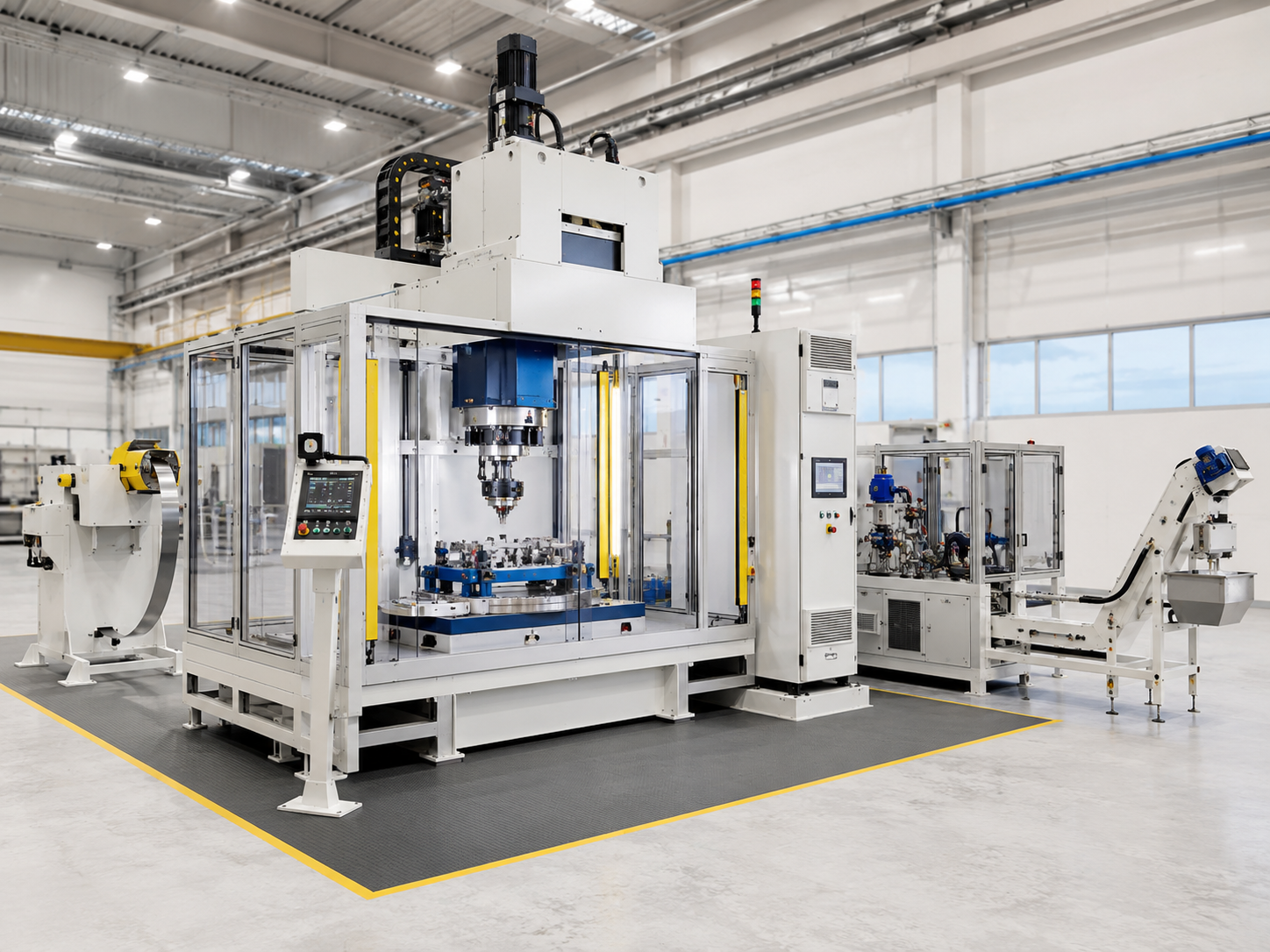
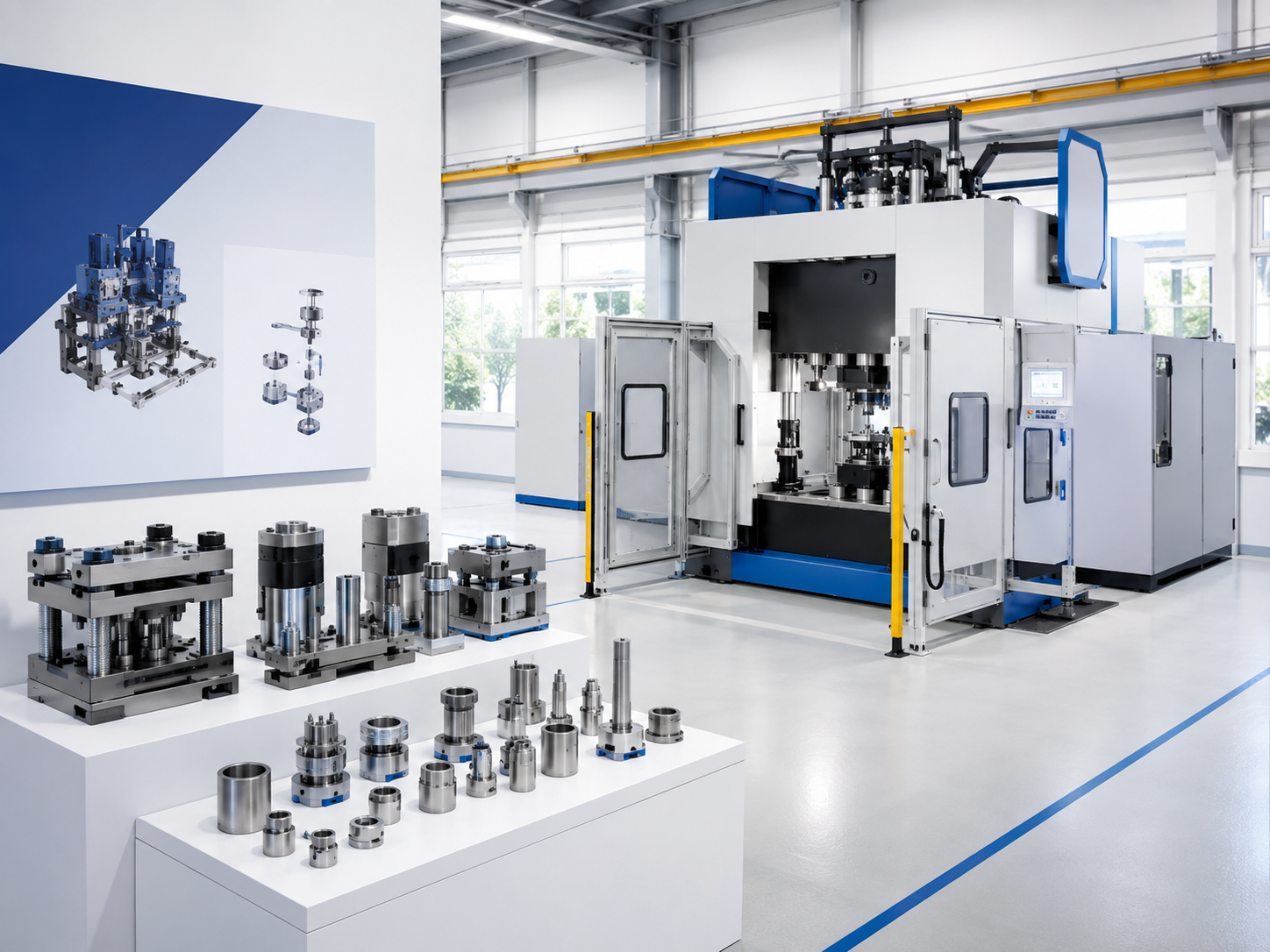
The following images illustrate SIMITCH equipment. They’re a guide in designing the facility layout and planning automation. They don’t suggest standard force, stroke, cycle time, accuracy, or included options.
Decision rule: A layout mismatch creates access and recovery risk because the part path may conflict with tooling or guarding. SIMITCH engineers combine nearly 20 years of machine-building context with the access boundary in OSHA 1910.212; unlike a gallery-only supplier page, the detailed scope must identify optional modules. Request a configuration review.
Evidence before production
From Part Review to Production Acceptance
Engineering, quality, and procurement teams should understand required actions leading up to and after the installation and commissioning of the equipment.
[ Engineering Decision Rule ]
Acceptance can fail because the test part, signal and limit were never aligned. SIMITCH engineers connect the production sample plan to standards such as IPC-9797; the honest workflow defines evidence before a machine is accepted.
Request a sample-test checklist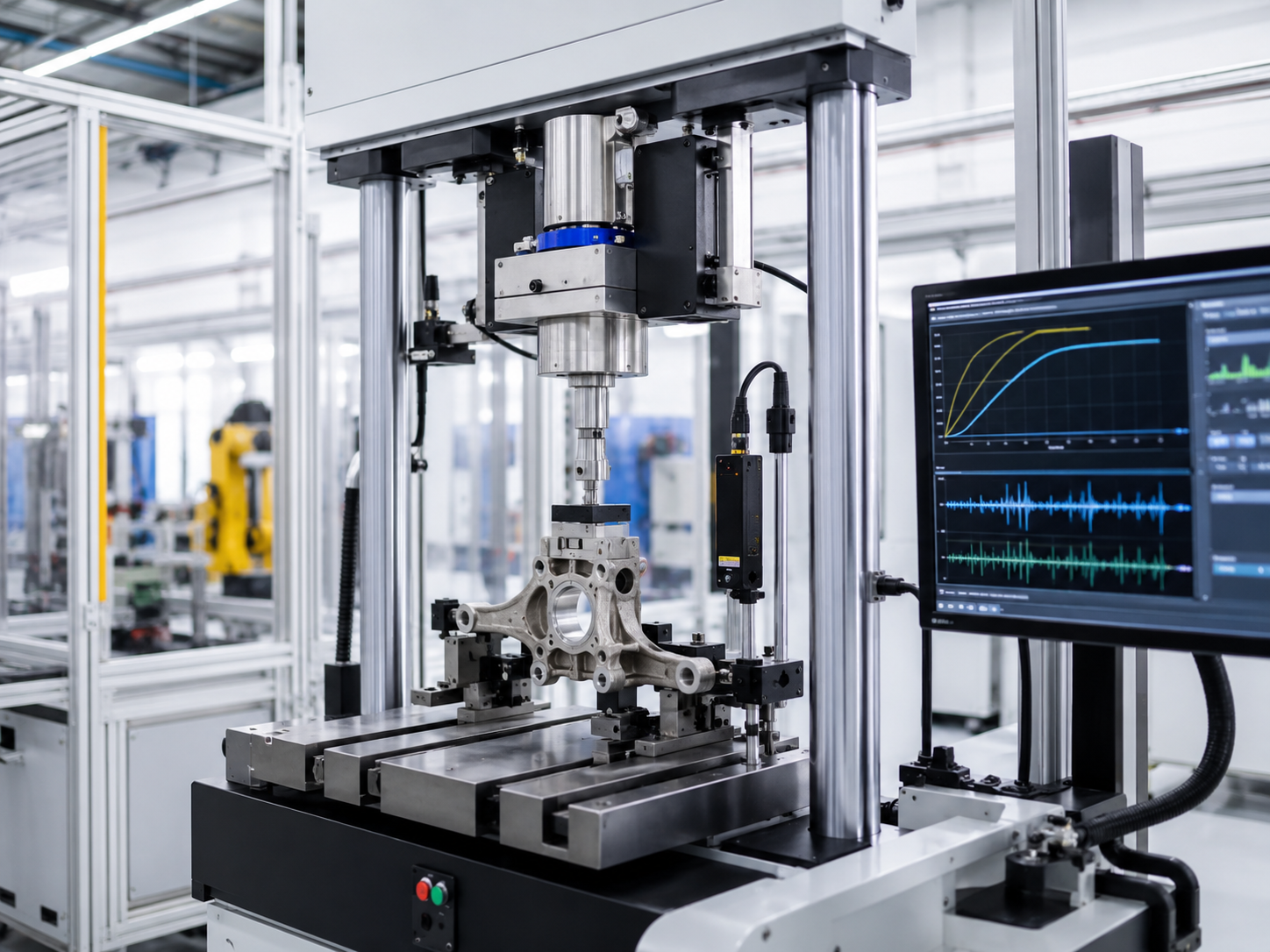
01 / STAGE
Requirement review
Share parts drawings, their usage and purpose, output specifications and targets, quality requirements, and facility limitations.
02 / STAGE
Feasibility framing
Identify the likely press, tooling, fixture, feeding, measurement and safety questions.
03 / STAGE
Sample validation
Process characteristic part studies using prototype components where feasible should be performed. These provide real insight into the behavior of parts undergoing the joining process and identify potential failure modes.
04 / STAGE
Scope definition
Document included functions, interfaces, acceptance tests, deliverables and buyer-supplied items.
05 / STAGE
Build and acceptance
Complete the agreed equipment, controls, checks and handover against the written project criteria.
Why sample testing matters
Industry guidance on press-fit parts lists material attributes, surface finish, lubrication, humidity, geometry, interference, alignment and frame rigidity as possible variables. Review Best Practices for Press-Fit Assembly for the cited engineering context.
Build a sample plan that answers engineering questions
| Sample variable | What to include | What the trial can reveal |
|---|---|---|
| Normal production range | Parts from expected material, finish and dimensional conditions | The typical force-position signature and normal spread |
| Known limits | Parts near allowed tolerance or process boundaries | Whether the acceptance window separates good variation from risk |
| Failure examples | Misaligned, missing, wrong or deliberately nonconforming samples where safe | Which failures are detectable and which still need another inspection |
| Tool and fixture condition | Representative support, contact surfaces and changeover state | Side load, deflection, repeatability and access problems |
| Cycle variation | Candidate approach, working speed, hold and return profiles | Trade-offs between part behavior, quality evidence and takt |
A trial should end with a decision record, not only a set of attractive curves. Document which variables were tested, what remained outside scope and which criteria must be carried into the production acceptance plan.
Sample quantity is project-specific. This is determined by the lot variance, reliability of the part, the method of sampling, and the customer’s policy on validation. No universal standard quantity is specified herein.
Why SIMITCH for a Project-Specific Pressing System
Suzhou Simitch Machinery Co., Ltd. was established in 2006 as a mechanical-equipment manufacturer focused on sheet-metal connection machinery. The company introduced foreign clinching technology in its early stage and built practical equipment-production and application experience around it.
Decision rule: Supplier risk rises because an attractive equipment concept may omit the process and acceptance work. SIMITCH engineers apply nearly 20 years of factory experience and in-house production context; unlike unsupported reach claims, the detailed proposal should state what will be built, tested and handed over. Request a project-scope review.
2006
Mechanical foundation
The company originated from the practice of sheet metal connection machinery and the physical manufacturing of equipment.
20+
Technology development
Over nearly two decades, the company moved from technology introduction toward independent research and development.
R&D
Core capability ownership
SIMITCH reports independent clinching and precision-pressing technology, its own trademarks, multiple technical patents and in-house production of key equipment and core parts.
Evidence note
These company-history statements come from the supplied brand brief. Specific patent numbers, certifications, installed-base counts and geographic service claims are intentionally omitted until first-party documents are available; patent details should be checked in WIPO PATENTSCOPE or the relevant national register.
What to ask any servo press manufacturer
Ask how the proposed working range, frame, tool access and sensor range connect to your samples. A catalogue match without process reasoning leaves important risk with the buyer.
Ask for a written list of included sensing, data, feeding, guarding, tooling and interface functions. This prevents a familiar feature name from hiding a different implementation.
Ask what will be demonstrated, on which samples and against which limits. The strongest supplier evidence is a reproducible acceptance method tied to your assembly.
A useful first message
What We Need to Review Your Servo Press Project
You do not need a complete machine specification to start. The following inputs let SIMITCH identify unknowns, propose a sample plan and decide whether an electric servo press, automatic feeding station or integrated cell deserves further engineering.
Decision rule: Quotation delay often occurs because part, tooling, production and quality owners hold different inputs. SIMITCH engineers combine nearly 20 years of machinery context with the sample variables discussed in press-fit assembly guidance; the honest alternative to guessing is a detailed sample and interface checklist. Request the checklist.
- Part drawings, photos or representative samples
- Material, finish, joint stack and fastener details
- Required joint function and known failure modes
- Expected load range, travel and production takt if known

- Acceptance criteria and inspection method
- Manual, feeder, robot or transfer-line loading concept
- PLC, robot, data and recipe expectations
- Plant voltage, safety standard, layout and delivery target
Feasibility review
Use this when there’s a specific part and joint setup, but no machine architecture specified.
Sample-test checklist
Use this when the expected load or acceptance window needs evidence from real parts.
Integration discussion
Use this when feeding, PLC, robot, traceability or line recovery will shape the project.
Battery Pack Assembly Engineering Tools
Configure technical specifications including required force-distance profiles, integration protocols, and press frame parameters for battery assembly lines.
Calculate long-term operational viability by comparing initial capital expenditure, energy utility consumption, and projected maintenance cycles.
Standardized validation protocol to verify seating forces, positional tolerances, and data acquisition behavior during physical sample trials.
FAQ: Servo Press for Battery and Electronics Assembly
A servo press uses an electric servo drive to program motion through the cycle, while a hydraulic press develops force through a hydraulic system. Compare the working force window, motion profile, duty cycle, environment, maintenance access, leak-control needs and measurement architecture. A representative cycle and part trial can expose differences that a drive-type label cannot settle.
No. Motion, working range, sensing, cycle behavior, maintenance and tooling all affect the decision.
Start with representative parts, the joint, required travel, expected working load, fixture condition, cycle profile and production takt. Sample testing may be needed because formulas can’t capture every material, finish, lubrication and alignment variable.
Force-position evaluation can be considered where the project requires it. Sensing method, range, sampling, limits, recipe behavior and data retention must be confirmed in the proposed scope.
Automatic feeding can be reviewed as a project module. SIMITCH needs the fastener specification, presentation condition, target takt, presence-check requirement and recovery concept before defining it.
IPC-9797 addresses qualification and acceptance for press-fit technology in high-reliability applications, but applicability depends on the product and customer requirements. It should be treated as an acceptance input, not as a blanket equipment certification.
Compare suppliers on the evidence they request before sizing, their tooling and integration scope, the measurement architecture, written acceptance plan, documentation and support boundaries. A generic servo press manufacturer comparison is less useful than a like-for-like project scope.
Send drawings or samples, material and joint details, known load or travel data, takt, loading method, quality criteria, interfaces, safety requirements and plant information. Unknown values can be marked for feasibility review or sample testing.