Get in touch with Suzhou Simitch Machinery Co., Ltd Company

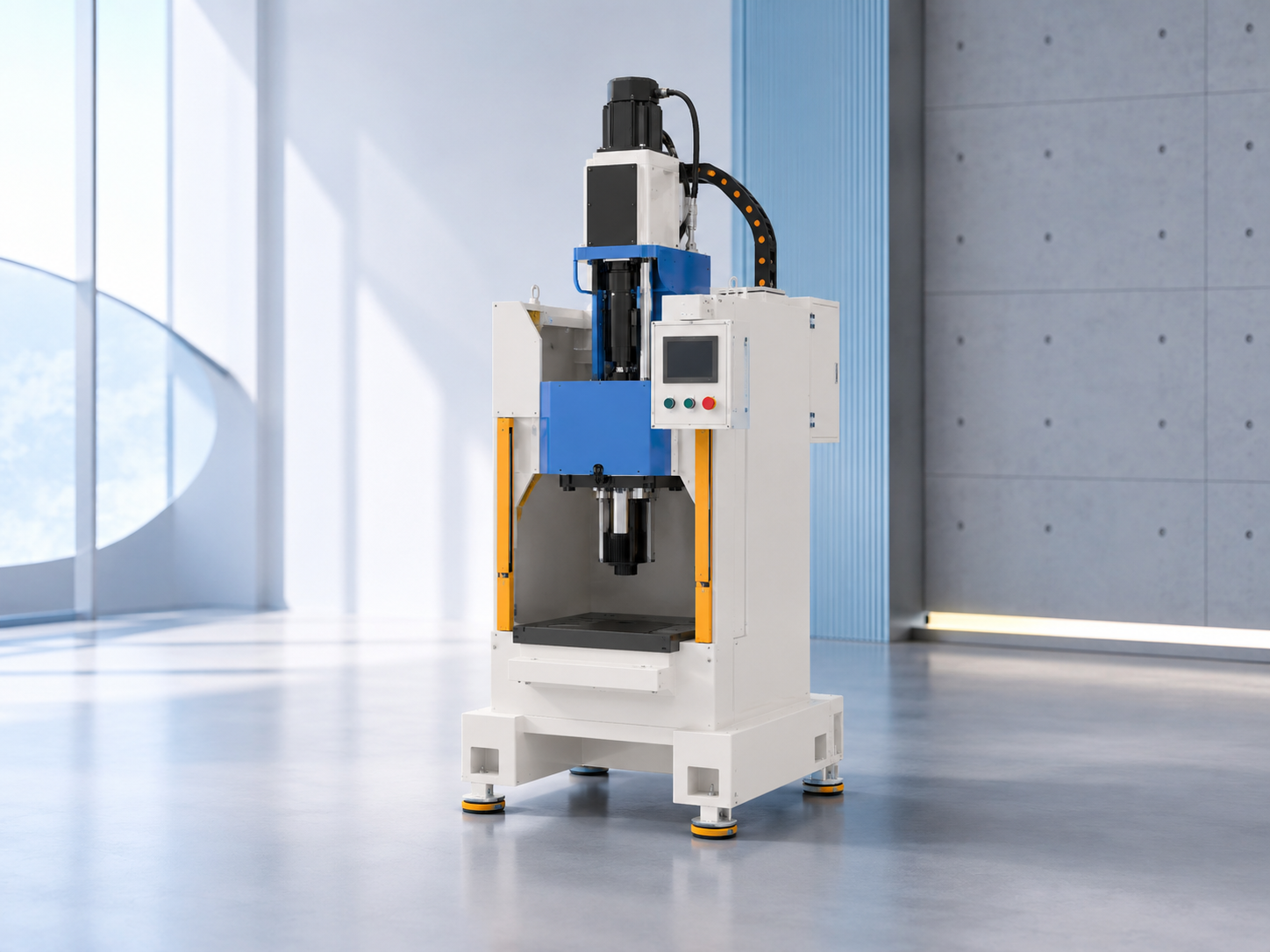
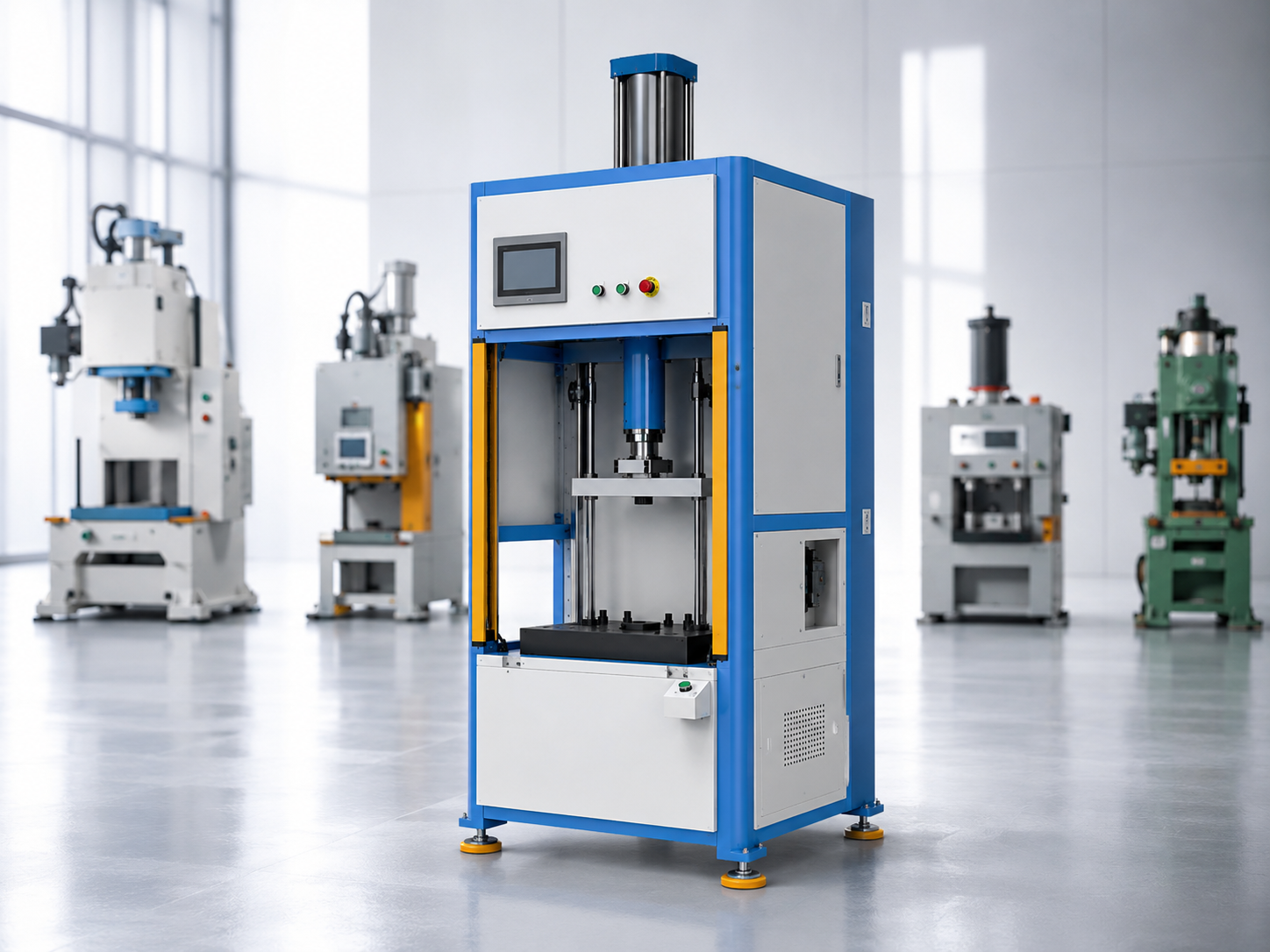
Precision Assembly Servo Press, BP Bending-Type Series
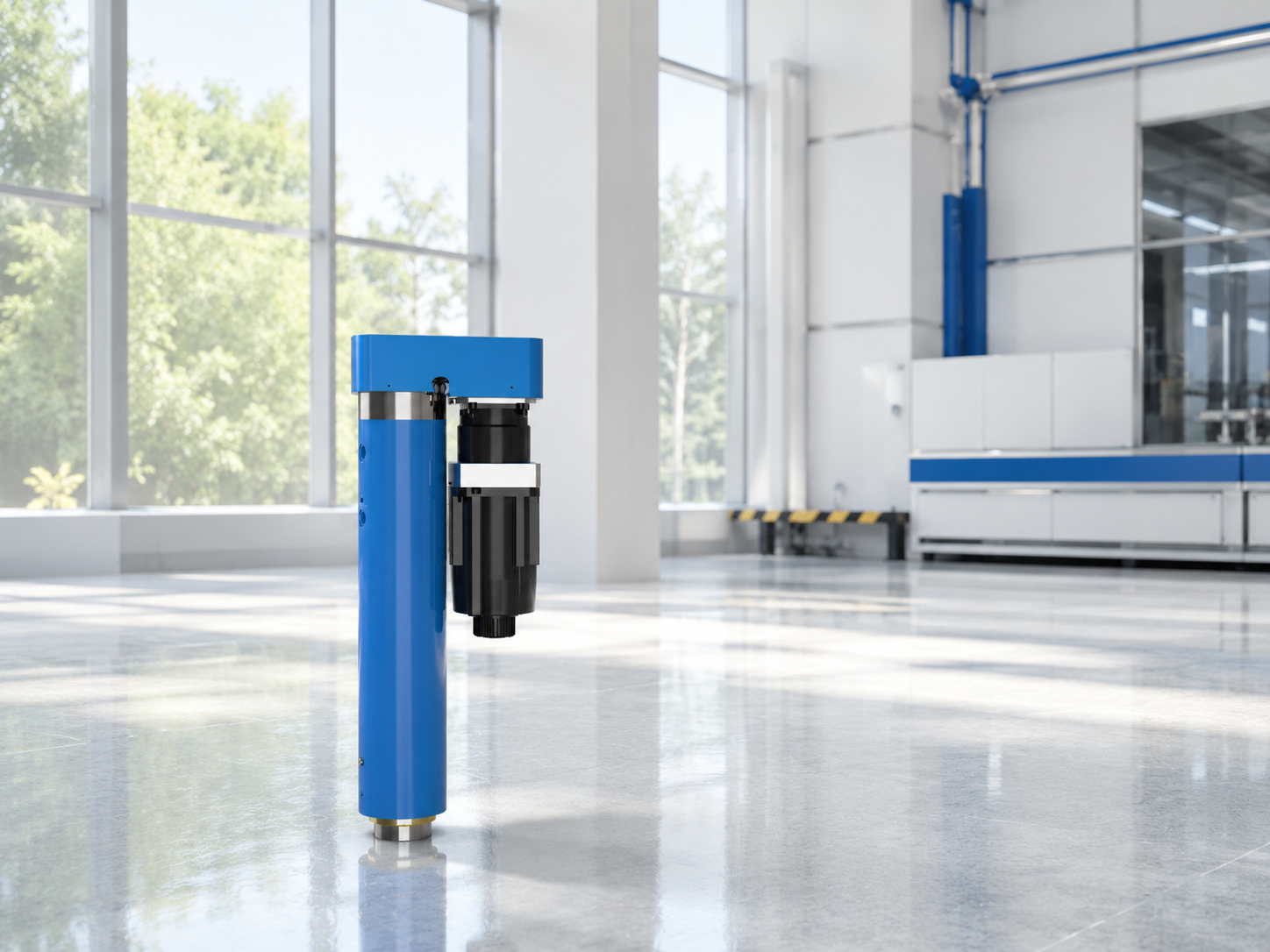
Simitch’s BP Series is an electric servo press platform for controlled press fitting, joining, light forming, bending, and verification work from 10 to 200 kN. Its programmable motion, force-displacement monitoring, and production-data options help engineering teams examine what happened during each press cycle instead of relying on the final position alone.
- 10–200 kN six listed force classes
- 300 mm listed maximum stroke
- 0.01 mm repeat positioning specification
- 10 kHz data acquisition rate
- 6 protocols listed fieldbus options
Control Force, Position, and Speed in One Assembly Process
Rated force alone doesn’t show whether a bearing seated smoothly, a connector stopped early, or a bushing crossed the expected load at the right position. Servo press features such as closed-loop position feedback and speed control help define the ram’s position, slide velocity, target position, and an inspectable motion profile.
During approach, the press ram moves toward the workpiece at a programmed speed. Tool clearance, fixture height, and the useful stroke length must be confirmed before commissioning.
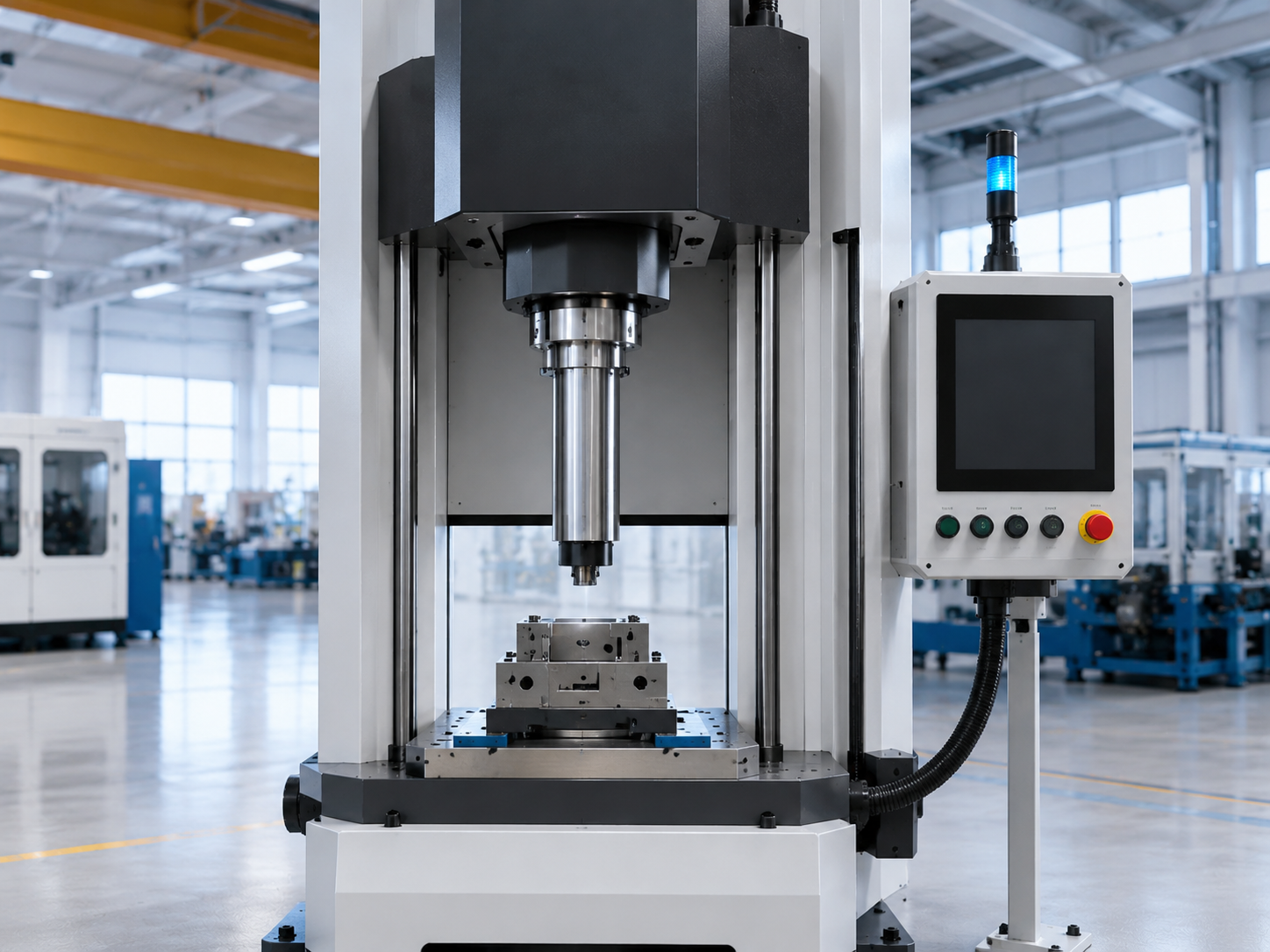
Electric servo motion can slow near contact and follow a position-based sequence. Force control and motion control settings are established with the real part, tooling, and risk assessment.
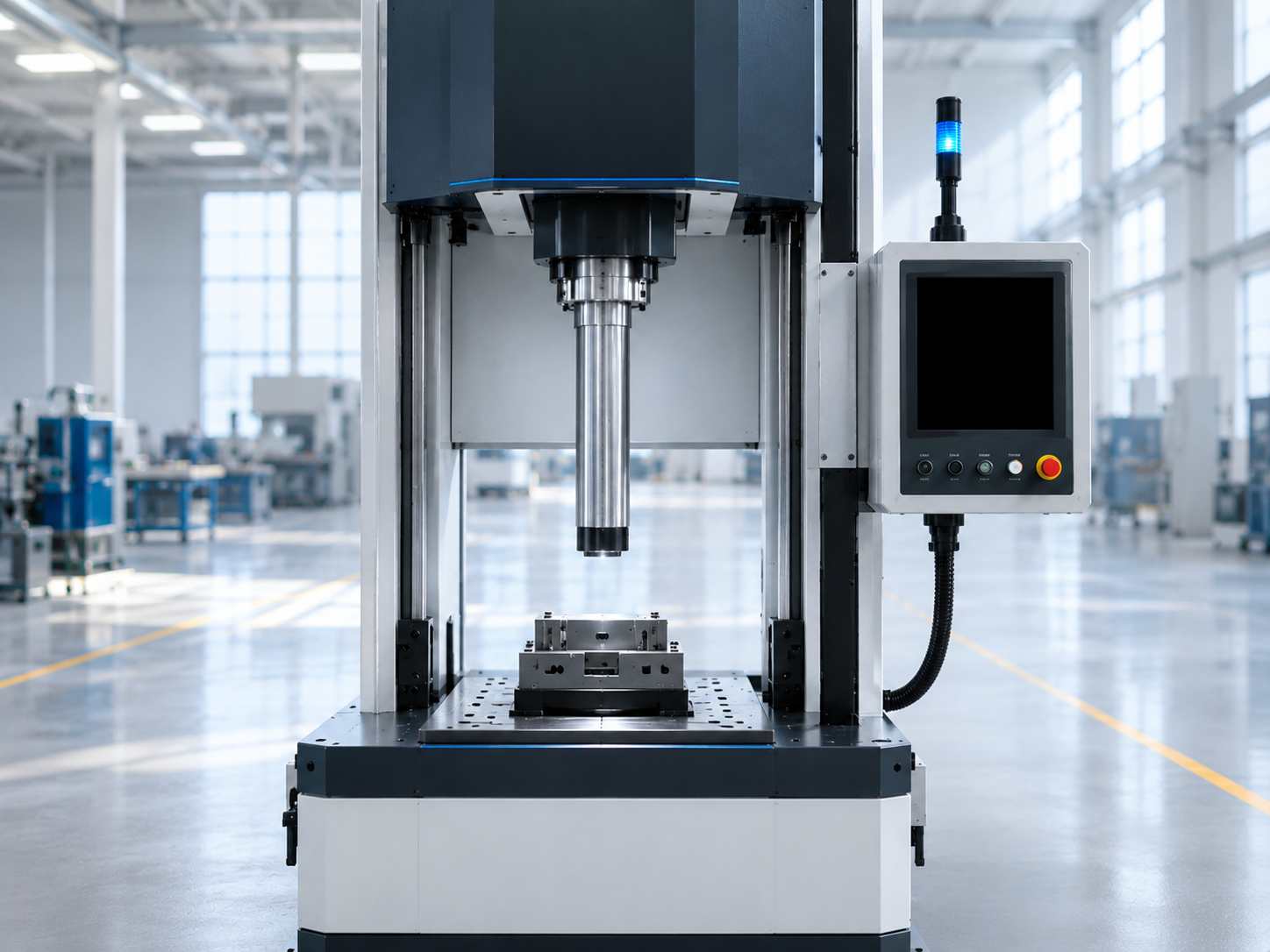
Force and displacement signals create a cycle record for quality control. A validated window can flag an early stop, missing component, excessive load, or out-of-position event.
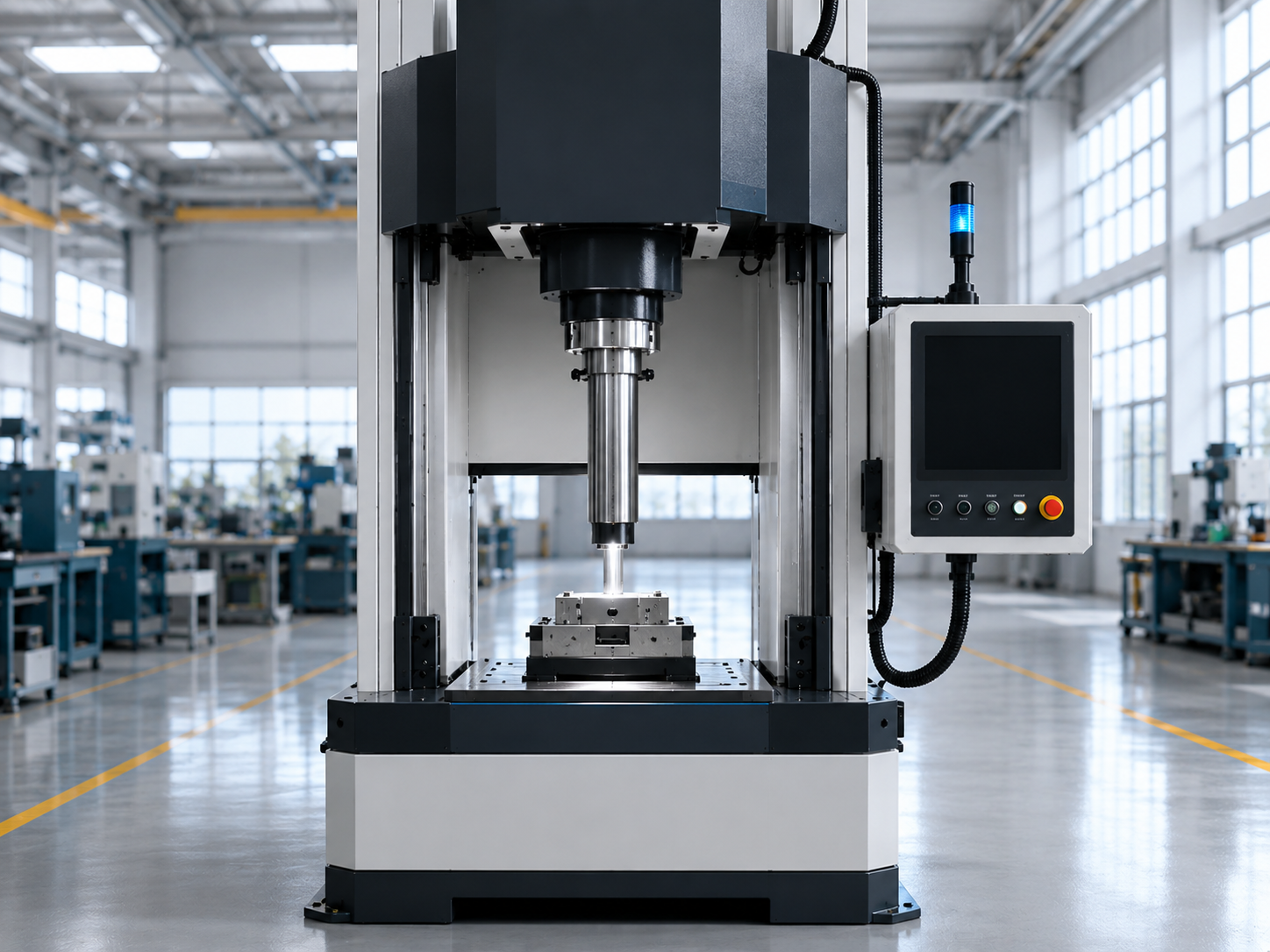
- High-precision complex assembly of bearings, bushings, pins, sleeves, and connectors.
- Controlled rivet, clinch, insertion, light bending, or joining steps.
- High-mix assembly processes that need stored recipes and repeatable results.
- Automation cells that need real-time results and production traceability.
- Large blank metal forming, high-speed stamp work, or deep drawing is outside this page’s precision assembly scope.
- A traditional mechanical press with a flywheel may suit high strokes per minute when process evidence isn’t the leading requirement.
- A hydraulic cylinder or hydraulic press may be better for long, heavy-duty force travel.
- A manual press can remain practical for very small production runs with low data requirements.
“Precise control is useful only when the programmed cycle, tooling, sensor chain, and acceptance limits are validated together.”
The honest trade-off
Unlike a force-only selection, Simitch engineers keep the cycle, evidence, and acceptance risk in the same review. Buyers comparing a servo press machine, an electric servo press, and a servo press manufacturer can therefore test the proposed system against one specific part.
Measurement evidence boundary
NIST force-transducer calibration guidance supports treating the transducer and readout as a measurement system. It does not validate a BP configuration or replace project-specific calibration and acceptance testing.
Servo press technology can offer greater flexibility than a fixed motion system, but it is not always the correct drive for every press operation. Request a detailed sample-part review after using the BP model table to screen capacity.
Request Part ReviewSelect a 10–200 kN BP Series Servo Press
Six standard model rows cover 10, 30, 60, 100, 150, and 200 kN nominal maximum force. Capacity mismatch can cause tool risk, process failure, or unnecessary oversizing because catalogue limits don’t represent every material, geometry, offset load, or duty cycle.
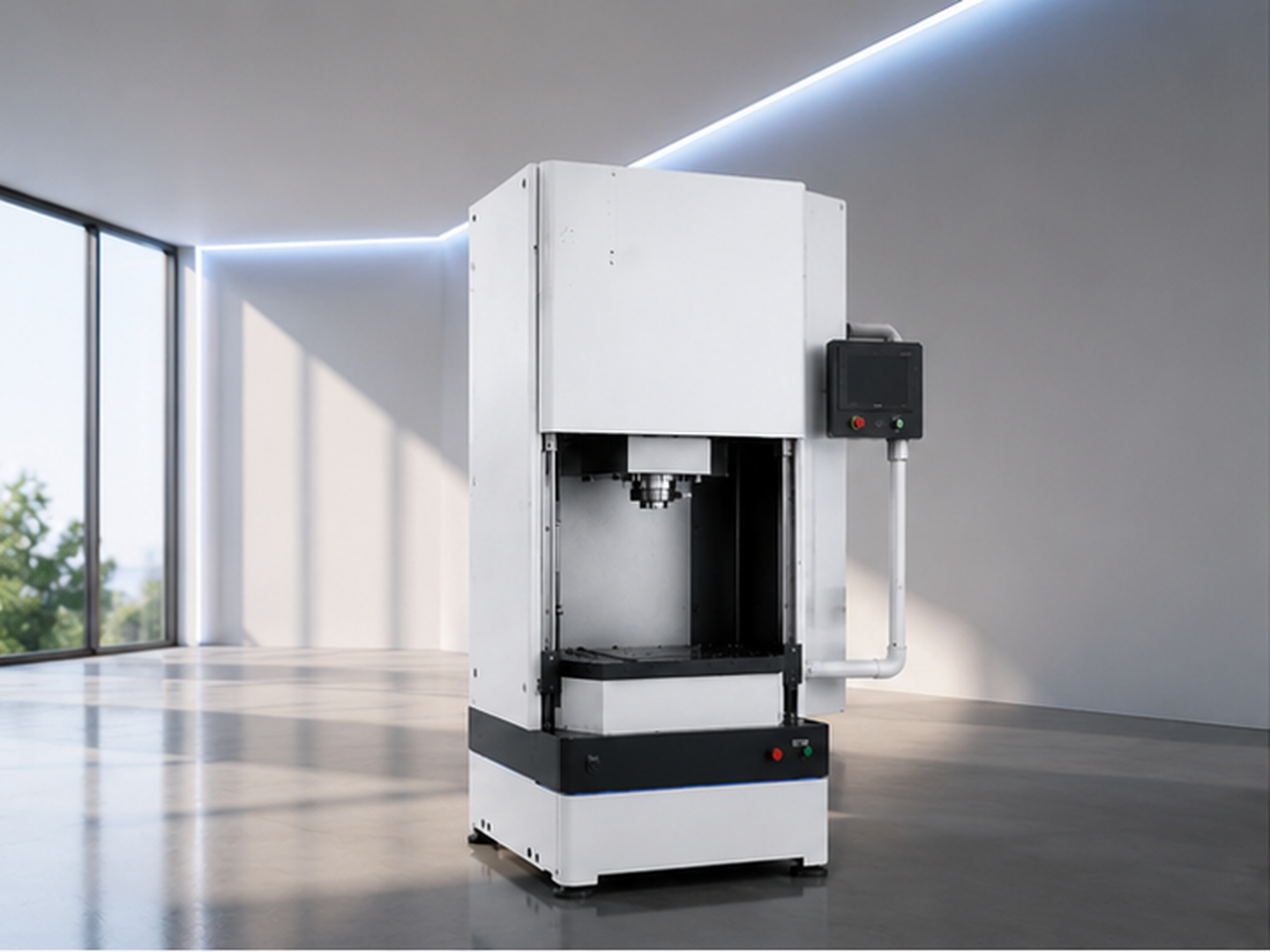
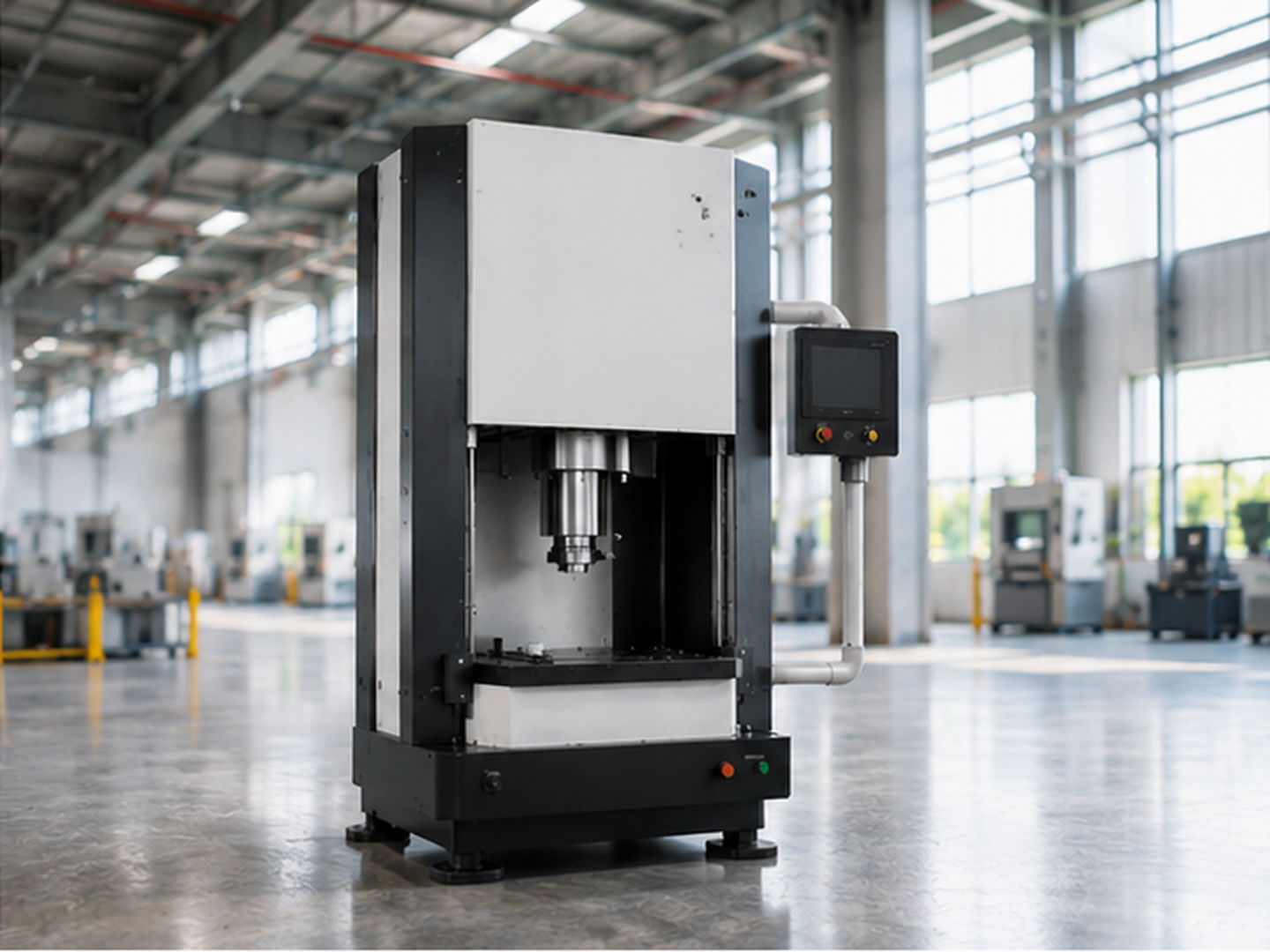
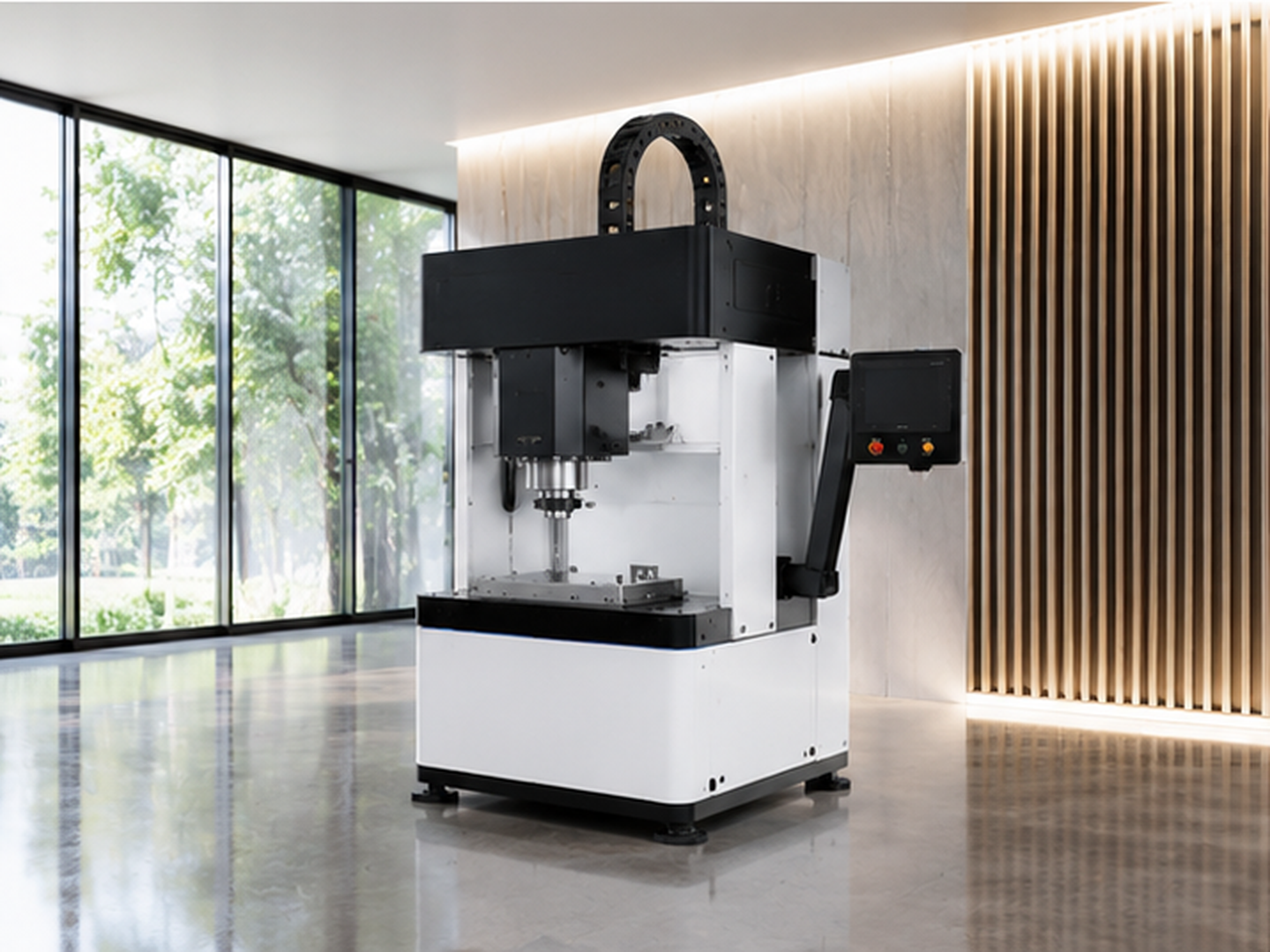
10 / 30 / 60 kN stroke options
10 / 30 / 60 kN stroke options
Choose from the listed 100 mm, 200 mm, or 300 mm stroke options. The shortest physical stroke that covers tooling, loading, approach, pressing, and return may improve layout discipline.
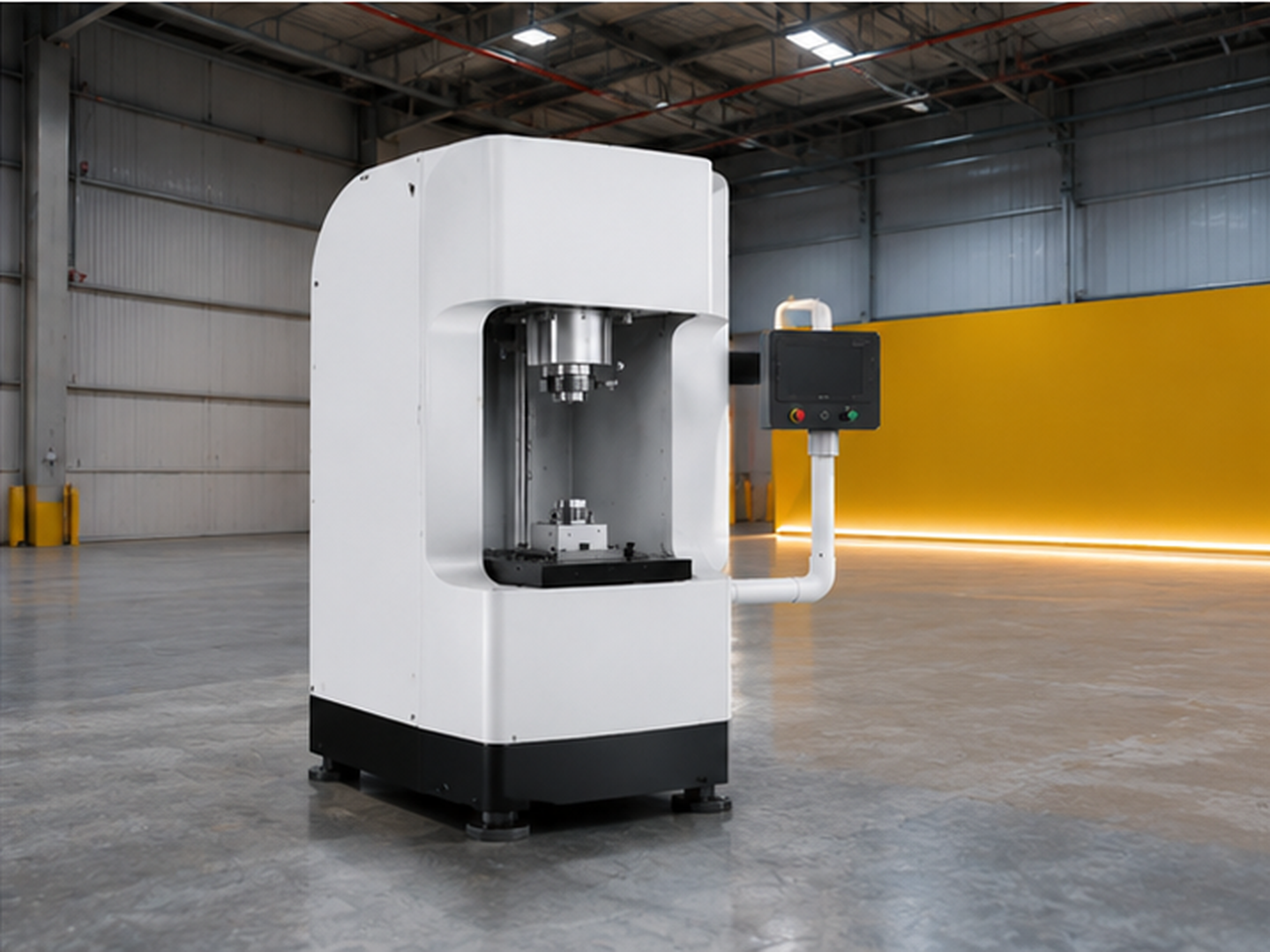
100 / 150 / 200 kN stroke options
100 / 150 / 200 kN stroke options
Choose from the listed 100 mm, 200 mm, 300 mm, or 400 mm stroke options. A 400 mm option isn’t listed for the three lower force classes.
Force-measurement boundary
Force-measurement boundary
The listed 1% value is a product-sheet specification, not a complete uncertainty statement. Confirm the load cell, readout, calibration range, traceability, mounting, and acceptance method.
This screening method converts a vague tonnage request into a reviewable force–stroke–speed brief. It narrows the candidate model, while final approval remains conditional on the actual part, fixture, load path, safety measures, and sample trial.
Inputs to supply
- Part drawing, material, press-fit or joining operation.
- Measured or calculated process force and how it was obtained.
- Total travel, working stroke, target speed, and cycle time.
- Tooling envelope, access, load direction, and production environment.
Screening output
- One or more capacity candidates from 10 to 200 kN.
- Available catalogue stroke and speed combinations.
- Open items for sensors, guarding, controls, data, and calibration.
- A sample-part test and factory acceptance plan before release.
The U.S. National Institute of Standards and Technology explains that a force transducer and its readout may be calibrated as one system. That’s why Simitch won’t claim that the catalogue’s 1% force entry proves the uncertainty of the complete installed machine without project evidence.
- Confirm whether calibration covers the working force range and direction.
- Record fixture alignment, warm-up, filtering, and evaluation settings.
- Agree which certificate, result, and tolerance will control acceptance.
Source used for the calibration boundary
The model table is manufacturer-supplied data; NIST’s force-calibration page is cited only for the system-level calibration principle. It does not independently verify the listed BP values.
Request a specific model and measurement review with the drawing, process-force basis, required stroke, and test evidence. Simitch won’t claim final capacity from rated force alone.
Turn Force, Displacement Curves into Pass/Fail Process Evidence
Force-displacement curves are useful when a known-good process has recognizable load and position behavior. They aren’t automatically defect detectors: the sensors, sample rate, filter, evaluation window, part variation, and reference samples must support the decision.
Illustrative curve, not an acceptance limit
force
evaluation window
sample trace
displacement
teal line: sample cycle
teal band: example envelope
orange box: example window
BP monitoring capacity
- One pressure channel and one displacement channel.
- Support for external pressure and displacement sensors.
- 10 kHz acquisition with a 0.1–2000 Hz low-pass filter.
- Up to 5,000,000 curve acquisition points and 100,000 stored records.
- Four-screen simultaneous monitoring for production review.
Line, force, and displacement windows
Use these windows to check whether a trace crosses a defined line, stays above or below a force boundary, or reaches a position boundary. The target position must come from part and process validation.
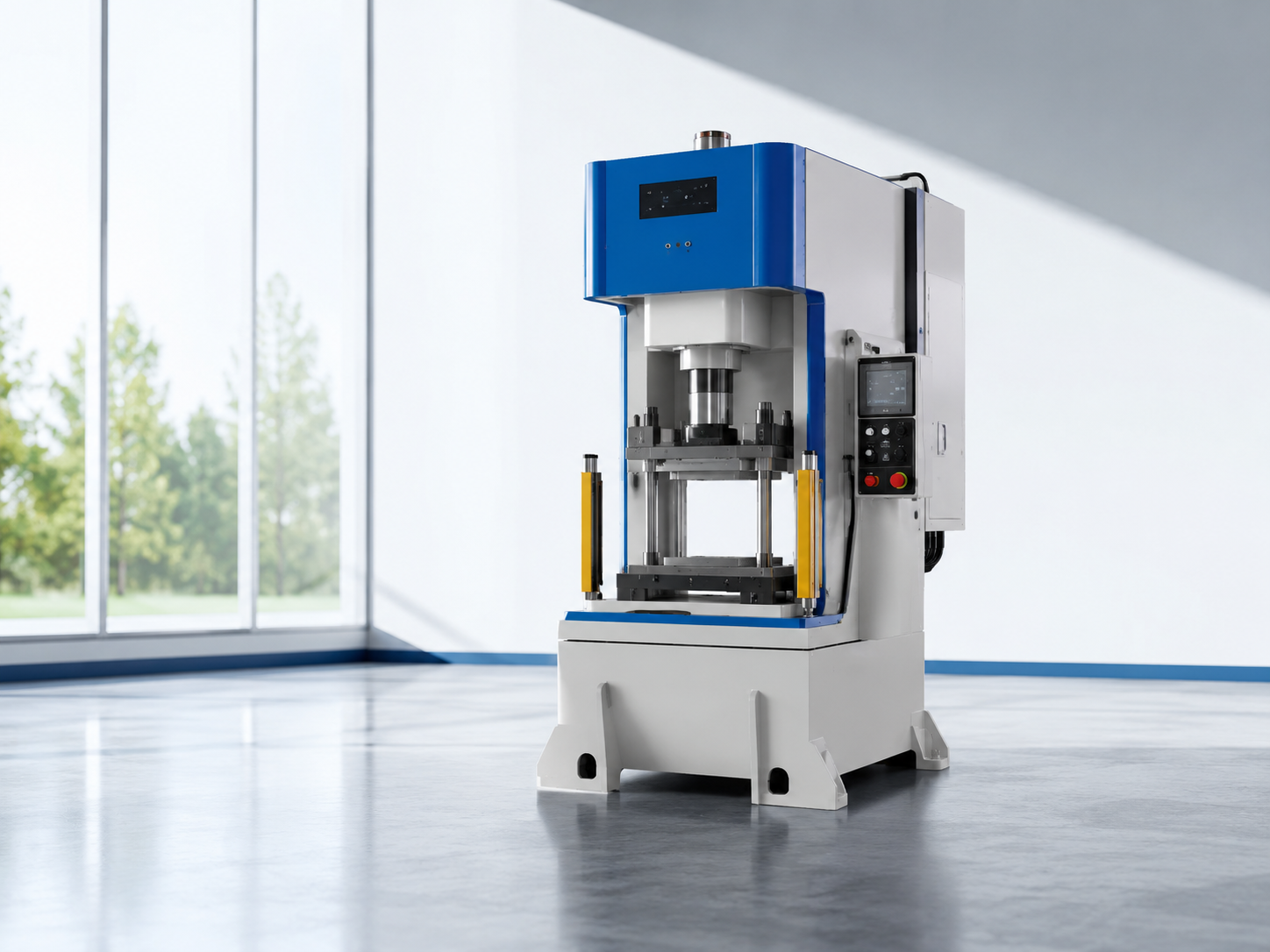
Inflection-point evaluation
An inflection feature may indicate a contact or seating transition. It should be correlated with physical part evidence before the machine uses it for quality control.
Rectangle and envelope windows
Rectangle windows check a region of the curve, while an envelope follows an allowed corridor. One published press-fit patent describes an initial, middle, and final curve-envelope method, but it doesn’t create universal limits for your part.
Build the evidence chain before claiming consistent quality
- Collect known-good, known-bad, and boundary samples under controlled tooling conditions.
- Confirm sensor range, mounting, calibration, sampling, filter, and programme version.
- Set evaluation limits from observed part behavior and engineering tolerances.
- Challenge the limits with material, temperature, lubrication, and fixture variation.
- Lock the approved recipe and keep a record that links each cycle to the right part or batch.
What differentiates a reviewable curve
Unlike a dashboard-only display, a Simitch review connects the sensor record to a physical defect, reference part, recipe, and acceptance test. A servo press with force monitoring or a servo press for press fitting still needs this chain because a visually smooth trace can hide a wrong limit.
What this page will not claim
No fixed 0.5 mm window, force percentage, or universal envelope is proposed. The 10 kHz rate and filter range describe available functions; they don’t by themselves prove that a selected setup will capture every physical event.
Curve-method evidence boundary
CN105403387A provides one published example of initial, middle, and final press-fit curve envelopes. It is background evidence for the method category, not a universal BP acceptance window.
Resources
Engineers can use the Force–Displacement Window Planner to define validation questions without inventing pass/fail thresholds.
Electric Servo Press vs. Hydraulic, Pneumatic, and Mechanical Presses
An electric servo press is not necessarily the lowest-cost or highest-performance choice for every production process. The defensible comparison is workload-specific: required force travel, speed, control and flexibility, data, maintenance capability, environment, initial cost, and acceptance scope all matter.
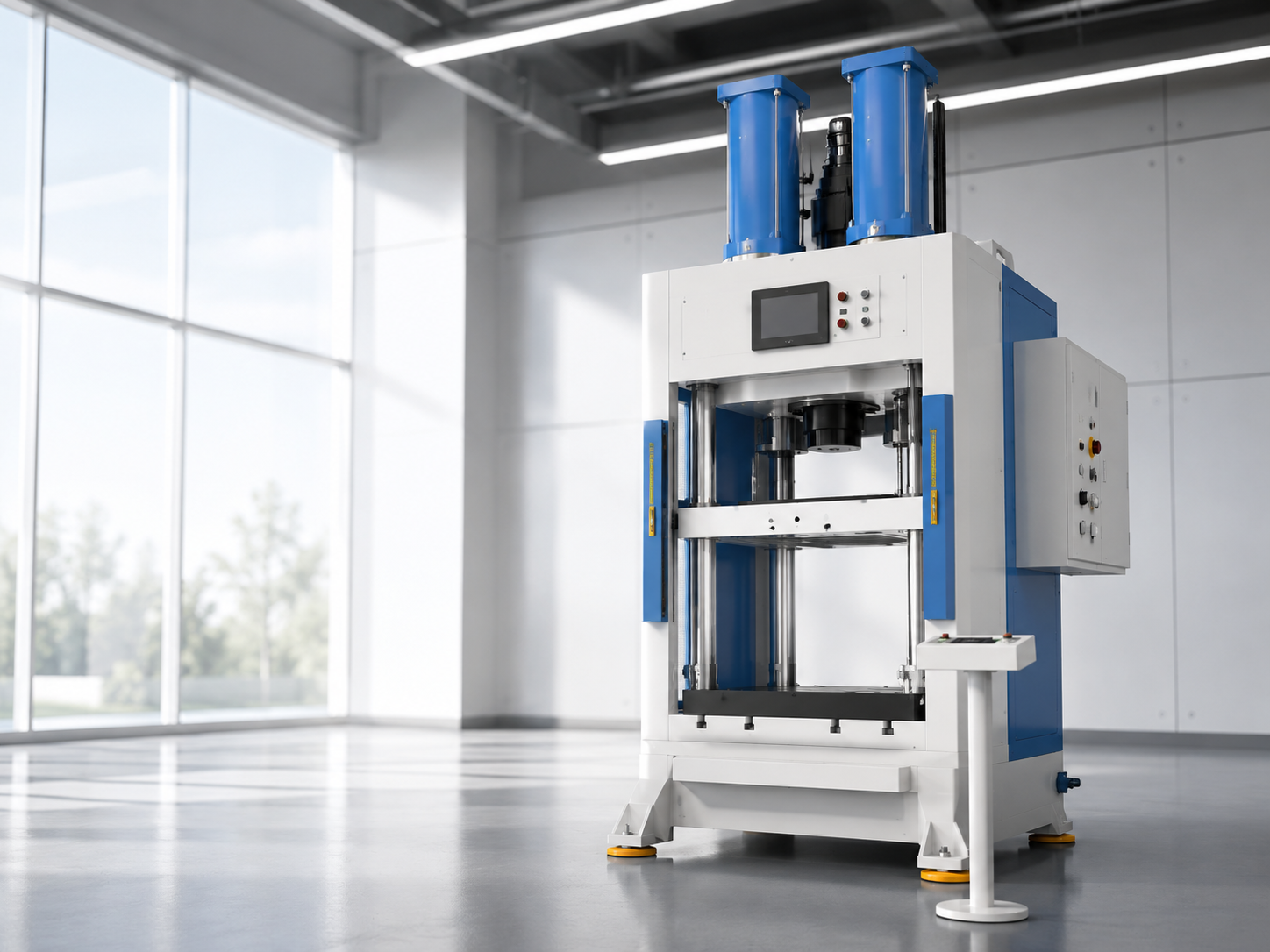
Force / position / speed
Programmable motion and position monitoring are core project functions
Cycle evidence
Force-displacement recording and evaluation options are listed
Utility dependency
Electric drive; confirm site power and duty cycle
Long high-force travel
Review motor, transmission, thermal duty, and speed
Deep draw or forming
Outside this BP precision assembly page
Energy efficiency
Calculate from the quoted system and measured duty cycle
Operational costs
Project-dependent
Force / position / speed
Project-dependent control architecture
Cycle evidence
Possible with added sensors and controls
Utility dependency
Hydraulic pump, hydraulic fluid, valves, hoses, and cooling may be involved
Long high-force travel
May suit long-stroke or heavy-duty force travel
Deep draw or forming
Hydraulic advantages may apply
Energy efficiency
Calculate pump, idle, cooling, and cycle demand
Operational costs
Project-dependent
Force / position / speed
Project-dependent; air behavior and controls matter
Cycle evidence
Possible with added sensors and controls
Utility dependency
Compressed-air generation, treatment, leakage, storage, and controls matter
Long high-force travel
Usually reviewed for lower-force work
Deep draw or forming
Usually not the first route
Energy efficiency
Calculate compressor-system demand and leakage
Operational costs
Project-dependent
Force / position / speed
Motion is linked to the mechanical drive unless servo-driven
Cycle evidence
Possible with added sensors and controls
Utility dependency
Electric motor, flywheel or direct drive, clutch/brake, and lubrication depend on design
Long high-force travel
Depends on press geometry and energy system
Deep draw or forming
Application-dependent
Energy efficiency
Calculate the actual drive and operating profile
Operational costs
Project-dependent
BEST BUYING TEST: Compare the complete system, tooling, safeguarding, controls, utilities, maintenance, data, acceptance, and handover package.
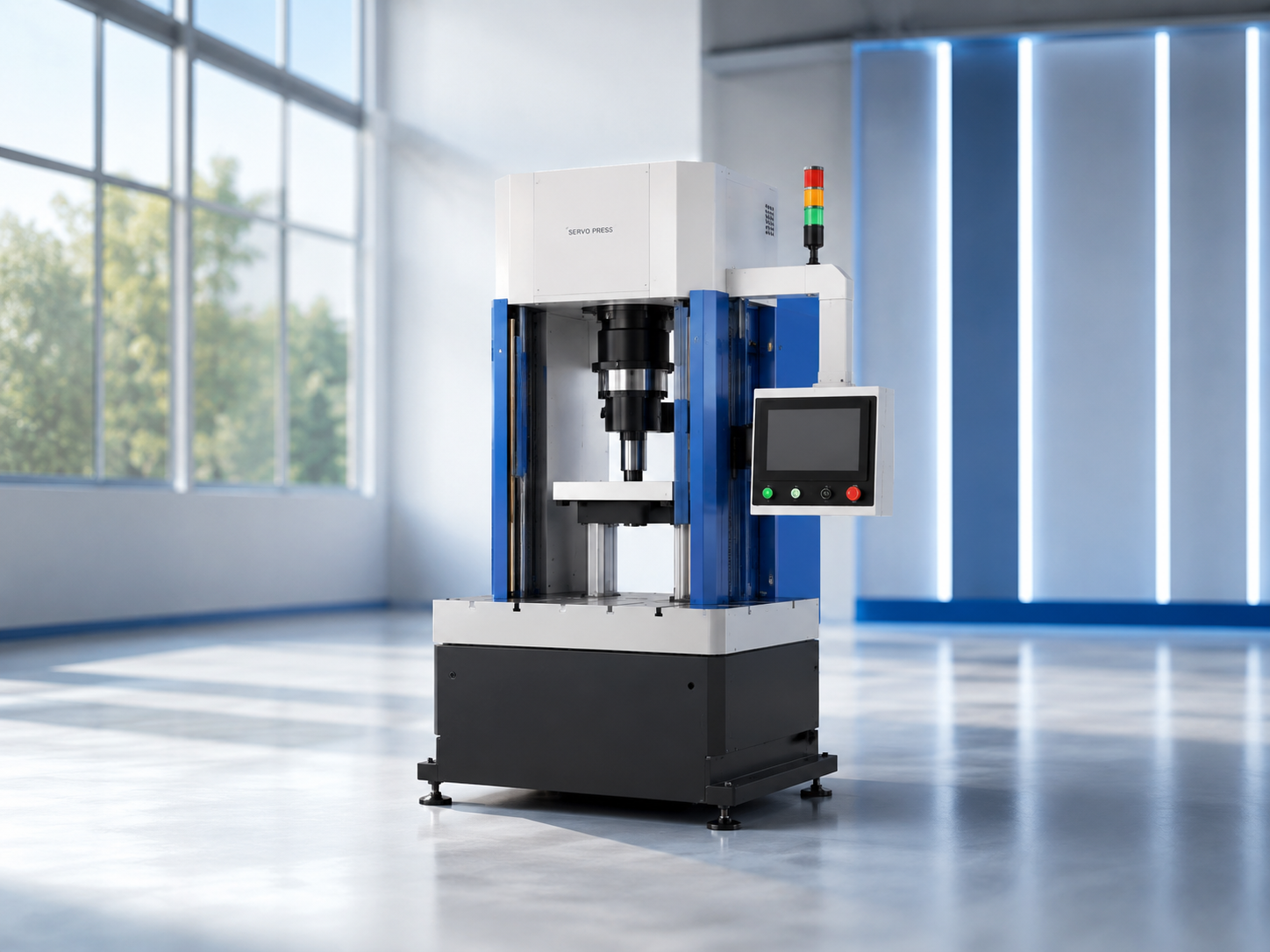
Do not compare nameplates
A lower purchase price does not always produce the lower total cost of ownership, and the highest tonnage isn’t automatically safer. Compare the force-time-distance profile and every required subsystem.
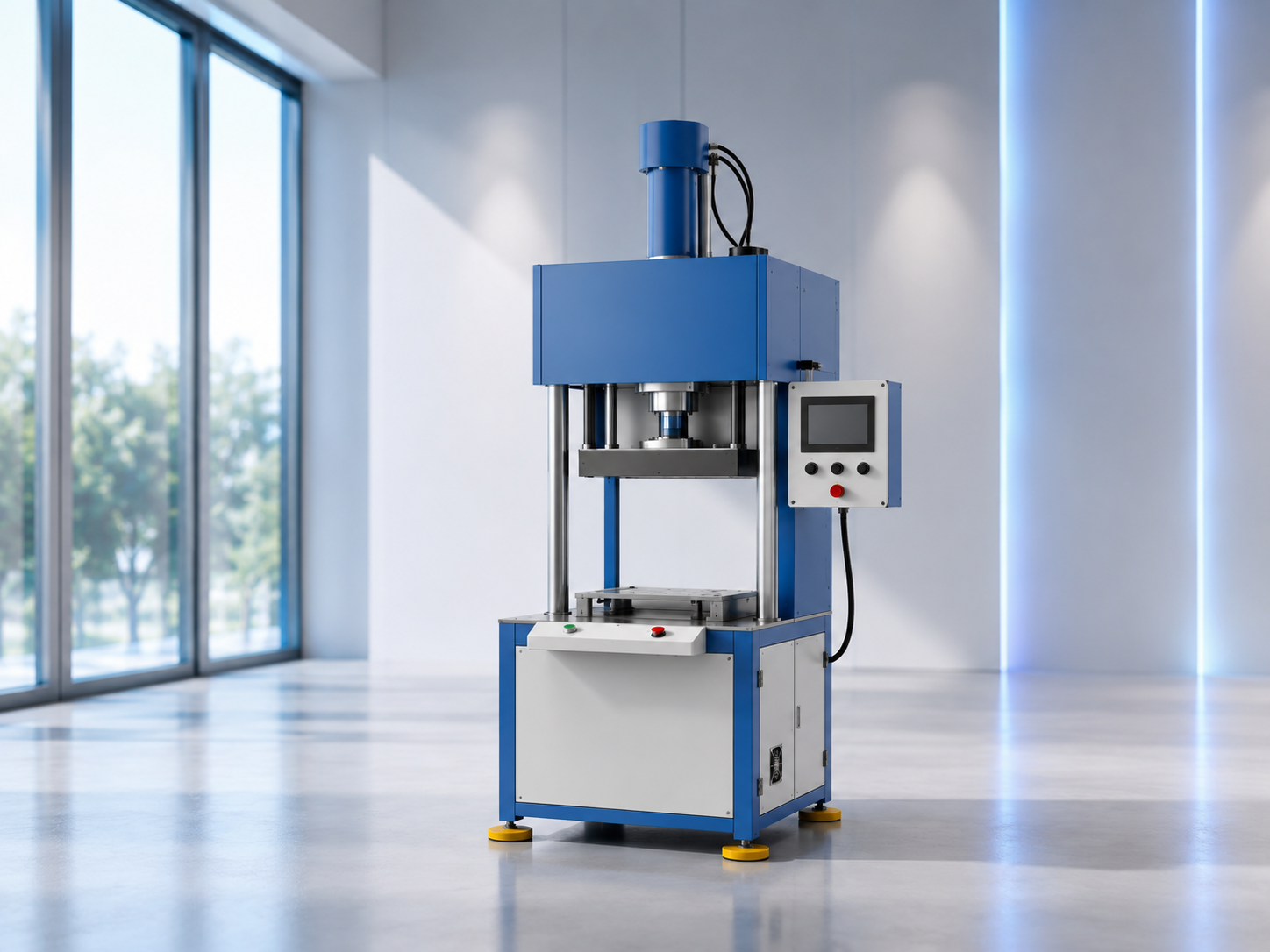
Conservative selection boundary
Traditional hydraulic machines and hydraulic presses may remain preferable for deep-draw, long-stroke, long-cycle, or lower-capital-cost requirements. BP Series evaluation should focus on precision assembly, programmable motion, curve evidence, and integration, not a blanket claim that fully electric presses always win.
Do not import vendor percentages
Published servo press benefits and energy claims often use different machines, cycles, and boundaries. Simitch won’t claim a universal savings percentage for the BP Series without a measured baseline.
Regulatory comparison boundary
OSHA 1910.217 is referenced for its stated mechanical-power-press scope and exclusions. It does not establish a universal safety or performance ranking among servo, hydraulic, pneumatic, and mechanical presses.
Use a project TCO worksheet
A cost-effective answer depends on capital equipment, utilities, tooling, integration, maintenance, downtime, quality data, and service assumptions. Use the TCO Scope Normalizer to compare like with like.
Request a detailed technology comparison with the actual press cycle, annual volume, utilities, and data requirement. The engineering form keeps every claimed trade-off tied to the same scope.
Request Technology ComparisonConfigure the BP Series for Your Production Cell
Fieldbus availability doesn’t guarantee that a servo press machine will integrate safely or exchange the right data with an existing line. Servo press fieldbus integration can fail because the project must align mechanical access, tooling, sensor signals, PLC logic, guarding, industrial networking, programme ownership, and factory acceptance.
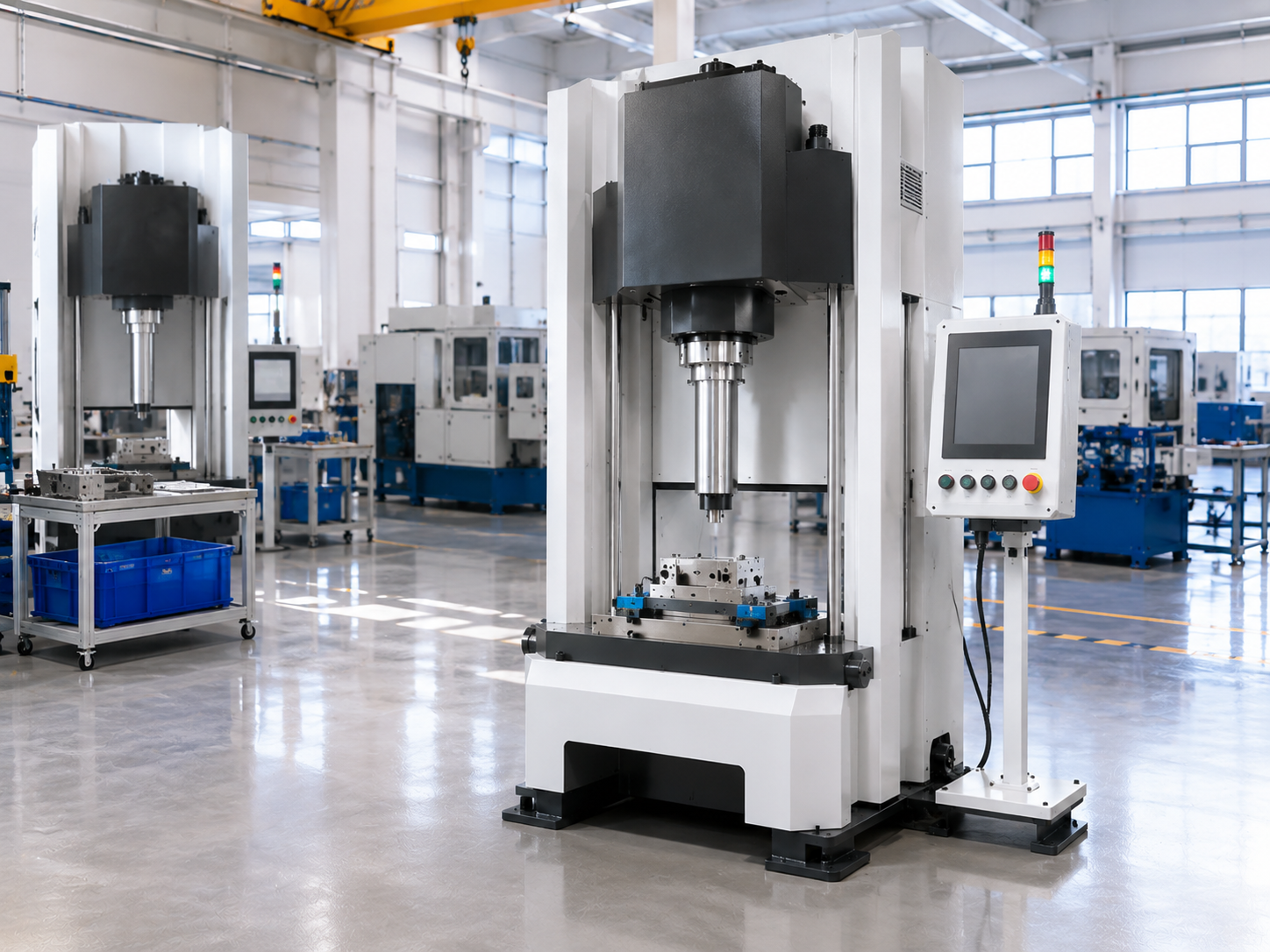
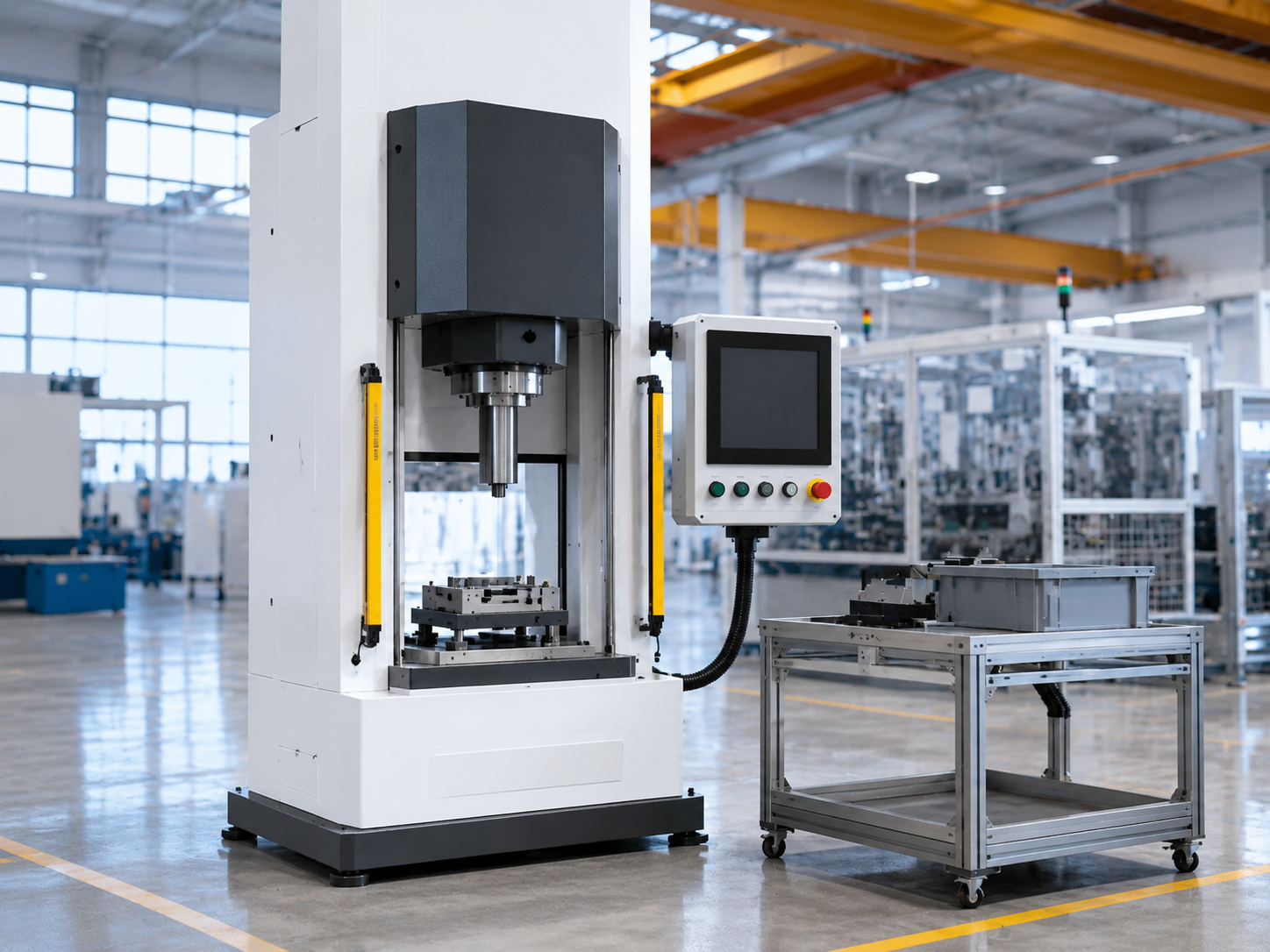
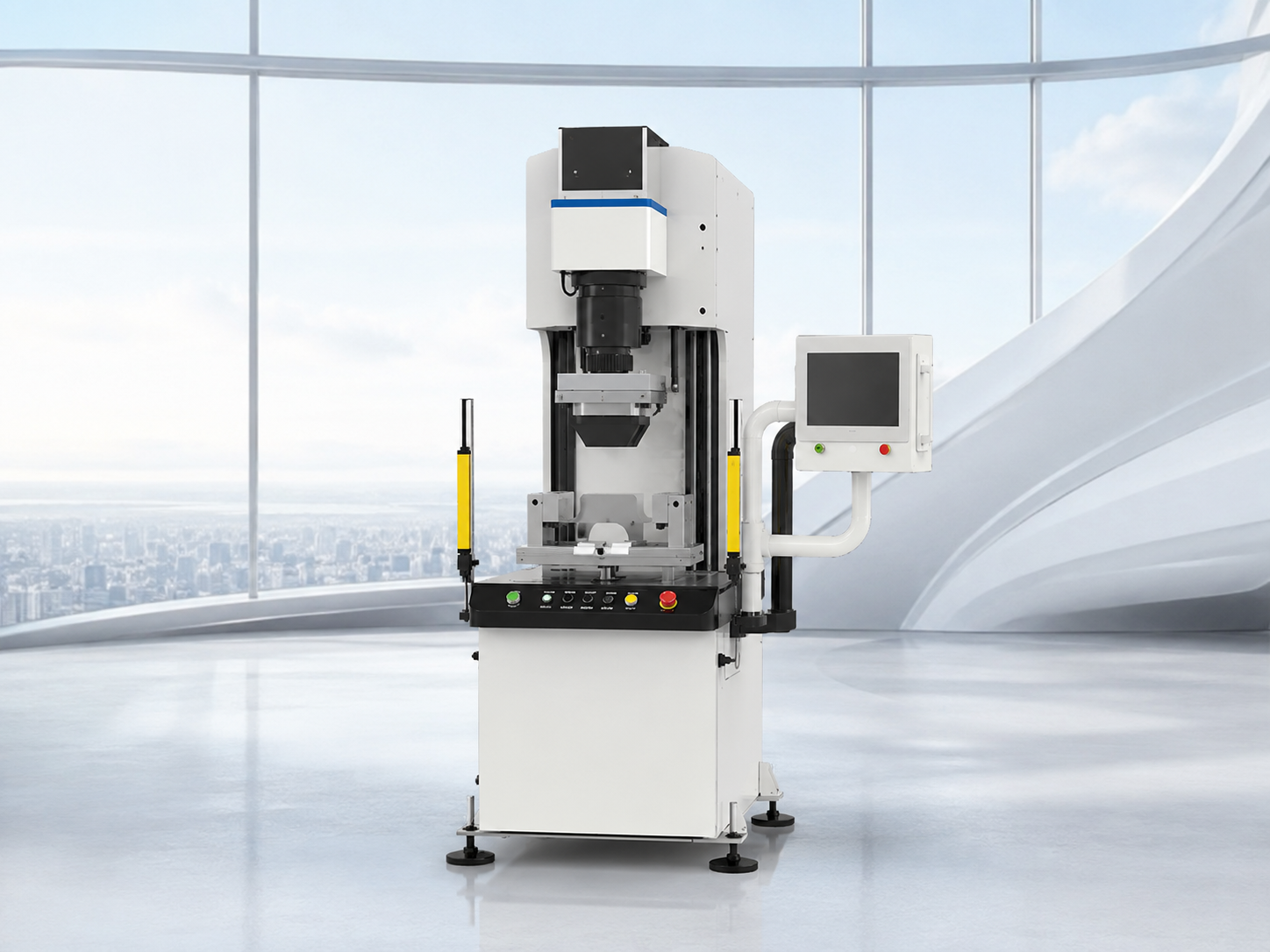
Simitch four-column servo press production configuration
Listed four-column configuration options
- Custom tooling and fixture interface.
- Pressure-displacement monitoring system and connector.
- Industrial computer and 10.4-inch touchscreen.
- PLC control, production-data export, and optional MES upload.
- Sample-part validation and acceptance documentation.
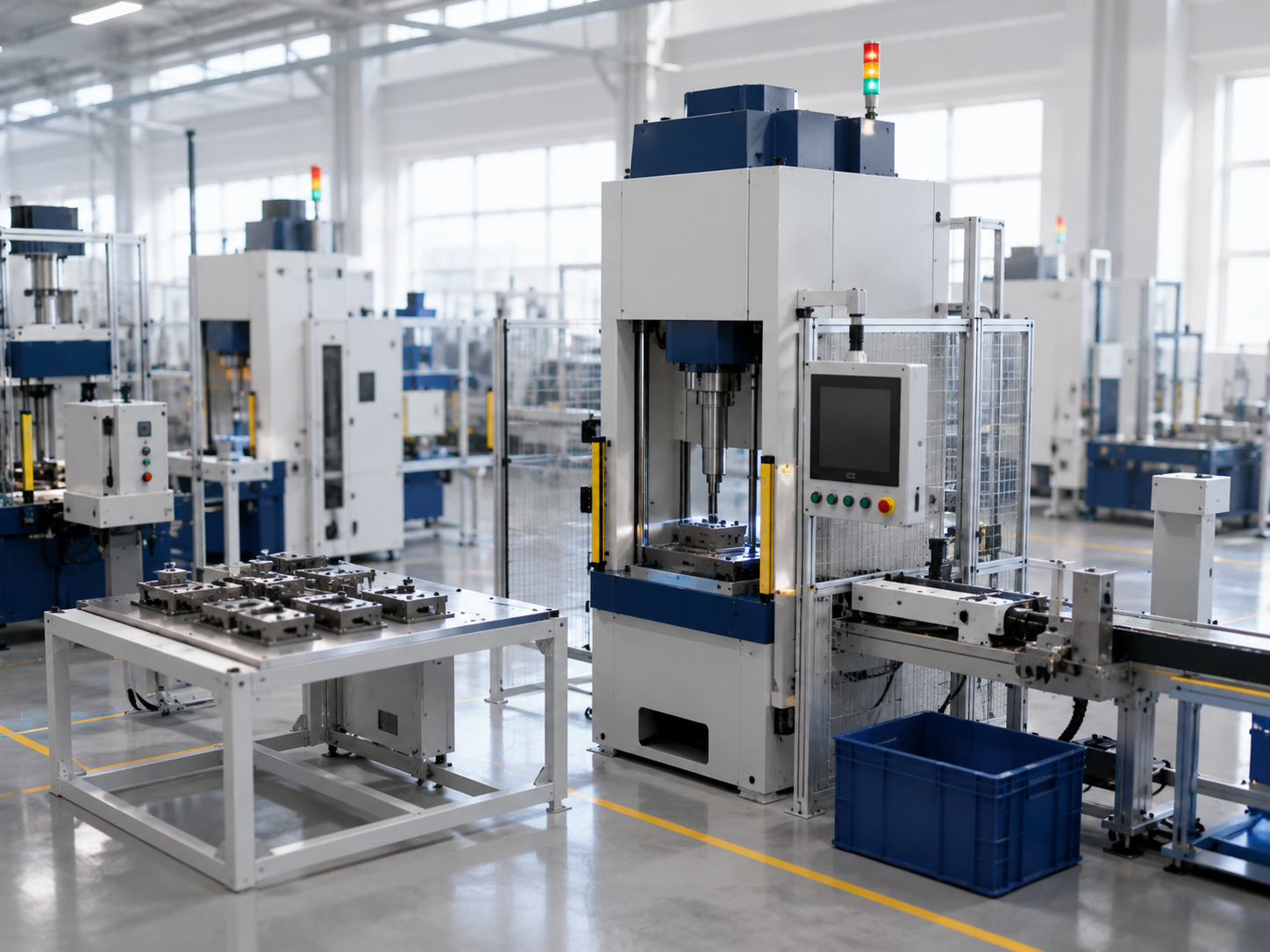
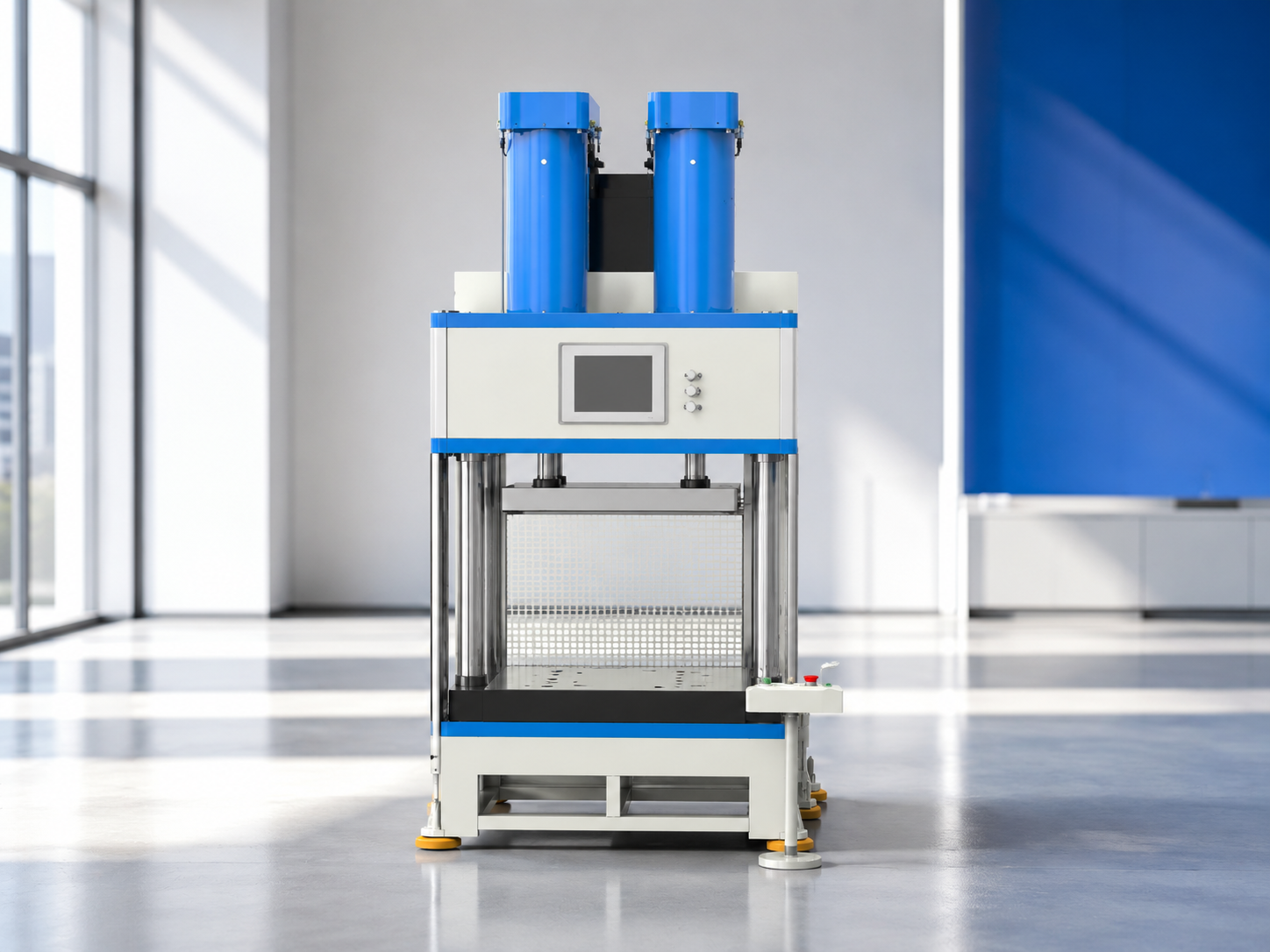
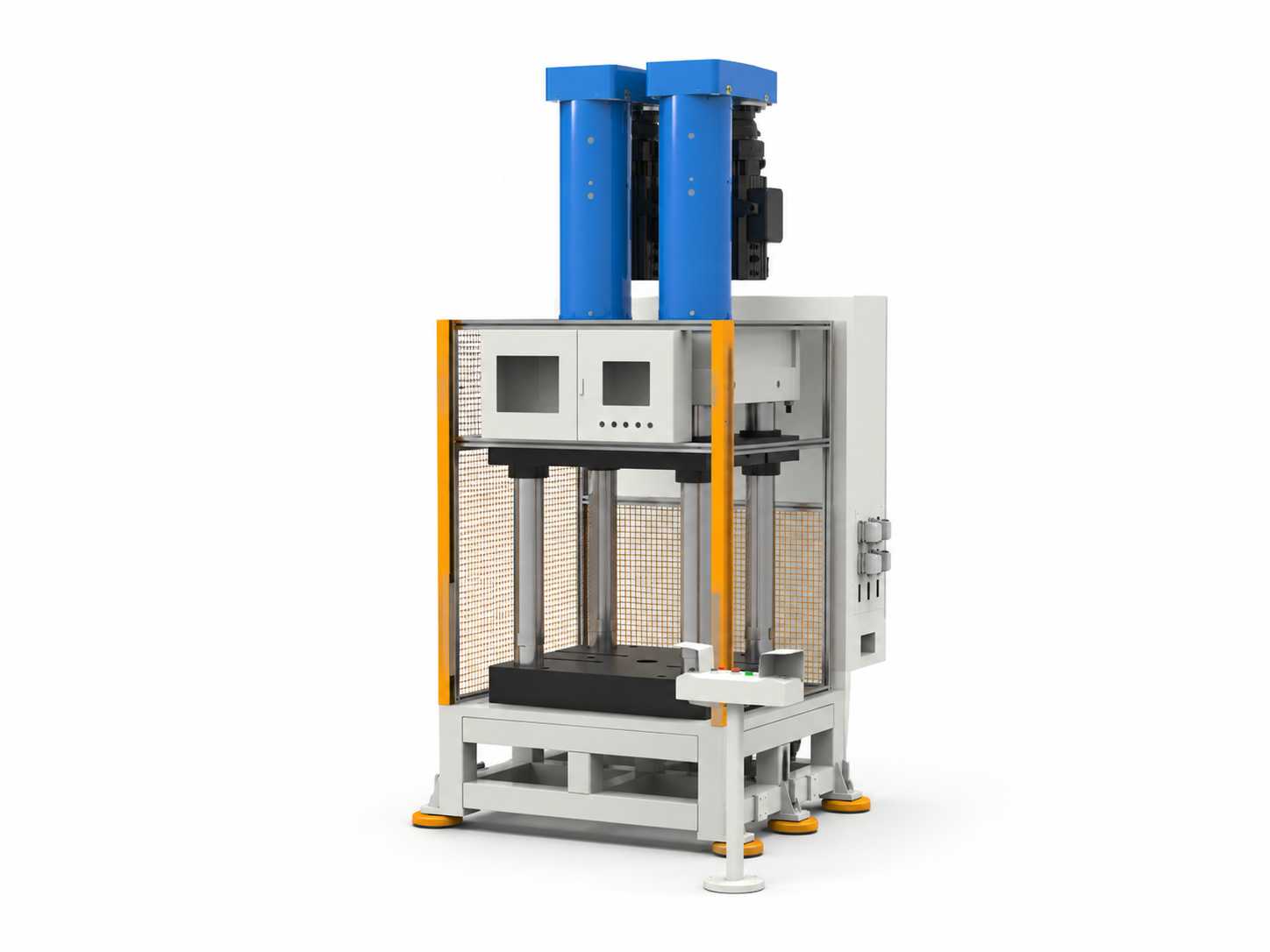
Simitch dual-cylinder enclosed servo press production configuration
Transmission details to confirm
Search results for electric presses often mention a ball screw, linear servo, AC servo motor, or other linear actuators. The supplied BP data doesn’t identify every internal transmission component, so exact specifications belong in the technical quotation and drawing review.
| Interface | Listed capacity | Project confirmation |
|---|---|---|
| Digital I/O | 8 inputs / 8 outputs | Signal list, voltage, logic, diagnostics, safe-state behavior |
| PROFINET | Available | Controller compatibility, device profile, tags, update rate |
| EtherNet/IP | Available | EDS/profile, assemblies, data ownership, fault handling |
| EtherCAT | Available | Master compatibility, synchronization, PDO mapping |
| CC-Link | Available | Version, station mapping, diagnostic scope |
| Modbus | Available | RTU/TCP variant, register map, byte order, polling |
| CANopen | Available | EDS, node settings, PDO/SDO scope, error control |
Machine safety
Define point-of-operation safeguarding, access, emergency stops, interlocks, safe restart, tooling hazards, and residual energy through a machine risk assessment. A general mechanical-power-press rule must not be presented as proof that it covers hydraulic and pneumatic presses or this servo-electric press.
Operational technology security
CISA guidance supports maintaining an operational technology asset inventory and taxonomy. For modern manufacturing environments, also define network segmentation, authentication, remote access, backups, software versions, and recovery ownership.
Protect production data integrity
Map part identity, recipe, curve result, alarm, timestamp, operator, and export status. Test what happens when the network is unavailable, storage reaches its limit, or the control system can’t upload to MES.
Integration evidence boundary
CISA’s asset-inventory guidance supports documenting connected assets and their roles. It does not certify the cybersecurity of a proposed BP cell or replace a site-specific controls review.
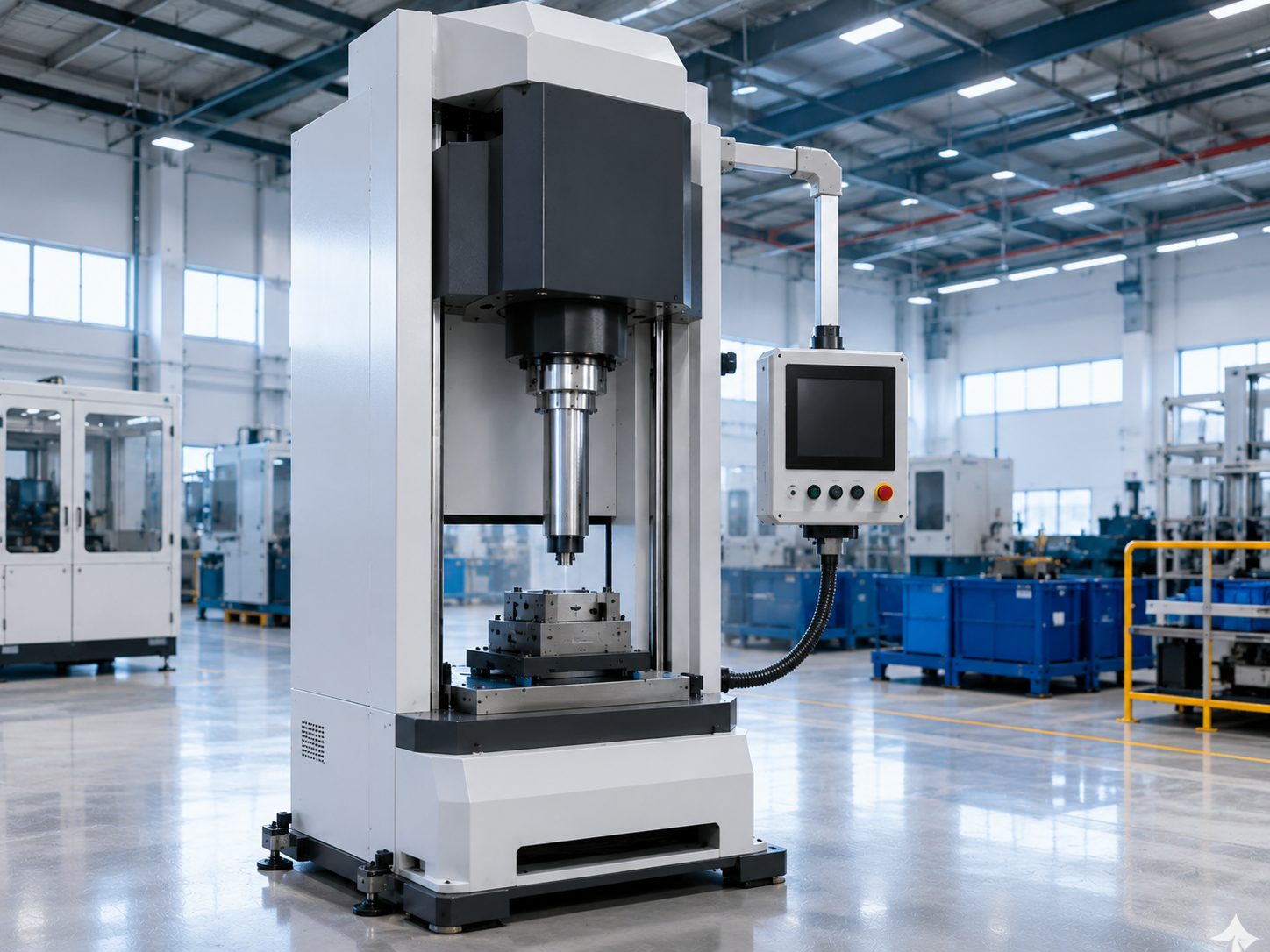
Use the BP Model Comparison tool to shortlist hardware, then request a specific integration review with the interface drawing and safeguarding checklist. Unlike a protocol logo, that evidence exposes the controls, network, and acceptance gaps while Simitch, the integrator, and the owner retain their project responsibilities.
Request Integration ReviewVerify the Supplier, Press, and Handover Package
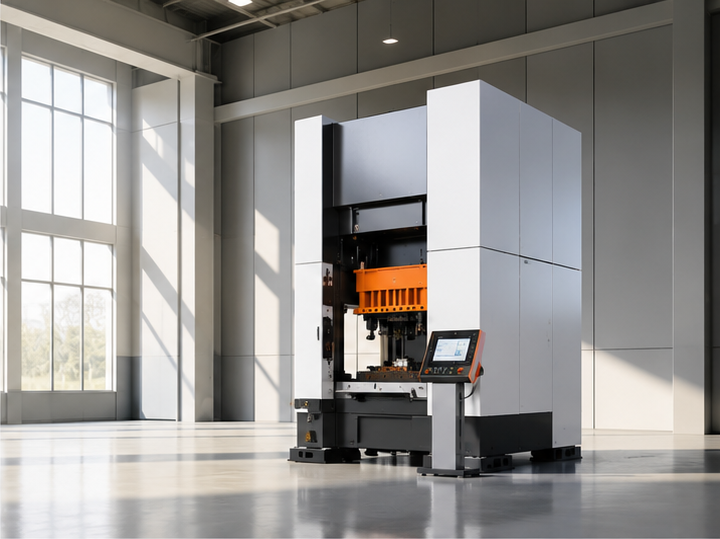
Suzhou Simitch Machinery Co., Ltd. was established in 2006 and began with sheet-metal connection machinery using introduced clinching technology. The company states that it progressed toward independent research and development, mastered core clinching and precision pressing technologies, obtained independent trademarks and multiple technical patents, and independently produces key equipment and core parts.
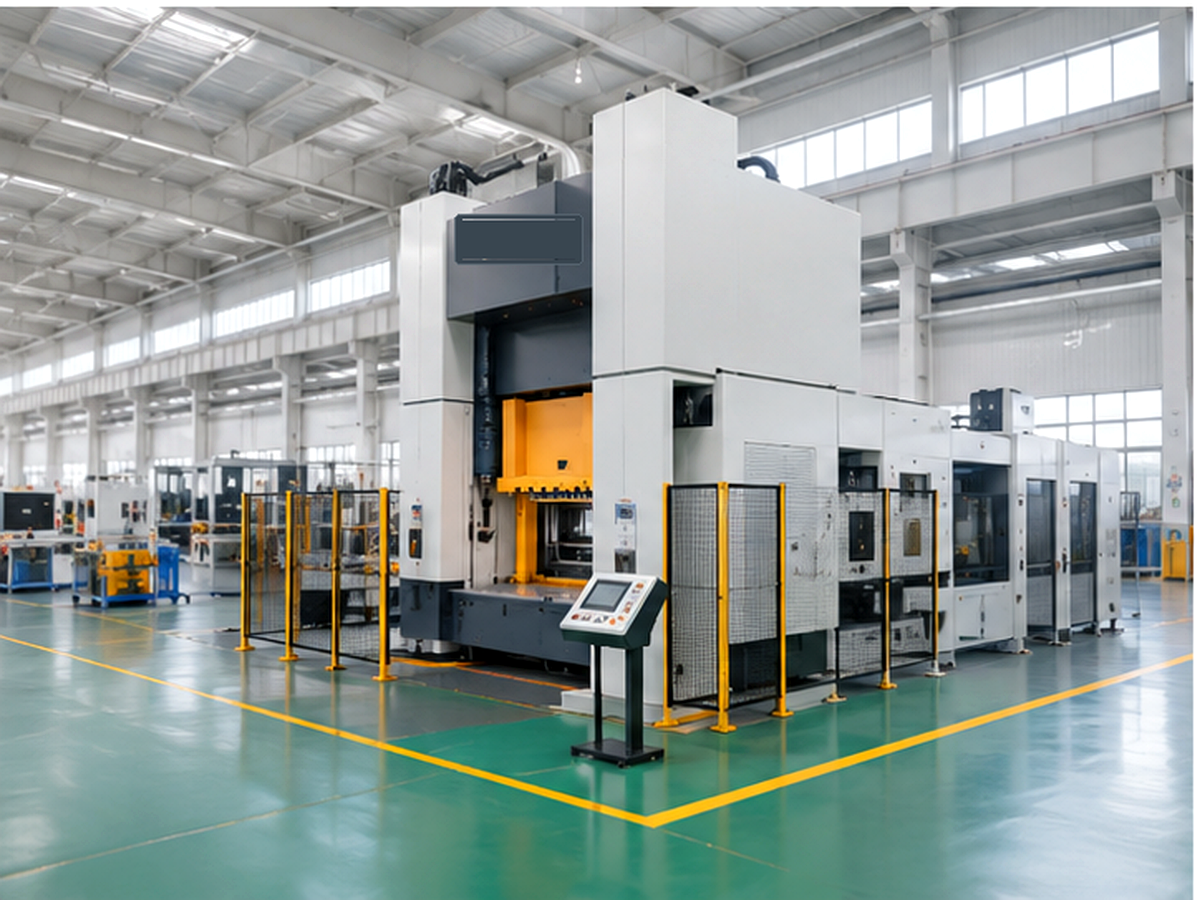
Company history is not machine acceptance
Brand statements, certificates, declarations, patents, or management-system marks don’t by themselves prove BP machine performance. Names, scopes, patent numbers, and applicable conformity requirements should be checked against the offered machine and destination market.
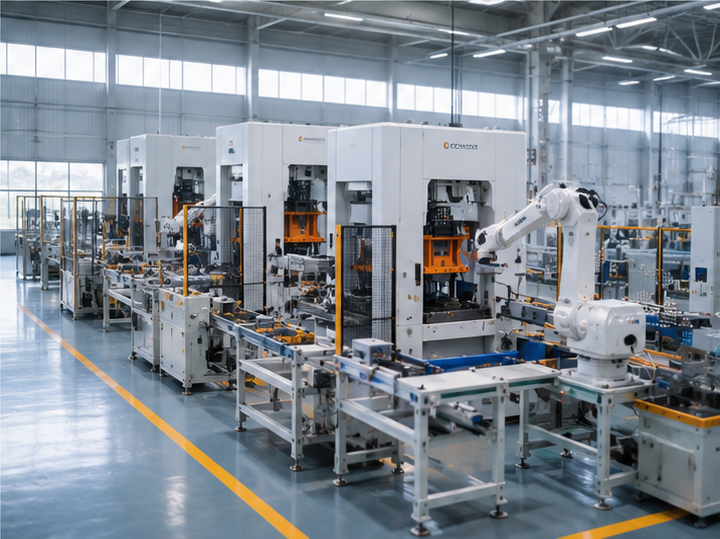
What a reliability engineering review should connect
Review the industrial equipment as a production system, not only as an actuator. Connect the quoted press, tool, part, sensor, programme, safeguarding, automation, maintenance, and records to measurable factory-acceptance tests.
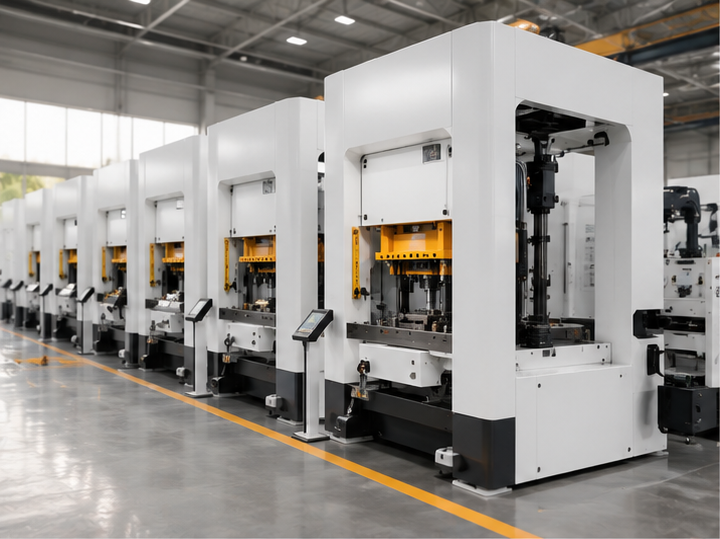
Independent verification boundary
NIST calibration guidance and OSHA’s mechanical-power-press rule inform parts of the evidence checklist. Neither source certifies Simitch, the BP Series, or a destination-market conformity decision.
- Quoted model, drawing, force, stroke, speed, power, and configuration scope.
- Sample-part trial plan with known-good and boundary parts.
- Tooling drawing approval and fixture/load-path review.
- Force-displacement curve samples and evaluation-method explanation.
- Sensor identification, calibration evidence, and acceptance range.
- Risk-reduction concept, guarding, controls, and interface list.
- Factory acceptance test record linked to the approved specification.
- Programme, parameter, recipe, and software backup package.
- Electrical, pneumatic, mechanical, and control documentation as applicable.
- Maintenance instructions, spare-parts list, and service contacts.
- Training, change-control, recovery, and data-export confirmation.
- Final punch list, deviations, responsibilities, and sign-off criteria.
…and ask Simitch to return it against the proposed BP configuration. Unlike “high precision,” “accuracy and repeatability,” or “consistent results” language, the checklist exposes evidence gaps before order release.
Prepare the Inputs for Tooling, Controls, and a Comparable Quote
Two suppliers can quote the same force class while including different tooling, sensors, safeguarding, software, data, testing, and handover work. Comparable quotes begin with one controlled application brief and mark unknown commercial fields as “confirmed after application review.”
Engineering request
Send Your Force, Stroke, Part Drawing, and Cycle Requirement
- Company
- Work email
- Application
- Bearing, bushing, pin, connector…
- Part material
- —
- Required force
- kN and basis
- Working stroke
- mm
- Target speed / cycle
- —
- Candidate protocol
- Not decided
- Monitoring and acceptance needs
- Curve windows, data retention, factory acceptance, tooling, guarding, MES…
- Drawing or curve link
- Secure file-sharing URL
NIST’s calibration-system context, CISA’s asset-inventory guidance, and the stated scope of OSHA 1910.217 help frame measurement, connected-asset, and safety questions. The applicable requirements still depend on the machine, site, and destination market.
Price, lead time, minimum order quantity, warranty, site service, training, and delivery terms are confirmed after application review. Standards-based inputs help normalize a quote, but they don’t replace commercial BP-series data.
Minimum engineering inputs
- Part drawing, material, fit, joining feature, and defect concern.
- Required press force, how it was established, and any process curve.
- Approach, working and return stroke; speed; cycle time; annual volume.
- Tooling, fixture, throat access, load direction, and changeover needs.
- Force/displacement sensors, evaluation windows, records, and retention.
- PLC, HMI, industrial PC, fieldbus, MES, and data ownership.
- Safeguarding, destination, standards, acceptance, and handover scope.
Why one controlled brief matters
Quote gaps occur because different suppliers include different frames, tools, controls, tests, and handover work around the same 10–200 kN request. Simitch engineers use the drawing, sample, specification, and acceptance criteria to expose that mismatch rather than hiding it behind a low headline price.
Scope
Model, frame, actuator, tool, fixture, sensors, controls, and safeguarding.
Performance
Force, position, speed, press cycle, repeatability, curve, and exact specifications.
Acceptance
Sample parts, measurement method, test quantity, limits, records, and sign-off.
Commercial
Price, lead time, warranty, delivery, installation, training, and support.
BP Series Engineering & Selection Tools
Access our interactive calculators and worksheets to specify, compare, and optimize precision assembly processes for your production line.
-
Input your specific application parameters to filter and identify the optimal BP Series servo press model for your technical requirements.
-
Select and evaluate two different servo press configurations side-by-side to analyze specifications, capacities, and performance metrics.
-
Calculate and visualize pressing force against displacement limits to ensure assembly quality and prevent precision component damage.
-
Estimate total cost of ownership by evaluating energy consumption, maintenance cycles, and operational efficiency over the equipment’s lifespan.
FAQ: Precision Assembly Servo Press Decisions
What force range does the BP Series cover?
Listed force classes run from 10 to 200 kN. Stroke, speed, duty cycle, tooling, and the sample trial determine the final model.
How do I select between the six BP press models?
Start with measured or calculated process force rather than selecting the next larger tonnage by habit. Next, separate total travel from the working stroke and check speed, cycle time, part variation, load direction, tooling access, fixture stiffness, safety, measurement, and data. Use the Application Input & Model Screening Matrix for a shortlist, then validate that shortlist with representative parts.
Can the press monitor force and displacement during every cycle?
Yes, when the project configures the listed pressure and displacement channels correctly. Sensor range, calibration, sampling, filter, recipe, record link, and limits still require validation.
Which fieldbus protocols can be configured?
Options are PROFINET, EtherNet/IP, EtherCAT, CC-Link, Modbus, and CANopen. The system also lists 8 inputs and 8 outputs.
What information is needed for tooling and a quotation?
Send the part drawing, material, fit, process-force basis, approach and working stroke, speed, cycle, tooling envelope, load direction, expected curve behavior, controls, data, safeguarding, destination, and acceptance requirements. Include known-good and boundary samples when curve judgment is part of the project. Price, lead time, warranty, and service are confirmed only after the inputs define the offered scope.
How does an electric servo press differ from hydraulic or pneumatic presses?
BP emphasizes programmable motion and curve evidence. Hydraulic or pneumatic equipment can still fit a different force-travel, speed, maintenance, or cost requirement.
Can the system export data or connect to MES?
Data export and optional MES upload are listed. Integration must define the data model, protocol, buffering, security, recovery, and ownership rules.
Which assembly processes can be evaluated with the BP Series?
Typical applications within the BP Series industrial applications scope include bearings, bushings, pins, sleeves, rivets, connectors, insertion, press-fitting, clinching, light sheet-metal joining, and verification. Some parts reveal part quality through a seating feature; others need a force boundary, final position, envelope, or inflection check. Simitch establishes suitability with the actual part, tool, force-distance behavior, sensor chain, and sample trial instead of treating an application label as approval.